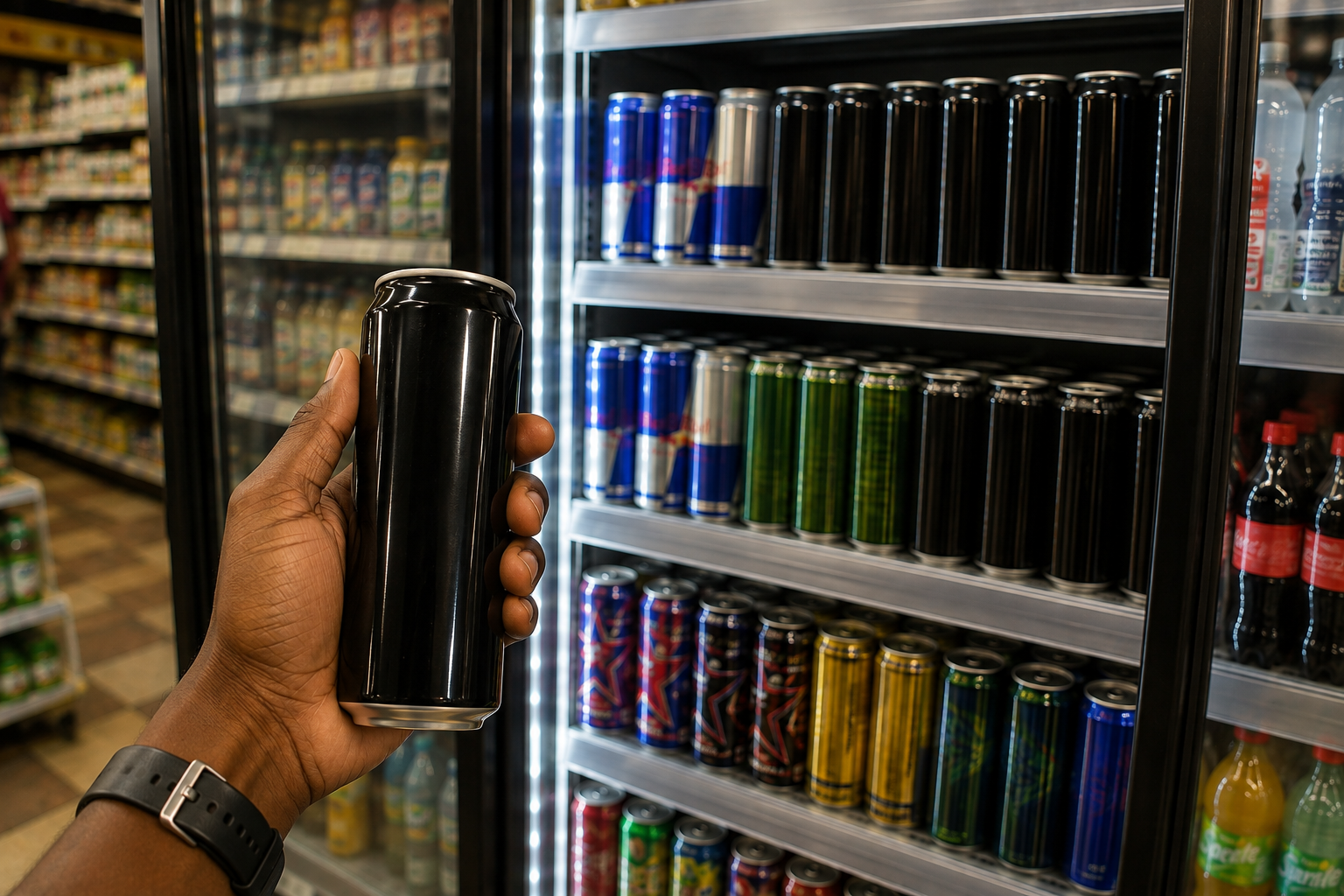
I wasn’t expecting to leave my neighbor’s shop with the beginnings of a story (even though, as you all know by now, I rarely pass up the opportunity for a good story). She had been rearranging her refrigerator when she casually mentioned an interesting fact – energy drinks, she said, had quietly become her biggest sellers. Not bottled water or Coca-Cola. Not Fanta or any other type of soda for that matter. Heck, even the fresh juices were being left behind.
“Predator,” she laughed, “moves almost twice as fast as the ordinary sodas”, (hmmmm I might be on to something with that “slogan”.
At first, I dismissed it as one shopkeeper’s experience. But then I began noticing supermarket shelves seemed to devote more space to energy drinks than ever before, how the mjengo guys and boda riders reached for them between trips. Even the guys in suits seemed to be walking around with them. They were everywhere.
The more I looked, the more I realized I was watching a quiet shift in Kenyan culture.
Kenya’s Hustle Economy Is Running on Caffeine
For years, Kenyans have proudly embraced the hustle culture. More and more, one job is no longer enough. Many people spend the day in formal employment before driving for ride hailing apps at night. Others juggle online businesses, freelance work, studies, farming or side hustles just to make ends meet.
The result, as it seems, is an exhausted people. But instead of solving the problem with rest or whatever, many solve it with a 50 bob can that promises instant energy. Have energy drinks become the unofficial fuel of Kenya’s hustle economy?
So yes, this is the nation that celebrates being busy, where we admire people juggling three jobs and studying at night as covered on Why Young Kenyans Are Choosing TikTok Side Hustles Over Office Jobs. Somewhere along the way, rest started feeling like laziness and exhaustion became a badge of honor. Yet as we explored in How to Have a Productive Week Without Burning Yourself Out, true productivity has never been about squeezing more hours out of the day but about managing the energy we already have.
The New Generation Doesn’t See Them as “Energy Drinks”
Ask someone in their twenties whether they drink energy drinks and they might not even think twice before saying yes. For many, they’re simply another beverage.
Have Energy Drinks Become Gen Z’s New Stimulant?
International research over the past few years has consistently suggested that Generation Z is drinking less alcohol and smoking fewer cigarettes than many previous generations did at the same age, although recent data indicates the picture is becoming more nuanced as some drinking habits begin to rise again. Even so, younger adults continue to approach alcohol differently than earlier generations.
Can’t help but ask then, if many young people are moving away from traditional stimulants like cigarettes and heavy drinking, what are they embracing instead?
Perhaps it is all about optimization, as opposed to intoxication. Energy drinks promise performance. They encourage people to keep going throuhj another shift….another lecture. Another delivery or deadline.
It would be an exaggeration to suggest that energy drinks have replaced alcohol or cigarettes. The evidence simply doesn’t support such a conclusion. Yet culturally, they seem to occupy a space that is worth paying attention to. If previous generations gathered around beer to unwind, today’s generation often gathers around caffeine to stay productive. That says something profound about how ambition and even rest are being redefined.
Marketing Sold a Lifestyle.
Energy drink companies deserve credit for understanding exactly what today’s consumer wants to feel.
Look at almost any advertisement and you will realise the message is rarely about taste but power.
Speed, focus, confidence.
It is about winning, in a culture where everything has become competitive (yes, social media.) Drink this, and you’ll perform better. Or so they say.
For young people trying to build careers, businesses and personal brands, that’s an incredibly persuasive promise.
And yet, the irony lies in the fact that Kenya produces some of the world’s finest coffee. Is not coffee the world’s largest “energy drink?” And, if we are among the world’s largest producers, why are many young consumers increasingly reaching for canned energy drinks instead of a cup of coffee?
Is it because coffee still carries an image of boardrooms, offices and morning meetings wile energy drinks on the other hand, have been successfully marketed as youthful, exciting and modern.
Not long ago, we were writing about burnout among Millennials and the search for gentler ways to slow down. Today’s conversation feels different. Well it seems that rather than reaching for green tea or mindfulness, many young adults appear to be reaching for caffeine. The question is whether this represents a cultural shift away from recovery and towards relentless performance.
Do energy drinks produce Energy?
Shocker. The answer is no. That despite the name, energy drinks don’t actually create energy. Most rely on combinations of caffeine, sugar or artificial sweeteners, taurine, B vitamins and other stimulants to temporarily increase alertness and reduce feelings of fatigue.
If you’ve had enough sleep and a balanced diet, the boost may simply make you feel more awake for a while. If you’re already exhausted, however, an energy drink doesn’t replace the rest your body actually needs. It merely postpones the feeling of tiredness.
It’s a bit like turning the volume down on your car’s warning alarm instead of fixing the engine.
For many people, one energy drink every now and then is unlikely to cause problems, but the concern begins when it becomes a daily requirement.
Some people now say they can’t start work without one as others experience headaches or irritability if they skip their usual can, common signs of caffeine withdrawal. Excessive intake – especially several cans in a day or when combined with alcohol may increase the risk of side effects such as a racing heartbeat, anxiety, difficulty sleeping and elevated blood pressure, particularly for people who are sensitive to caffeine.
The real issue isn’t simply the drink but what the drink may be masking.
Are We Becoming Dependent on Energy Drinks?
The word addiction is often used casually, but dependence is a more useful way to think about what many people describe.
“I can’t start my shift without one.”, “I need one before exams.” and “I get headaches if I skip it” are all familliar phrases when it comes to energy drinks.
Those experiences don’t necessarily mean someone is addicted to energy drinks themselves. They may instead reflect dependence on caffeine, which is well documented and can lead to withdrawal symptoms such as headaches, fatigue and irritability when consumption suddenly stops.
Perhaps the biggest surprise isn’t that energy drinks have become so popular but how hardly anyone seems surprised by it.
We have normalised exhaustion to the point that buying artificial energy feels more practical than protecting natural energy. We celebrate people who work through the night, applaud those juggling multiple jobs and admire anyone who appears endlessly productive. In that environment, a brightly coloured can promising “energy”, “power” or “focus” becomes a symbol of survival.
Maybe the real monster under the bed isn’t caffeine at all but the quiet acceptance that being permanently tired has become a normal part of modern Kenyan life.