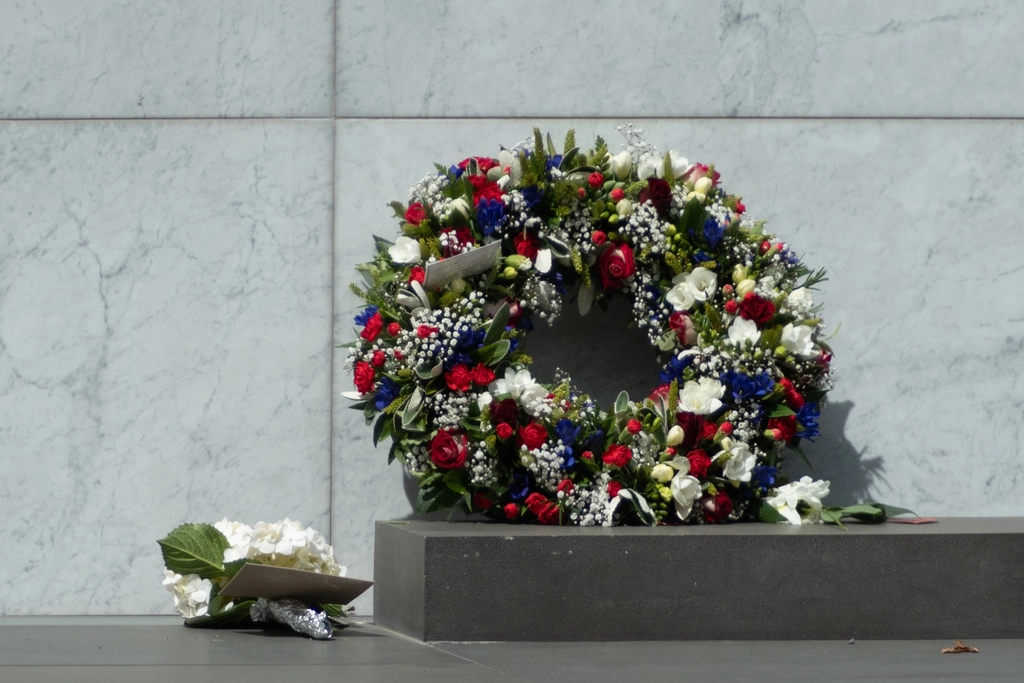
Have you ever stood in front of someone who has just lost a loved one, and suddenly the “cat got your tongue?”
You rehearse the words in your head on the way there. I’m so sorry for your loss. Please accept my condolences. Be strong. You prepare yourself, prepare the right outfit… and then you finally see the bereaved person, they look at you, and suddenly your carefully prepared vocabulary disappears.
So you smile and hug them. But they don’t smile back… and you are beating yourself up for smiling. Before you know it, you are blurting out “Pole aki” because it’s the only complete sentence you can manage.
Sometimes, it is enough, better than a “Wueh!”
When someone is grieving, there is no magical sentence that can make the pain disappear or even a combination of words that can bring back the person who has died or explain why the loss happened. The pressure to say the “right” thing can therefore make us forget that a grieving person does not necessarily need us to fix their grief. They need to know they are not carrying it alone.
There can also be a significant financial burden on families, particularly in Kenya, where funeral arrangements can involve everything from mortuary fees and transportation to the burial itself. Our Complete Guide to Funeral Costs in Kenya breaks down some of the expenses families may encounter.
You Don’t Have to Find the Perfect Words
One of the biggest misconceptions about comforting someone after a death is that you need to know exactly what to say, or even know exactly what to carry to the funeral.
Sometimes the most compassionate thing you can say is simply, “I am so sorry. I don’t know what to say, but I am here with you.”
There is something highly comforting about honesty. You are not pretending to understand exactly what the bereaved person is experiencing, and you are not trying to make their pain smaller. You are simply acknowledging that something terrible has happened and letting them know that you are present.
A simple “I am thinking about you,” “I am here for you,” or “I am so sorry you’re going through this” can be enough.
And if you knew the person who died, sharing a genuine memory can be even more meaningful.
“I will always remember how your dad used to make everyone laugh.”
“Your sister was such a warm person. I feel lucky that I got to know her.”
Those memories remind the bereaved that their loved one’s life was seen and mattered beyond the immediate family.
Sometimes, that is one of the greatest gifts you can offer.
What Can You Actually Say to Someone Who Is Grieving?
The words you choose will depend on your relationship with the person, the circumstances of the death and even the culture or family traditions surrounding the funeral.
The most important part is that you don’t overthink it. You can say:
- “I am so sorry for your loss.”
- “I am thinking of you and your family.”
- “I don’t have the right words, but I want you to know I am here.”
- “Take things one day at a time.”
- “You don’t have to go through this alone.”
- “I remember how much they meant to you.”
- “Would you like me to sit with you for a while?”
- “Is there anything you need right now?”
That last question can be particularly helpful, although it can be made even more useful by offering something specific.
Instead of saying, “Let me know if you need anything,” you could say, “Can I bring you some food tomorrow?” or “Would it help if I handled the shopping this week?”
Grief can make even ordinary tasks feel exhausting. Someone who has barely slept, is organising a funeral, receiving visitors and trying to process a death may not have the energy to figure out what “anything” means.
Sometimes love looks less like a profound conversation and more like showing up with a plate of food.
What About Saying “Be Strong”?
This is one of those phrases that is usually said with good intentions. Someone tells a grieving person to “be strong” because they want to encourage them. They want them to survive the difficult days ahead.
But grief does not always look strong.
A person may cry. They may become quiet, or they may laugh unexpectedly and then feel guilty about laughing. They may be angry and not want to talk. They may want to talk about the person who died for three hours…..or they may want everyone to leave them alone.
None of these reactions means they are handling grief badly. So instead of telling someone to be strong, you can give them permission to feel what they are feeling.
“You don’t have to be okay right now.”
That can be far more comforting since it tells the bereaved person that they don’t have to perform strength for everyone around them.
This is particularly important at funerals, where the person who has lost someone can sometimes feel as though they have to receive visitors, answer questions, greet relatives and somehow remain composed while their world has just been turned upside down.
As I wrote in Funeral Etiquette: The Unspoken Rules of Showing Up for Grief, showing up for someone’s grief is not simply about attending the funeral. It is about understanding that this is a deeply vulnerable time and behaving accordingly.
The Things We Say Because We Don’t Know What Else to Say
Most people don’t mean to hurt a grieving person. Sometimes, however, our discomfort with death makes us reach for phrases that sound comforting but can land badly.
“You have to accept it.”
“At least they lived a long life.”
“Everything happens for a reason.”
“They are in a better place.”
“God needed another angel.”
“You need to move on.”
“Don’t cry.”
“Be grateful for the time you had.”
Even when these statements come from love, they can unintentionally tell someone how they are supposed to feel. The truth is that you don’t know what someone else’s grief feels like from the inside.
You may have lost someone yourself, but their relationship with the person who died was unique. Their circumstances are different. Their memories are different. Their questions may be different.
So instead of trying to explain the death, allow the person to experience it.
You don’t have to provide answers, but you can provide company.
Sometimes Listening Is More Important Than Speaking
There is a strange pressure around grief to fill every silence. We become uncomfortable when someone cries, so we start talking.
We see someone sitting quietly and ask questions. Someone begins telling us about the person they lost, and we immediately try to make them feel better.
But sometimes they don’t need to feel better in that moment. All they need is to be heard.
If someone wants to talk about their mother, let them talk about their mother. If they want to tell you the same story for the fourth time, listen to it for the fourth time. If they cry halfway through a sentence, you don’t have to rush to stop the tears.
You can sit beside them and even hold their hand, if your relationship allows it.
You can say, “Take your time.”
And sometimes, that is the whole conversation. Grief does not always need a speech.
What If You Don’t Know the Person Who Died?
This happens often at Kenyan funerals.
You may attend because your colleague has lost a parent. Your neighbour has lost a spouse. A friend’s sibling has died. You may never have met the person whose funeral you are attending.
You don’t need to pretend otherwise, and you can simply say:
“I didn’t know your mum, but I know how much she meant to you. I am so sorry.”
Or:
“I wish I had known him. I am sorry that you and your family are going through this.”
The point isn’t to manufacture a connection with the deceased but to acknowledge the connection that exists between you and the person who is grieving.
And if you are close enough to offer practical help, offer it.
Funerals come with a mountain of practical responsibilities, and sometimes the most meaningful words are followed by action.
“I can stay with you while you deal with the visitors.”
“I’ll handle the errands this afternoon.”
“I can drive you home.”
“Have you eaten?”
That last question may not sound profound, but grief has a way of making people forget very basic things.
And Then There Are the Days After the Funeral
This is perhaps the part we don’t talk about enough. The funeral ends.
The chairs are collected, the visitors leave and the family returns home. Just as abruptly, the phone stops ringing.
But… the person who died is still dead.
Grief does not end when the burial is over. If anything, for some people, the quiet that follows can be when the reality of the loss becomes even more difficult to process. Which is why showing up should not necessarily end with the funeral.
Send a message a week later. And Call, even after a month or two.
You could also remember the birthday of the person who died and Check in around Christmas, during holidays or on anniversaries.
And don’t be afraid to mention the person who died simply because you think doing so will make the bereaved person sad.
They already know the person is gone. Sometimes hearing their name from someone else is comforting.
Sometimes knowing that other people remember them is a beautiful reminder that their life did not disappear simply because their funeral ended.
As grief unfolds, it can also take forms people don’t always expect. Not every loss comes with a funeral, a coffin or a clear goodbye. Sometimes people grieve relationships, pregnancies, people who disappeared from their lives, or people whose deaths left complicated feelings behind. That is why grief cannot always be measured by the funeral or by how quickly someone appears to “move on.”
There Is No Perfect Way to Comfort Someone
We spend so much time worrying about saying the wrong thing that we sometimes forget that you are not being asked to remove someone’s grief. Mostyly because you cannot.
What you can do is make sure they don’t feel invisible inside it.
You can sit beside them, listen, bring food and make a phone call.
You can remember important dates, say the person’s name and cry with them.
You can admit that you don’t know what to say by simply saying,
“I am here.”
Because when someone is grieving, presence can speak louder than eloquence.
There will be plenty of things we cannot fix about death. We cannot change what happened or return the person who died. But we can choose how we show up for the people left behind.
And perhaps that is what comforting someone through grief really means – not finding the perfect words, but making sure they do not have to face the silence alone.