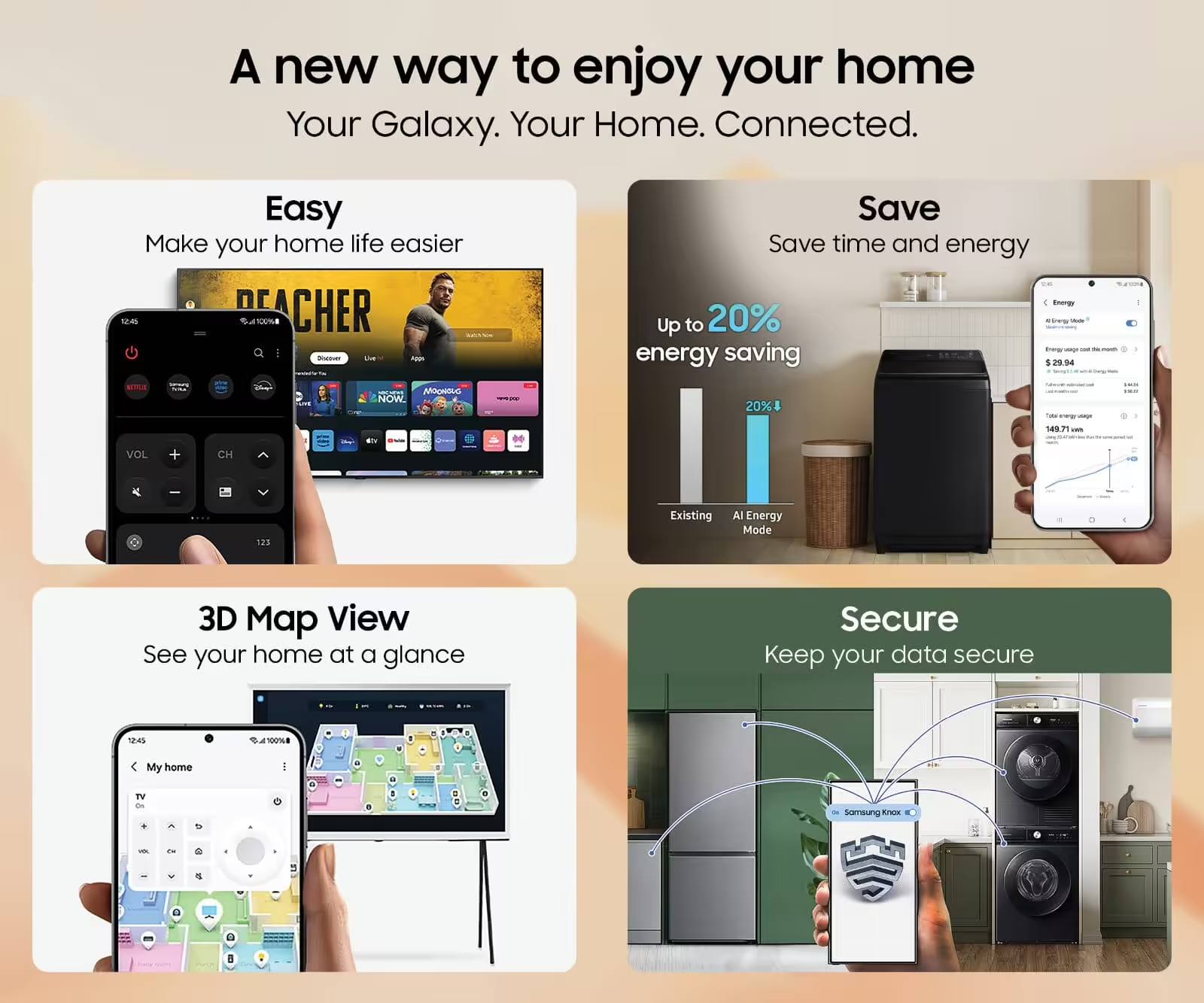
The other day, a friend called me requesting if I could come through for an acting gig for his upcoming YouTube movie. I haven’t done one of those in a while, but you know how it is – when a friend is in need and they call, you show up, right?
So I showed up on set, ready to do what I do best, and almost immediately found myself wondering where the cameras were.
There was a crew and people getting ready for their scenes. But where was the camera? So I asked him, “where are the cameras?”
“What cameras?” he asked while laughing.
We were shooting with a phone.
Not as some clever behind the scenes trick while the “real” camera waited somewhere nearby. No. The phone was the camera.
And that wasn’t even the most interesting part. My friend, who happens to have hundreds of thousands of followers on YouTube, uses a phone to shoot, edit and put together content. There is a sound editing app involved. There are editing tools. There is a whole content creation workflow happening on one device that, until fairly recently, I would have assumed required considerably more equipment.
It got me thinking about just how much the smartphone has changed what it means to be a creator. Once upon a time, saying you were going to create a video could mean finding a camera, setting up lights, recording audio, transferring files to a computer, editing, exporting and finally uploading.
Now? You can just pull a phone out of your pocket and get remarkably far before you ever need a laptop. And with AI increasingly built into smartphones, the phone is becoming more than the camera. It can help with the thinking, organising, editing and polishing that happens around the actual act of creating.
That is where Samsung’s Galaxy AI tools become particularly interesting.
Your phone is becoming your little creative studio
For bloggers, YouTubers, TikTokers, photographers, small business owners and even those of us who occasionally find ourselves on an unexpected film set, the smartphone has become an increasingly important part of the creative process.
The camera is only one piece of it as you also need somewhere to capture an idea when it comes to you. You need to edit photographs and videos, to clean things up, to write captions, organise information and eventually get the finished product onto the internet.
Samsung’s Galaxy AI features are designed to help with some of those everyday tasks, which means the phone can take on more of the work that happens between I have an idea and it’s published.
It starts before you press record
Good content usually begins with an idea, and ideas have a terrible habit of arriving at inconvenient times.
You might be travelling and suddenly think of a story. You might be at an event and realise there is a post hiding somewhere in the experience. Or you might hear something interesting and want to remember it before your brain moves on to the next thing.
Having tools that help you capture, organise and work with information on the same device means less friction between having the idea and actually doing something with it.
And that is one of the places where AI can be useful. Instead of thinking about AI as something that should magically create everything for you, it can be more useful as a tool that helps you get through some of the less exciting parts of the creative process.
Then comes the camera
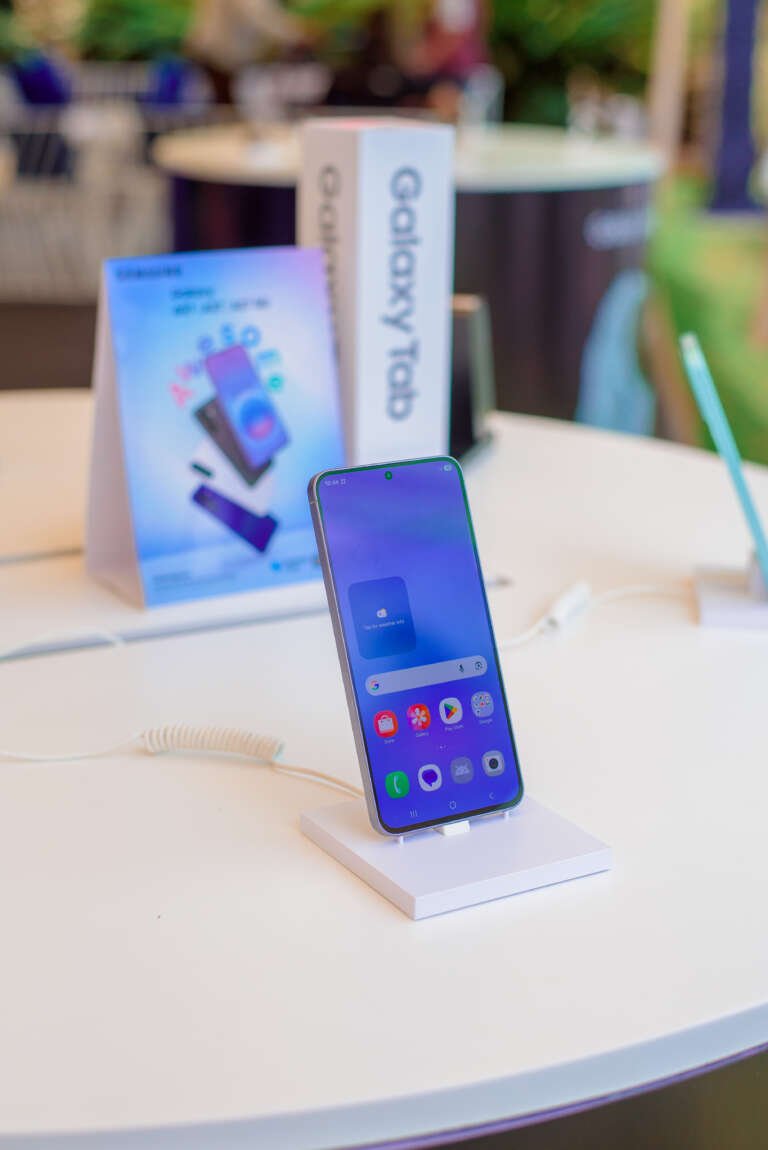
This is where phones such as the Galaxy A37 5G and Galaxy A27 5G fit into the picture.
You don’t have to be a full time content creator to need a good camera.
Maybe you’re photographing products for your small business. Maybe you’re documenting a trip. Maybe you run a social media page or you simply want to make a decent Reel without carrying a bag full of equipment.
The A-series has increasingly become about bringing useful features to more people, and the A37 and A27 give creators another option for producing content directly from their phones.
Because the reality is that the best camera for a spontaneous piece of content is often the one you actually have with you.
When the photograph needs a little help
Then there is the inevitable moment when you look at the photograph and realise it isn’t quite what you thought it was because say, someone has wandered into the background or there is an object you wish wasn’t there. Maybe something needs adjusting.
This is where AI-powered editing becomes genuinely useful.
Rather than moving the image to a computer and opening complicated editing software for every little correction, AI tools can help you make certain edits directly on the phone.
For a creator, that can save time and save momentum. Remember, when you are in the middle of creating something, every extra step is another opportunity to say, I’ll finish this later. And we all know how often “later” becomes tomorrow.
The editing desk is now in your pocket
My friend’s setup on that shoot was a good reminder of this. The phone wasn’t simply recording the footage. It was part of the production process; something that is becoming increasingly normal for creators.
Shoot on the phone, edit on the phone, work on the audio and add the finishing touches. And, Voilà! You can now publish.
The technology has become small enough that the distinction between a camera, editing device and publishing device is starting to disappear.
Samsung’s Galaxy AI features add another layer to that workflow by bringing AI-assisted tools into tasks that creators are already doing.
AI can help, but it doesn’t replace the creator
The important distinction here is that AI can help you organise an idea, make an edit or speed up a repetitive task. It can make the process easier, but the reason people follow a creator is still the human bit.
Your perspective and sense of humour. Your eye for a photograph or the story you decide is worth telling. The strange little observation that turns an ordinary experience into something people want to read or watch.
While it’s true that AI can help with the tools, you still have to bring the story.
And perhaps that is the most interesting thing about where smartphones are going. How – for an increasing number of creators – the phone is no longer simply the thing we use to consume content but the place where the content begins, gets made and eventually reaches everyone else.
I went to that shoot expecting to act in front of a camera but instead, I got a rather useful reminder that these days, sometimes the camera is the phone in your pocket.