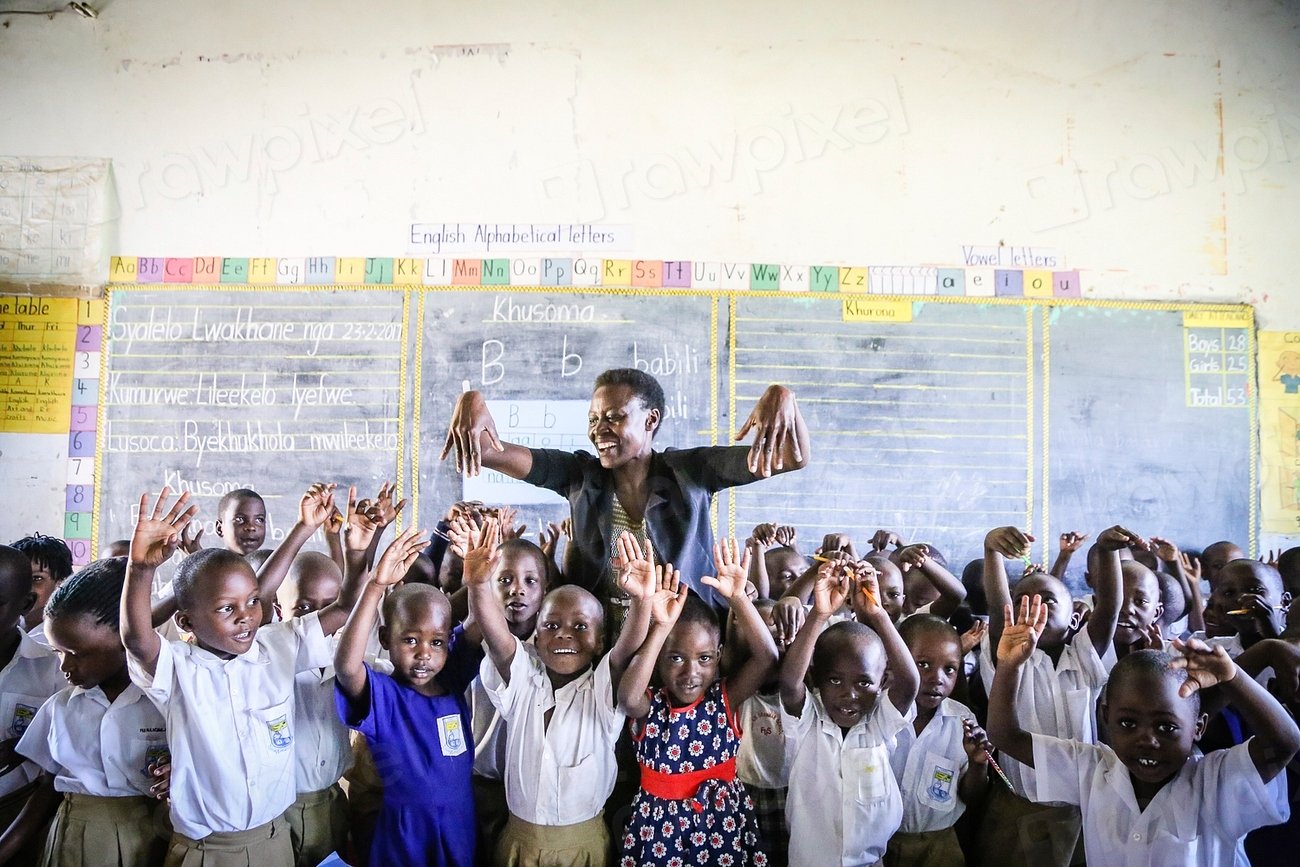
For clarity, when we say CBC, we are talking about the Competency-Based Curriculum that replaced the old 8-4-4 system. The broader reform is now increasingly described as Competency-Based Education, or CBE, because it goes beyond the curriculum itself to how learners are assessed, supported and eventually guided into different pathways. So while most of us still casually call it “CBC”, what we are really watching unfold is a much bigger change in how Kenya approaches education, from the early years all the way to Senior School and beyond.
I actually went through 8-4-4. Which means I know what it feels like to spend years being taught exactly the same things as everybody else regardless of whether you were particularly good at them, completely hopeless at them, or secretly brilliant at something nobody was asking you to do.
We all went through the same academic funnel – learn, memorise, revise and sit for the exams. And by Jove, did we memorise.
Eventually, you got a certificate which either opened doors for you or became something you folded carefully into a file and carried around while trying to figure out what you were actually good at.
This is why I find the hostility towards the Competency-Based Curriculum, or CBC, slightly interesting.
Listen, I understand the complaints. How parents are tired of assignments that appear to require the combined resources of a child, three adults, a printer, a laptop and a YouTube tutorial. Teachers have also complained about workload and inadequate resources. There is genuine confusion around assessment, implementation and what exactly parents are expected to do.
While all these are legitimate concerns, I sometimes wonder whether we are making the mistake of judging CBC before we have actually seen what it produces.
At the very least, CBC is trying to do something that 8-4-4 was never particularly designed to do.
Unlike 8-4-4 that was about “How much information can this child remember?” CBC asks, “What can this child actually do?” A pretty important question in the world today’s children are growing up in.
We were all expected to run the same race
One of the strangest things about 8-4-4, when you look back at it as an adult, is how little room there was for the fact that children are wildly different.
Different personalities, different brains, different abilities/ interests and most importantly, different circumstances.
One child could be brilliant at mathematics. Another could struggle with mathematics but draw beautifully while another could take apart a radio and somehow put it back together. Some kids are good writers/ strory tellers while others could run faster than everybody else in school.
Yet the system largely put all of them in the same classroom, gave them broadly the same subjects and eventually placed enormous importance on their ability to perform in the same examinations.
And because marks were so important, we developed a culture around them. The clever child was the one with the highest marks while the child who struggled academically was often regarded as the one who needed to “work harder” (we used to call them slow learners.)
But what if the child wasn’t stupid? That they were simply brilliant at something the examination system wasn’t particularly interested in measuring?
Of what importance is it to a nation to have people who are good at passing examinations if those same people cannot be builders, mechanics, farmers and programmers?
What about the nurses, writers, electricians, teachers, chefs, carpenters, entrepreneurs, animators and technicians? For a country to grow it needs people who can make things, fix things, imagine things and sell things.
A functioning economy is not built by everyone being good at the same thing, aka 8-4-4.
The world our children are entering is completely different
The world my generation grew up in is not the world our children are entering. There are children making money from coding, content creation, design, gaming, animation, photography, digital marketing, crafts and entrepreneurship.
A teenager can build an audience without owning a television station. Someone can learn graphic design from their bedroom while somewhere else, young person can sell clothes to customers in another country without having a shop on Moi Avenue.
And let us not even begin on artificial intelligence and how it is changing the workplace yet again.
Information is now everywhere. Your phone can find it, with AI explaining, summarising and, increasingly, helping you create something from it.
That doesn’t make knowledge useless, but memorising information is becoming progressively less valuable as the only measure of whether a person is capable.
What becomes more valuable is knowing what to do with that information. For instance, can you solve a problem, communicate or even create?
Can you work with other people and think critically? Can you build something?
Can you identify an opportunity or learn a new skill when the world changes?
Those are the kinds of abilities CBC is attempting to put closer to the centre of education.
Imagine what happens if we get it right
Imagine a child who discovers early that they are exceptionally good with their hands and therefore instead of being made to feel like their practical ability is somehow inferior to academic ability, that talent is developed.
They could become a carpenter or even a furniture designer.
Perhaps an architect.
Now we have children excellomg in sports, music, fashion, architecture – you name it.
In CBC – unlike 8-4-4 – none of these children has to be a failure because they didn’t all become doctors, lawyers, accountants or engineers.
That, to me, is one of the most exciting possibilities of a competency based education system because of how it could help us move away from the idea that there is one narrow definition of being “successful” at school.
What does a country do when millions of young people are taught to pursue the same handful of careers, only to discover that there aren’t enough opportunities waiting for all of them?
At some point, we have to stop asking whether every child can win the same race and start asking whether we are giving them enough different races to run.
But CBC has a serious problem
There happens to be a big catch, of course. A good idea can still be badly implemented, which is where I think much of the criticism of CBC deserves to be taken seriously.
You cannot tell children to discover and develop their talents while giving schools inadequate facilities, or demand competency based learning from teachers who have not been adequately trained or who are already overwhelmed.
You cannot expect parents to embrace a completely different education philosophy if nobody properly explains what the system is trying to achieve. And you cannot measure children using old assumptions while telling them you have created a new system.
The complaints about CBC therefore shouldn’t simply be dismissed as people resisting change. Some of them are telling us exactly where the system needs fixing.
Maybe we are judging it too early
This is the part I keep coming back to. We haven’t seen the adults that CBC will produce (even though we kind of get a hint on the type of people gen Alpha are becoming).
We are looking at children in the middle of a transition and asking whether the system is working. Truthfully though, the more interesting test is five, ten or fifteen years from now.
What will these children be doing?
At that point we can begin asking if we have more skilled artisans, designers, entrepreneurs, technicians or even creators.
How comfortable are those children going to be with technology? One thing for sure, we shall witness more young people who understand that their talent can become a livelihood and are not simply waiting for someone to employ them because they have learnt how to create, solve problems and identify opportunities.
We don’t know yet, but we can only hope.
And because we don’t know yet, I am reluctant to declare CBC a failure.
I don’t think 8-4-4 was useless
I am not saying everything about 8-4-4 was terrible. It did, after all, give my generation an education and a solid academic foundation. It produced doctors, teachers, engineers, journalists, lawyers and professionals of every kind.
But I think we can acknowledge what it did well while also recognising its limitations. We don’t have to romanticise the system simply because we went through it.
And we don’t have to hate CBC simply because our children are experiencing the messy transition that comes with changing something as enormous as education.
Perhaps the better question is what we want our education system to produce.
If the answer is simply children who can pass examinations, then 8-4-4 had a pretty clear job.
But if we want children who can think, create, communicate, build, innovate, work with their hands, use technology and turn their abilities into something economically valuable, then perhaps this new direction deserves a little more patience. The world as we know it is changing, whether our education system likes it or not.
And the child who is brilliant at something that cannot be captured by a traditional examination may be exactly the kind of person Kenya needs more of.
So yes, CBC has problems, but I don’t think they lack solitions to fix them.
Listen to teachers and parents, and give schools the resources they need. Actually, let’s begin with making the system less confusing.