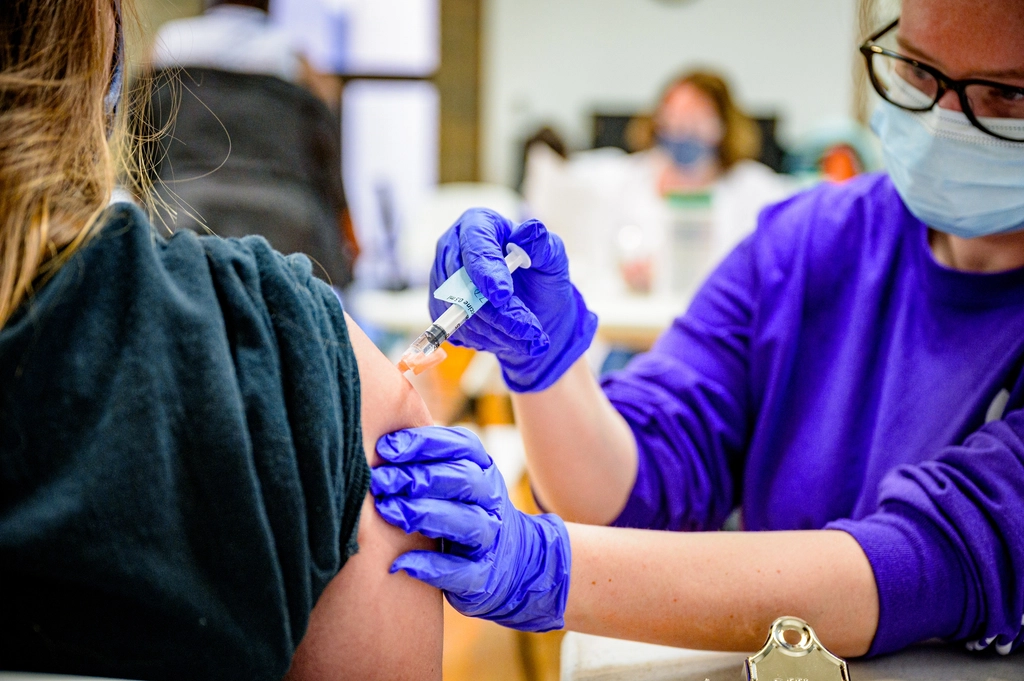
A generic version of a groundbreaking HIV prevention injection could soon cost just US$40 per person annually, potentially making one of the most significant advances in HIV prevention more accessible to millions of people in low and middle income countries, including Kenya.
The development follows a regulatory milestone announced on November 2, 2026, after India’s Dr. Reddy’s Laboratories secured tentative approval from the United States Food and Drug Administration (FDA) for a generic version of lenacapavir, a long acting injectable drug that offers protection against HIV with just two injections a year.
For countries that continue to grapple with new HIV infections, limited healthcare resources and inequalities in access to prevention services, the development could mark an important turning point.
What is lenacapavir and how does it prevent HIV?
Lenacapavir is a long acting antiretroviral medicine developed by pharmaceutical company Gilead Sciences. It belongs to a class of medicines known as capsid inhibitors, which interfere with the HIV capsid, a protein shell that plays an important role in the virus’s ability to reproduce and infect cells.
When used as pre exposure prophylaxis (PrEP), lenacapavir helps prevent HIV infection in people who are HIV negative but may be exposed to the virus.
Unlike traditional oral PrEP, which requires a person to take a preventive pill every day, injectable lenacapavir is administered twice a year, with the injections given approximately six months apart.
This is particularly significant for people who struggle with daily medication routines, have difficulty accessing regular refills or would prefer a more discreet prevention option.
Clinical trials have demonstrated exceptionally high protection against HIV acquisition. In the PURPOSE 1 trial involving adolescent girls and young women in South Africa and Uganda, no HIV infections were recorded among participants receiving lenacapavir during the primary analysis period. The PURPOSE 2 trial also demonstrated very high efficacy among men and gender-diverse people.
The findings helped establish lenacapavir as a major development in HIV prevention.
It is important to understand, however, that lenacapavir is not an HIV vaccine, but a preventive medicine that requires appropriate HIV testing and follow up with healthcare providers.
How a US$40 generic version could change HIV prevention
While the original lenacapavir product has generated considerable excitement, its price has been a major obstacle to widespread access.
The branded version, marketed as Yeztugo in the United States, has carried a list price of more than US$28,000 annually.
That is far beyond what most public healthcare systems in low income countries could reasonably afford to provide to large populations.
The proposed generic version changes the conversation.
Under an agreement involving Unitaid, the Clinton Health Access Initiative (CHAI), the Wits Reproductive Health and HIV Institute (Wits RHI) and Dr. Reddy’s Laboratories, the generic injection is expected to be available at US$40 per person per year in 120 eligible low and middle income countries.
The agreement was designed to accelerate the development of an affordable generic alternative rather than leave lower income countries dependent on the considerably more expensive original product.
The FDA’s tentative approval is an important step towards making this possible. Initial supplies are expected to reach some countries before the end of 2026, with broader availability anticipated in 2027.
For perspective, US$40 annually translates to approximately US$3.33 per month per person, although the actual payment arrangements will depend on national procurement and healthcare programmes.
Kenya, interestingly, is not waiting for the generic version to discover lenacapavir. In February 2026, the country officially launched the long acting HIV prevention injection, becoming the first country in East Africa to introduce it.
The Ministry of Health announced that the initial rollout would prioritise 15 counties with a high burden of HIV, with plans for phased expansion.
Kenya had received an initial consignment of 21,000 starter doses in February, with additional continuation doses and supplies expected to support the programme.
The government also announced that eligible individuals would receive the injection free of charge at selected public health facilities.
At the time of the initial shipment, the Ministry of Health estimated the annual cost of lenacapavir at approximately KSh7,800 per patient, a substantial reduction from its previous price of about US$42,000.
The introduction was supported by the Global Fund and other development partners.
This means that the arrival of the generic version could strengthen a programme that Kenya has already begun implementing. However, the immediate question is whether Kenya could procure lenacapavir at the new US$40 annual price.
Kenya is among the countries covered by the generic licensing initiative, making it eligible to benefit from the agreement.
A lower procurement price could help the government and its partners stretch limited healthcare budgets, purchase more doses and potentially expand access beyond the initial priority counties.
It could also reduce the financial pressure on donor supported HIV prevention programmes, which have historically played an important role in financing prevention and treatment services across Africa.
Why twice a year HIV prevention matters
For years, oral PrEP has been an important part of HIV prevention programmes. However, taking a pill every day can be difficult for some people due to whatever reasons – from forgetting doses, struggling with consistent access to medication or experiencing concerns about stigma and privacy.
These challenges are particularly relevant for young people and populations who may face barriers when accessing sexual and reproductive health services.
A twice yearly injection offers another option where instead of having to remember a daily tablet, a person visits a health facility for an injection and returns approximately six months later for their next dose.
It does not mean oral PrEP will become obsolete. Different prevention methods work for different people and access to multiple options gives individuals and healthcare providers more flexibility.
It is important to note that Lenacapavir does not protect against other sexually transmitted infections or unintended pregnancy, therefore condoms and other appropriate prevention methods remain important.
Can affordable HIV prevention accelerate progress in Africa?
The development comes at an important time for countries across sub-Saharan Africa, which continue to carry a substantial share of the global HIV burden.
UNAIDS has repeatedly emphasised the importance of accessible prevention services, particularly for adolescent girls, young women and other populations disproportionately affected by HIV.
For Kenya, the opportunity extends beyond introducing another medical innovation. It is about making sure that the innovation reaches the people who need it.
More than simply importing affordable medication, that calls for sustained financing, reliable supply chains, trained healthcare workers, accessible testing services and meaningful community engagement.
And while the US$40 generic version could help remove one of the biggest barriers to expanding access – the cost of the medicine itself – the real measure of its success will not be how quickly manufacturers produce it or how many countries qualify for the agreement. Rather, It will be how many people who need HIV prevention can actually access it.