From farmers and transporters to distributors and retailers, Kenya Breweries Limited’s value chain illustrates how the beverage industry creates business opportunities and livelihoods far beyond the factory floor.
If we are being truthful, anytime you pick up a bottle of your favourite beverage, the last thing to cross your mind is the journey it has taken to get there. Yet behind that seemingly simple transaction at a restaurant or maybe even the supermarket, is an extensive network of businesses and people who make the process possible.
Starting with the farmers growing raw materials to suppliers providing production inputs, transporters moving goods, distributors connecting manufacturers to retailers and thousands of small businesses serving consumers at the last mile.
For Kenya’s beverage industry, this network represents an important part of its economic footprint and is a reminder that the business of making beverages extends well beyond manufacturing.
At Kenya Breweries Limited (KBL), the value chain connects agricultural production, manufacturing, logistics and retail, creating opportunities for businesses operating at different levels of the economy.
Figures presented by East African Breweries Limited (EABL) to a parliamentary committee in 2024 illustrate the scale of this ecosystem. The company reported that its direct value chain activities supported 45,000 farmers, 180,000 retail trade employees operating across more than 45,000 outlets, 21,000 employees in grain and finished goods transport services, and 120 local distributors who directly employed 2,400 people.
These figures offer a glimpse into the number of livelihoods connected to the industry, including those working in businesses that consumers may never directly associate with a beverage manufacturer.
From the farm to the factory
One of the most visible connections between beverage manufacturing and small businesses begins in agriculture.
The farmer is quite clearly at the heart of it all.
Raw materials are essential to production, and local sourcing creates markets for farmers who supply agricultural produce to manufacturers.
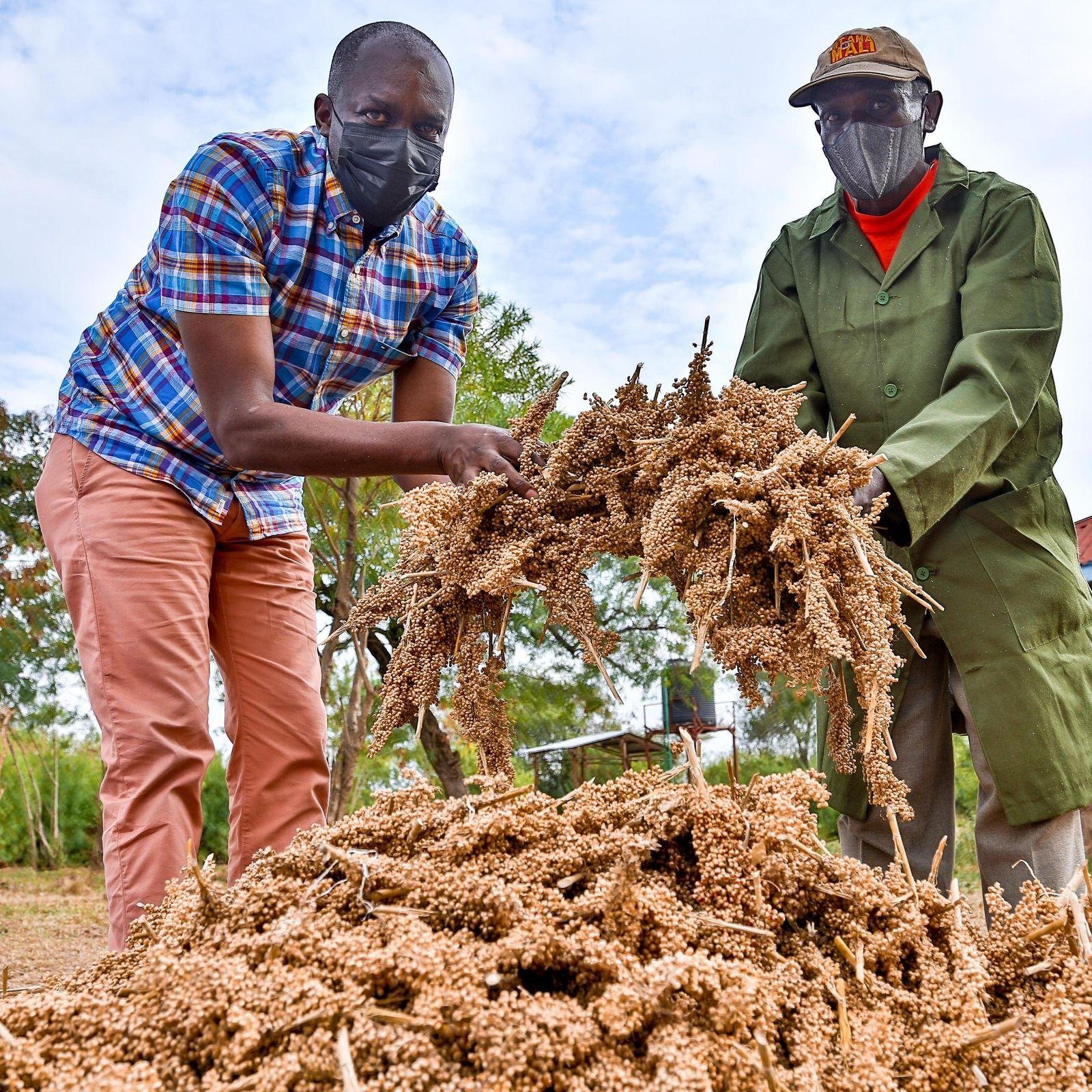
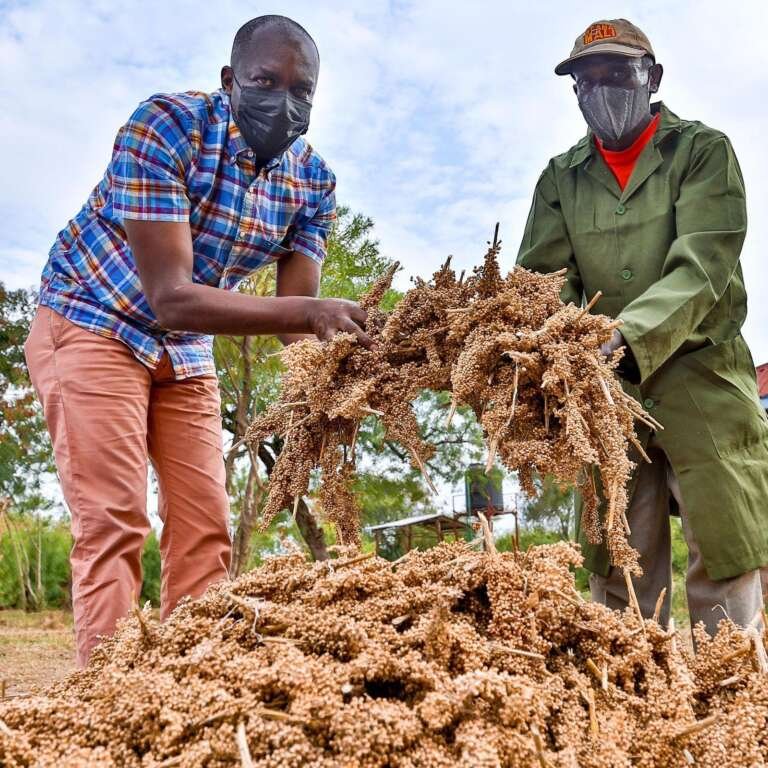
A notable example is KBL’s sorghum supply chain, which supports the production of Senator Keg. Sorghum has become an important crop for farmers in parts of Western Kenya, where the company sources much of the grain used at its Kisumu brewery.
In December 2025, KBL reported that it had contracted 45,000 sorghum farmers to supply raw materials for Senator Keg production. The network spans several counties and includes farmers, aggregators, transporters and distributors.
The relationship between agricultural production and manufacturing creates a market for farmers while supporting businesses involved in supplying agricultural inputs, collecting produce, storage and transportation.
This is the best opportunity for smallholder farmers because having an established buyer provides an opportunity to participate in commercial agriculture rather than relying entirely on traditional markets.
KBL has also highlighted the provision of agricultural support, including access to affordable credit facilities, field extension services and connections to seed companies, fertiliser providers and research institutions.
The company’s 2024 sustainability report further illustrates the scale of this agricultural network. It reported that its sorghum supply for the Kisumu brewery came from more than 40,000 farmers in Western Kenya.
The same report noted that some brewing by products are returned to farmers for use as dairy and poultry feed, creating another link between manufacturing and agricultural activity.
The businesses moving products across Kenya
Manufacturing a product is only one part of getting it to consumers. Moving finished goods from factories and warehouses to different markets requires an extensive logistics and distribution network.
This is where local distributors, wholesalers and transport businesses become important players in the beverage industry.
Distributors help connect manufacturers to retailers, ensuring products reach businesses in different towns and regions. Their operations also create demand for supporting services such as warehousing, vehicle maintenance, loading and transportation.
According to figures submitted by EABL to Parliament in 2024, the company had 120 local distributors directly employing 2,400 people.
The same submission identified approximately 21,000 people employed in grain and finished goods transport services.
These figures demonstrate how distribution and logistics contribute to employment beyond the manufacturer’s own workforce.
For entrepreneurs, operating within a distribution network can provide an opportunity to build businesses around product movement, storage and market access. However, such businesses also require investment in vehicles, personnel, working capital and the infrastructure needed to serve different markets.
The small retailers at the centre of the market
At the end of the distribution chain are the businesses consumers interact with most frequently.
From neighbourhood shops and wholesalers to bars, restaurants and supermarkets, retailers play an important role in connecting manufacturers to the market.
For many small businesses, stocking beverages is part of a wider retail operation that includes food, household goods and other consumer products.
These outlets also create employment opportunities for shop attendants, cashiers, stock managers, delivery personnel and other workers.
EABL’s submission to Parliament estimated that 180,000 people worked in retail trade across more than 45,000 outlets selling products from its subsidiaries.
The figures highlight the scale of the retail network and the number of people whose livelihoods are connected to businesses selling beverages.
We also have to acknowledge the extent which technology is changing how some of these relationships work. Digital ordering platforms, for instance, can make it easier for retailers to place orders and connect with distributors, potentially improving the efficiency of the supply chain.
For small retailers, reliable access to suppliers and consistent product availability are important considerations in running their businesses.
Beyond manufacturing: The wider economic contribution
The economic contribution of the beverage industry extends beyond the businesses directly involved in producing and selling drinks.
It also creates demand for professional services, maintenance, security, cleaning, catering and other support businesses.
In its submission to Parliament, EABL reported that 465 outsourced personnel worked across its Nairobi and Kisumu plants, providing services including facility management, security, cleaning and catering.
The company also highlighted its investment in local sourcing, noting that the proportion of locally sourced materials had increased from 55 per cent in 2005 to 87 per cent by 2024.
Another example is KBL’s investment in a biomass steam plant, commissioned in 2022. The company reported that the investment created supply chain opportunities for local farmers and traders supplying agricultural waste, including macadamia, rice, sugarcane bagasse and wood-related materials from sawmills.
The materials are transported by Kenyan logistics companies and used as biomass fuel.
Such arrangements demonstrate how manufacturing investments can create business opportunities in sectors that may initially appear unrelated to beverage production.
A value chain that reaches beyond the factory gates
The scale of the beverage industry’s supply chain is particularly visible in Western Kenya, where KBL’s Kisumu brewery has helped establish a significant market for locally grown sorghum.
According to EABL’s submission to Parliament, the KSh15 billion Kisumu brewery, whose operations commenced in June 2019, had created more than 17,000 jobs in the Western region through its sorghum value chain. These included opportunities for farmers, transporters and input suppliers.
The brewery also established links with the National Cereals and Produce Board, including the leasing of storage silos for sorghum in Kisumu.
This illustrates how a manufacturing investment can create connections with agricultural producers, logistics businesses and public institutions, extending its economic footprint into surrounding communities.
As Kenya Cane marks its 50th anniversary under the Spirit Yetu Idumu platform, the milestone also provides an opportunity to reflect on the wider business ecosystem surrounding Kenya’s beverage industry.
The story of an enduring brand is not only about its products or presence in the market but also about the people and businesses that participate in the journey, from sourcing raw materials to getting products into the hands of retailers.
For the farmers, distributors, transporters, suppliers and retailers involved, the industry represents more than a supply chain – It is a source of business opportunities and economic activity.