NAIROBI, KENYA – Samsung Electronics East Africa is strengthening efforts to nurture Kenya’s next generation of digital innovators through its Samsung Innovation Campus (SIC) programme, which has seen students at Jomo Kenyatta University of Agriculture and Technology (JKUAT) develop technology-based solutions to real world challenges.
The students recently showcased their innovations at JKUAT’s Main Campus in Juja, in an event hosted by the university’s technology incubation centre, JHUB Africa, in partnership with Samsung Electronics East Africa. The showcase brought together students and key stakeholders to explore projects developed through the programme and highlight the practical application of the digital skills acquired during the training.
Samsung Innovation Campus is a global education initiative designed to equip young people with industry relevant digital skills, including artificial intelligence (AI), coding and programming. In Kenya, the programme is implemented in partnership with JKUAT and JHUB Africa, making the university the only institution in East Africa currently implementing the initiative.
Beyond classroom instruction, the programme gives students practical exposure to emerging technologies, encouraging them to apply their knowledge to problem-solving and innovation. It also bridges the gap between academic learning and industry requirements by developing the technical and critical thinking skills needed in an increasingly digital economy.
Speaking during the showcase, Nyawira Muraguri, Head of Corporate Marketing at Samsung Electronics East Africa, said investing in digital capabilities among young people remains central to the company’s commitment to creating opportunities through technology.
“At Samsung Electronics East Africa, we believe that technology has the power to open doors, transform communities and create opportunities for the next generation. Through the Samsung Innovation Campus, we are investing in young people by equipping them with the skills and confidence to become creators of technology, not just consumers of it. The projects being presented today demonstrate what is possible when young talent is given access to the right knowledge, tools and opportunities to innovate,” said Muraguri.
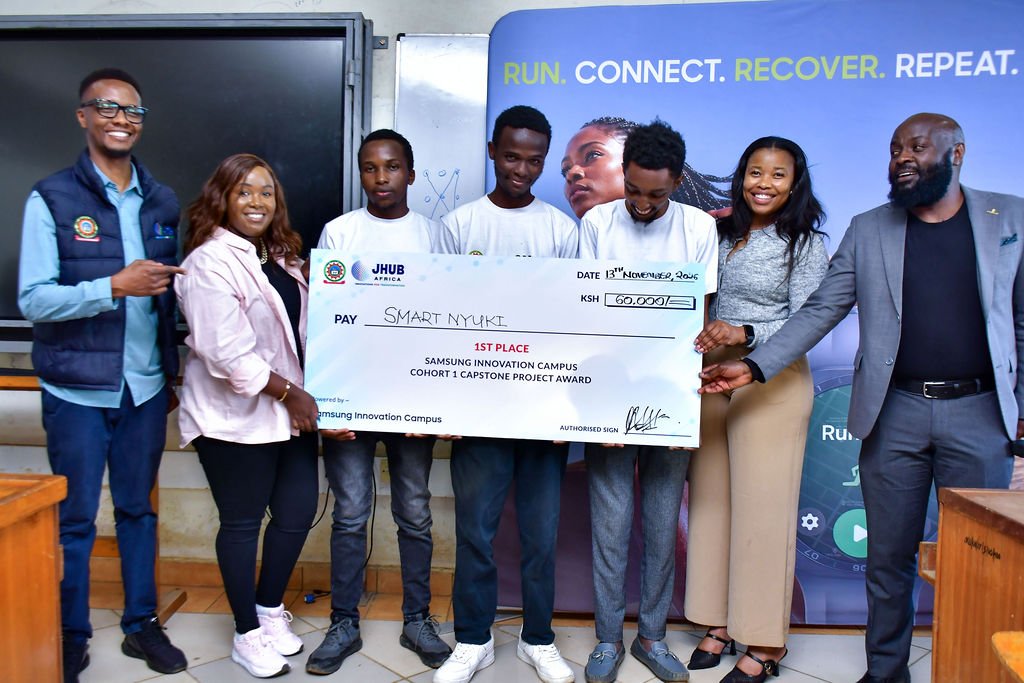
As part of the programme, the 80 participating students worked in teams to identify local challenges and develop technology-driven solutions. The training culminated in 17 teams presenting their projects, with Smart Nyuki emerging as the overall winner.
The winning team developed a solution designed to support local beekeepers with hive management, demonstrating how technology can be applied to address practical challenges within local communities.
For the students, the experience offered an opportunity to move beyond theoretical learning and put their technical knowledge into practice while developing their confidence as problem-solvers and innovators.
Moses Njau, a member of the winning Smart Nyuki team, said the programme had provided valuable hands-on experience and helped the students better understand how technology can be used to develop solutions to everyday challenges.
“One of the most valuable aspects of this programme has been the opportunity to move beyond learning concepts and actually build something. Working on our projects has helped us understand how technology can be applied to solve problems, while also strengthening our technical and problem-solving skills. Being able to showcase our work is an opportunity to demonstrate how far we have come and what we can achieve with the right support and training,” said Njau.
The partnership between Samsung and JKUAT highlights the role of industry-academia collaborations in developing relevant digital skills and nurturing homegrown talent. Through initiatives such as the Samsung Innovation Campus, young people gain opportunities to experiment with emerging technologies, develop practical solutions and prepare for an evolving digital job market.
The programme forms part of Samsung’s broader commitment to using technology and education to empower young people and contribute to the development of a more digitally skilled workforce.