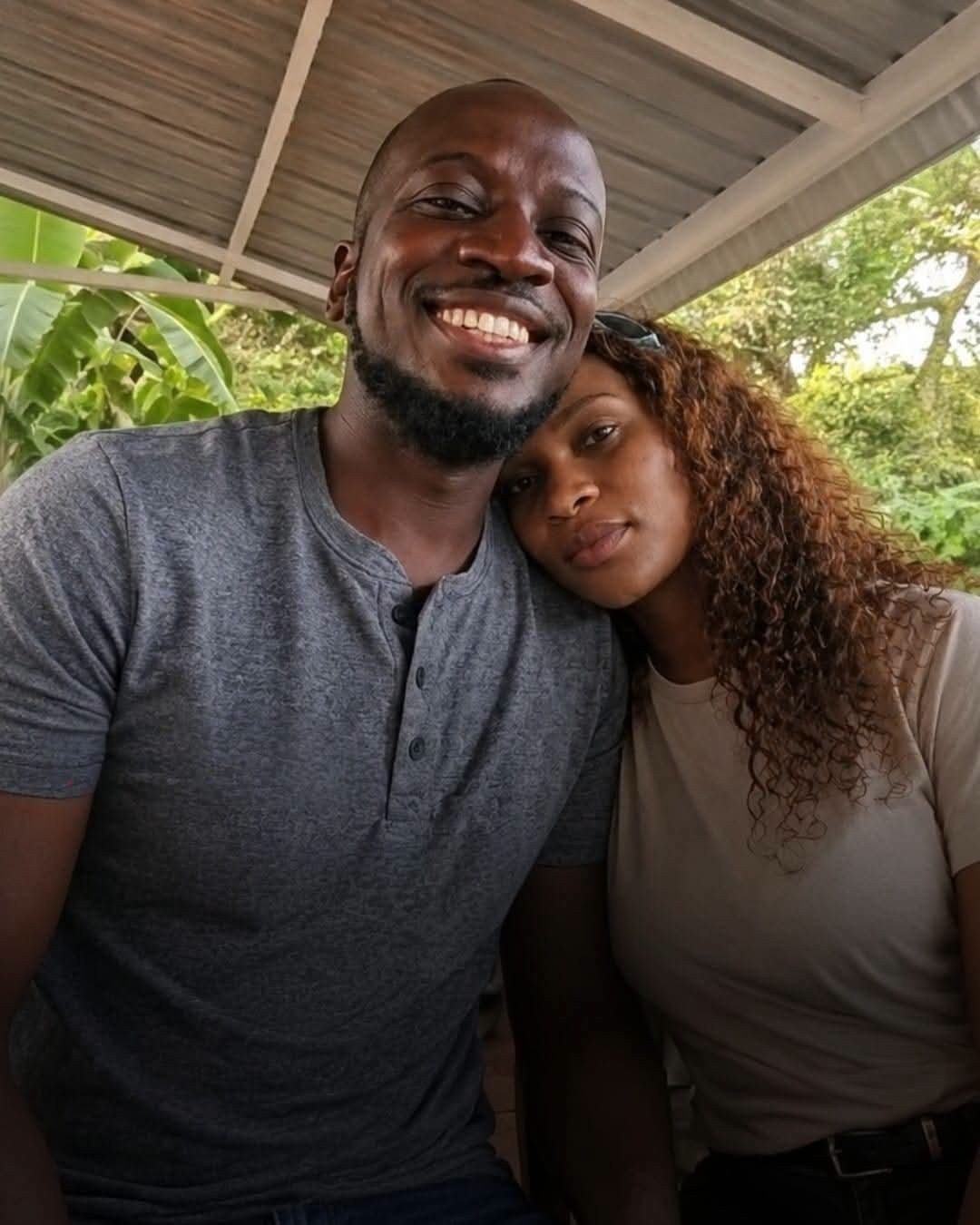
What happens when a relationship becomes so dysfunctional that both people appear to be trying to escape it, yet neither seems able to get out safely? That is the question the Nyambane marriage raises. An uncomfortable question, but one we find ourselves increasingly asking with the relationships of today.
Anyone that has seen the story of Dr Denis Masomba Nyambane and his wife, Mary Mwende, must at one point asked themself; Why didn’t he just leave? Why did he not take back his bank cards or change his PIN? Most importantly, why did he not move out or simply walk away?
The questions sound straightforward because, from the outside, leaving an unhappy relationship often appears to be a matter of making a decision. Yet relationships do not become psychologically complicated only when people stop loving each other. Sometimes they become complicated because of fear, financial dependence, emotional conditioning, shame, isolation – the list goes on and on.
That is why the Nyambane case deserves a conversation that goes beyond the increasingly familiar language of toxic marriage and why didn’t he leave?
According to reports, Nyambane is being investigated in connection with the death of Mwende after she was fatally stabbed at their home in Kiambu on August 7, 2026. He has been remanded as investigations continue, and he has not been convicted of any offence. The circumstances surrounding her death will ultimately have to be established through the investigative and judicial process.
I keep thinking, “but he was a doctor! A surgeon!” A surgeon – trained to fight death with discipline and skill, spending years learning how to preserve life when everything is going wrong. So how does someone whose profession is built around saving lives end up taking one? Dennis Nyambane used his social media platforms to educate people on how to survive knife stabbing incidents, yet here he was, standing before a magistrate, facing possible murder charges as investigators and prosecutors argue that he stabbed his wife to death.
The contradiction is almost impossible to ignore. But it does remind us that professional expertise does not make a person immune to the anger or psychological struggles that can exist behind closed doors.
The problem with “just leave”
We have become better at understanding why women sometimes remain in abusive relationships, although even that understanding is far from perfect. We talk about financial dependence, children, threats, emotional manipulation, isolation and fear. We understand that an abusive relationship can progressively make leaving more difficult, even when the person outside the relationship cannot understand why someone would stay.
We need to extend that same understanding to men. A man can be financially controlled. He can be humiliated, threatened, isolated or physically assaulted. He can become emotionally dependent on a partner who is hurting him. He can be successful professionally and still feel powerless in his private life.
Male victims exist too. Don’t get me wrong; only the doctor and MWende really know what happened behind their closed doors and all we can do currently is speculate, before the case is tried. But from all the screenshots passing around, it is clear that this was a very dysfunctional relationship.
It is however, particularly relevant because colleagues of Nyambane have publicly alleged that he had complained about problems within his marriage, including claims of mistreatment. One colleague, Dr Goody Gor, said Nyambane had previously reported the situation to police. Those allegations are now part of the public discussion surrounding the case, but they remain allegations and should not be treated as established facts before they are independently verified or tested through the proper process.
At the same time, Mwende’s family – particularly her mother – have spoken publicly about a message Mwende allegedly sent before her death in which she described herself as emotionally and physically exhausted and expressed a desire to leave the marriage. If those accounts are accurate, then the story becomes considerably more complicated than the internet’s preferred version of a relationship in which there was one unhappy person and one person who simply refused to let them go.
It suggests the possibility of two deeply distressed people experiencing the same marriage very differently, and perhaps both struggling to escape it.
When control and dependence become a cycle
This is where much of the online conversation has gone wrong, with people attaching psychological labels to both spouses. Some are describing Mwende as a narcissist and Nyambane as having Dependent Personality Disorder. We should resist that temptation. Neither person can responsibly be diagnosed from social-media posts, photographs, private messages or second hand accounts, and personality disorders are clinical conditions that require proper assessment.
However, we do not need to diagnose either spouse to understand the relationship dynamic being discussed. Some unhealthy relationships develop a cycle in which control and dependence reinforce each other. One partner gradually takes greater control over money, decisions, movement or access to resources, while the other becomes increasingly anxious about conflict, abandonment or the possibility of functioning independently.
If the allegations surrounding Nyambane’s finances are eventually substantiated, they would also force us to confront a form of domestic abuse that is rarely taken seriously when the victim is a man: financial abuse.
Controlling someone’s access to their own money, taking over their financial resources, restricting what they can spend or making them dependent on you for basic needs can and will become a powerful mechanism of control. It does not suddenly become harmless because the person being controlled is the husband rather than the wife.
Yet men who experience such situations are often mocked.
Why did he give her his cards? Why didn’t he change the PIN? What kind of man allows his wife to control his money!?
All questions that can obscure what actually happens inside coercive relationships. Control rarely arrives with a warning label. It can develop slowly until behaviors that once seemed extraordinary become normalized and the person being controlled begins making decisions primarily to avoid conflict.
That is one reason the phrase “just leave” is so inadequate. Leaving is an action and regaining independence can be a process.
For someone who has spent years building a life around another person, leaving is not simply about walking through a door; it can mean confronting the terrifying prospect of rebuilding everything from scratch. We explored that difficult process in How to Rebuild Your Life After Starting Over, from accepting that the old life is gone to finding stability and learning how to move forward.
Perhaps the saddest part is that both may have wanted out

There is something particularly haunting about the competing accounts surrounding this marriage.
Mwende’s family says she wanted to leave. Nyambane’s colleagues say he had also complained about the relationship.
If both accounts are eventually supported by evidence, then we may have been looking at two people who were not simply staying because everything was fine. We may have been looking at two people who were profoundly unhappy, each carrying their own account of what was happening inside the marriage.
It is crazy really, of the number of people that knew this relationship was in trouble and did nothing with that knowledge. We tend to treat relationship problems as private matters until they become impossible to ignore. Friends hear about the arguments and notice the tension and look the other way.
Then, when the relationship ends in tragedy, everyone suddenly wants to reconstruct the warning signs.
Personally, I am beginning to notice a pattern. These murders do not come from just anywhere. They are never random. The signs re usually there – so why do peope wait until it is too late?
If you are keen enough, you will also notice the irony in the question “Why didn’t he just leave?”
We rarely ask it with the same compassion when we are speaking about a woman, yet the underlying reasons for staying can exist across gender: fear, financial dependence, emotional attachment, shame, isolation, threats, hope that things will improve, concern about children, or simply the terrifying prospect of rebuilding a life from scratch. Sometimes a person does not stay because they are happy. They stay because they cannot yet see a safe way out.
That is also why the aftermath of a destructive relationship can be so complicated. Leaving does not necessarily provide an apology, an explanation or the closure a person hoped for. Sometimes the person who caused the hurt never acknowledges it, and the survivor is left to make sense of what happened alone. That is a reality explored in our earlier piece, How to Heal From Someone Who Never Apologized.
The lesson from the Nyambane-Mwende tragedy should not be that one spouse was secretly the real victim, or that allegations of abuse somehow explain away an alleged killing. Nor should it be that we can diagnose two people from the fragments of their private lives now circulating online. And by the way, narcissists mask their disorder very well. The plot twist could be, what if Mwende has been labelled so – allegedly of course – but the real culprit is the doctor himself. Think about that for a minute.
Take away? Domestic abuse can happen to men. Women can also experience destructive and abusive relationships. A person can be successful, educated and professionally respected and still become trapped in a relationship that is damaging them. And sometimes, from the outside, we will never fully understand why leaving proved so difficult.
If the allegations surrounding the Nyambane marriage are substantiated, they deserve to be taken seriously. If allegations made against either spouse are disproved, that matters too. And the circumstances surrounding Mwende’s death must ultimately be established by evidence, not social media.
By the time a relationship reaches its most violent ending, the final night may be only one moment in a much longer story.