We have talked before about how for the longest time the poster image of weight loss drugs was the injection pen, and how that is now changing.
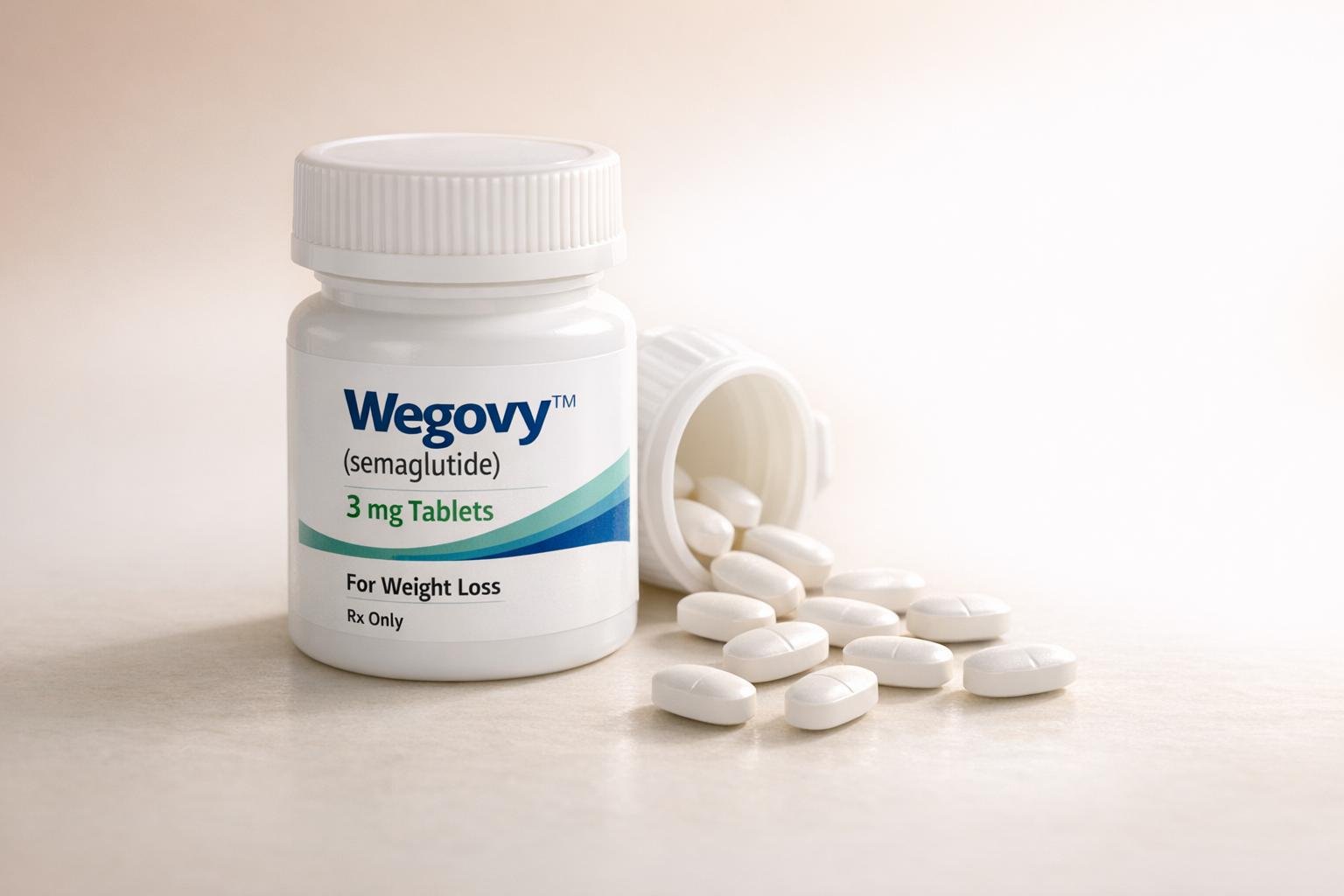
Wegovy, the semaglutide medicine best known as a weekly injection, is now available in tablet form for weight management in several major markets – and the response has been remarkable.
In the United States, where the Wegovy pill launched on January 5, 2026, more than 3 million prescriptions were filled in just over five months. Novo Nordisk said more than 80% of new Wegovy pill prescriptions were for people who had not previously used a GLP-1 medicine, suggesting that the tablet is not simply replacing injections but bringing new patients into the obesity treatment market. The development could mark a major shift in the rapidly expanding GLP-1 market.
What is the Wegovy pill?
The Wegovy pill contains semaglutide, the same active ingredient found in injectable Wegovy and the diabetes medicine Ozempic. But the products should not be confused with one another.
Ozempic is an injectable semaglutide medicine primarily approved for type 2 diabetes while Wegovy is a semaglutide treatment specifically authorized for chronic weight management in eligible patients.
The newer Wegovy tablet is therefore not simply “Ozempic in pill form,” but an oral version of semaglutide specifically developed and authorized for weight management. The U.S. version contains 25 mg of oral semaglutide, while regulators in the UK have authorized the tablet for adults with obesity, or adults who are overweight and have at least one weight related health condition, alongside a reduced calorie diet and increased physical activity.
Notably, the Wegovy pill is part of a much bigger shift in the GLP-1 market, as pharmaceutical companies move beyond the traditional injection model. We look at that wider transition in our article, The Ozempic Era Is Changing: From Injections to Weight-Loss Pills
When did the Wegovy pill become available?
The United States was the first major market to launch the Wegovy pill, with the tablets becoming broadly available on January 5, 2026. Novo Nordisk initially made the medicine available through more than 70,000 U.S. pharmacies, as well as selected telehealth providers and its own pharmacy services.
By April, weekly prescriptions had passed 200,000, while first quarter sales reached approximately DKK 2.26 billion. Novo Nordisk described it as its strongest ever GLP-1 volume launch in the U.S. at that stage.
As if that was not enough, In June the company announced that Wegovy pill prescriptions had surpassed three million.
The figure represented prescriptions filled between its January launch and early June, meaning the tablet reached the milestone in only a little over five months.
Why are people choosing the pill?
The answer may be as simple as the needle. Although injectable Wegovy is taken only once a week, some people are uncomfortable with injections or simply prefer tablets. A daily pill may therefore appeal to people who have been reluctant to start injectable GLP-1 treatment.
The early prescription data is particularly interesting for this reason.
More than 80% of new Wegovy pill prescriptions were for people who were new to GLP-1 treatment, according to Novo Nordisk’s analysis. Meaning, there is a probability the tablet is expanding the market rather than merely taking patients away from injectable Wegovy.
Does the Wegovy pill work for weight loss?
Clinical research suggests that it can.
In the OASIS 4 trial, adults with overweight or obesity who received once-daily oral semaglutide achieved substantial average weight loss over the study period. Novo Nordisk reported an average weight reduction of about 17% when accounting for participants who remained on treatment, with a lower figure when the analysis included treatment discontinuation.
The trial results published in the New England Journal of Medicine also found significant weight loss compared with placebo.
However, clinical trial results are averages – they do not mean every person taking the Wegovy pill will lose 17% of their body weight. Individual results depend on factors including health, adherence, treatment duration, diet, physical activity and how the person’s body responds to the medicine.
How does the Wegovy pill work?
Wegovy belongs to a class of medicines known as GLP-1 receptor agonists. GLP-1 is a hormone naturally produced by the body after eating. Semaglutide mimics some of its effects, including acting on areas of the brain involved in appetite regulation.
The result can be reduced hunger, fewer food cravings and a greater feeling of fullness.
This can help people consume fewer calories and lose weight when the medicine is combined with appropriate diet and physical activity. The UK’s Medicines and Healthcare products Regulatory Agency describes the tablet in similar terms, noting its effects on appetite, hunger and food cravings.
Is the Wegovy pill better than the injection?
Not necessarily – It is all about preference. The tablet is taken once daily, while injectable Wegovy is administered weekly.
Someone who dislikes needles may find a tablet easier while someone who does not want to remember a daily medicine may prefer a weekly injection.
It is also important to avoid comparing weight loss percentages from different clinical trials as though they were direct head to head tests. Different trials can involve different doses, patient groups and study designs.
The appropriate treatment therefore depends on the individual patient and should be decided with a healthcare professional.
What are the side effects of the Wegovy pill?
The tablet does not eliminate the side effects associated with semaglutide. The most commonly reported problems are gastrointestinal and can include:
- nausea
- diarrhoea
- constipation
- vomiting
- abdominal discomfort
The UK regulator lists gastrointestinal disorders among the most common side effects of the Wegovy tablet.
Patients should also understand that Wegovy is a prescription medicine, not an ordinary slimming supplement, whose risks, benefits and suitability need to be assessed by a healthcare professional.
Wegovy pill vs Ozempic: what is the difference?
Both medicines contain semaglutide, but they are not interchangeable simply because they share an active ingredient.
Ozempic is an injectable medicine primarily approved for adults with type 2 diabetes. Wegovy is specifically authorised for chronic weight management in eligible patients.
The new Wegovy pill is an oral formulation of semaglutide designed for weight management. There is also Rybelsus, an oral semaglutide medicine used for type 2 diabetes.
So someone searching for an “Ozempic pill” may actually be referring to one of several different oral semaglutide products.
That distinction matters because the products have different indications, formulations, doses and instructions.
For more on Ozempic, weight loss and the Kenyan market, see our earlier guide: Ozempic in Kenya: Weight Loss, Diabetes Treatment and the Truth Behind the Hype.
The pill is now spreading beyond the U.S.
The United States was the first major market to launch the Wegovy tablet, but it is no longer the only country where regulators have approved it. In June 2026, the UK’s Medicines and Healthcare products Regulatory Agency approved the semaglutide tablet for weight loss and weight management. The approval applies to eligible adults with obesity, as well as some adults who are overweight and have a weight related health condition.
The European Commission followed in July 2026, granting marketing authorisation for Wegovy pill as the first oral GLP-1 medicine approved in the European Union for the treatment of obesity and overweight in eligible adults.
That makes the development considerably bigger than a new American weight loss product.
What does the Wegovy pill mean for the GLP-1 market?
Potentially, a lot. Novo Nordisk’s CEO recently said oral medicines could eventually account for up to half of the GLP-1 market by 2030, reflecting the expectation that patients will increasingly have a choice between tablets and injections.
And Novo Nordisk is not alone in pursuing this market. Eli Lilly is also developing oral obesity treatment, meaning competition among pharmaceutical companies is moving beyond injectable drugs. A competition that could eventually affect prices, availability, treatment options and the way obesity is treated around the world.
What does this mean for Kenya?
This is where Kenyan consumers need to be particularly careful. The fact that Wegovy pills have been approved in the United States, UK and European Union does not automatically mean that the same tablet is approved or available in Kenya. Kenya has its own medicines regulatory system, and patients should confirm the status of a specific product with the Pharmacy and Poisons Board or a licensed healthcare professional before purchasing it.
The move toward easier-to-take GLP-1 medicines also makes safety and regulation increasingly important, particularly as demand grows. Kenya’s health authorities have previously warned against unsupervised Ozempic use and highlighted concerns around counterfeit products. Here is what the Kenyan government warned about Ozempic use.
A person seeing an advertisement for an “Ozempic pill” or “Wegovy tablet” should not assume that the product is genuine, registered or legally authorised for sale in Kenya. The safest approach is to establish the exact product name, verify its regulatory status and obtain prescription medicines through legitimate, regulated channels.
The next battle may be over pills
The rise of the Wegovy tablet marks a new stage in the GLP-1 story.
The first phase was dominated by injectable medicines, and the next phase could involve a much broader choice of tablets, injections and newer drugs.
Also, the early numbers suggest that the pill is not a niche product. Three million U.S. prescriptions in just over five months is a significant launch by any measure, while the fact that most new users had not previously taken a GLP-1 medicine suggests that oral treatment could bring millions more people into the market.
The question is no longer whether GLP-1 medicines can be delivered in a pill, but how quickly these tablets will spread, how affordable they will become and how they will change the global approach to obesity treatment.
The rapid growth of these medicines has also brought increased scrutiny over their safety, side effects and how they are marketed. We previously examined the growing legal storm around Ozempic, including the lawsuits that have placed semaglutide-based medicines under increasing scrutiny.
Frequently Asked Questions
What is the Wegovy pill?
The Wegovy pill is an oral form of semaglutide developed for weight management. It belongs to the GLP-1 class of medicines and is intended for eligible adults with obesity or certain adults who are overweight and have weight-related health conditions.
Is the Wegovy pill the same as Ozempic?
No. Both contain semaglutide, but Ozempic is an injectable medicine primarily used for type 2 diabetes, while Wegovy is authorised for chronic weight management. The Wegovy pill is an oral formulation specifically developed for weight management.
Is the Wegovy pill available now?
Yes, it is already available in the United States and has received regulatory approval in the UK and European Union. Availability varies by country, however, and approval in one market does not automatically mean the product is available elsewhere.
How effective is the Wegovy pill for weight loss?
Clinical research has found substantial average weight loss with oral semaglutide. Results vary between individuals, however, and the medicine is intended to be used alongside dietary and physical-activity measures.
How often do you take the Wegovy pill?
The Wegovy tablet is taken once daily. Patients should follow the instructions provided with their specific prescription and should not change the dose without medical advice.
What are the side effects of the Wegovy pill?
Common side effects include nausea, diarrhoea, constipation and vomiting. Gastrointestinal problems are among the most frequently reported side effects.
Is the Wegovy pill better than Wegovy injections?
Again, it is a matter of preference. The tablet may be more appealing to people who dislike injections, while others may prefer the convenience of a weekly injection. Effectiveness comparisons also need to take clinical trial differences into account.
Is the Wegovy pill available in Kenya?
Its availability in Kenya depends on local regulatory approval and supply. Approval in the United States, UK or European Union does not automatically authorise a medicine for sale in Kenya. Anyone considering oral Wegovy should confirm its Kenyan regulatory status with the Pharmacy and Poisons Board or a qualified healthcare professional.
Is there an Ozempic pill?
Ozempic itself is an injection. There are oral semaglutide medicines, including Rybelsus and the newer Wegovy tablet for weight management. These should not be treated as interchangeable products.
How much does the Wegovy pill cost?
The price varies by country, dose, pharmacy, insurance coverage and treatment programme. In the United States, Novo Nordisk launched the tablet with a self-pay price starting at $149 per month for the introductory 1.5 mg dose, although actual prices can vary depending on the prescription and access programme.
Can I buy Wegovy pills online?
Wegovy is a prescription medicine. Consumers should only obtain it through legitimate, regulated healthcare and pharmacy channels. Regulators have warned businesses against improperly promoting newly authorised or unlicensed weight-management medicines, highlighting the risks associated with the rapidly changing market.
When will Wegovy pills be available in Kenya?
There is no basis for assuming a specific Kenyan launch date until the relevant product has been authorised and supplied locally. Readers should check with the Pharmacy and Poisons Board and licensed healthcare providers for current information rather than relying on social-media advertisements.
Why are weight-loss drugs moving from injections to pills?
The main attraction is choice and convenience. Some people dislike injections or may be more willing to consider treatment if it is available as a tablet. Early U.S. prescription data suggests the Wegovy pill may be expanding the GLP-1 market, with more than 80% of new prescriptions going to people who were new to GLP-1 therapy.