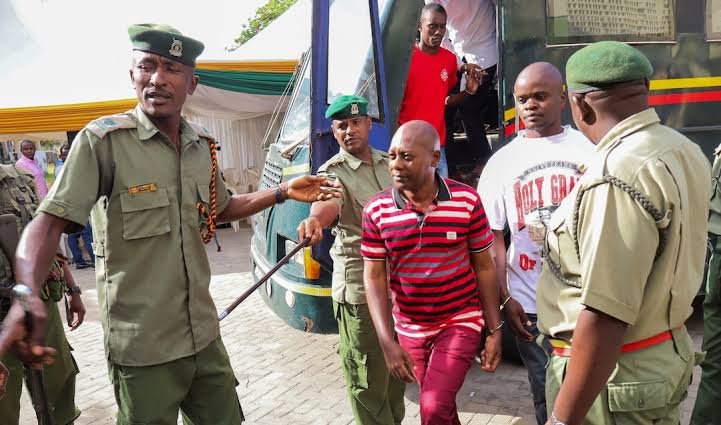
More than three years after the discovery of mass graves in a forest in coastal Kenya exposed one of the country’s most disturbing criminal cases, preacher Paul Mackenzie has been found guilty of murder alongside 28 co accused over the deaths of 190 children and one adult.
The verdict, delivered at the High Court in Mombasa on Monday, October 19, 2026, marks a significant moment in the pursuit of justice for victims of the Shakahola massacre, a tragedy that drew international attention to the dangers of religious extremism and failures in the oversight of religious organisations.
Justice Diana Kavedza found that the accused had participated in a system in which religious teachings were used to direct and enforce fasting that ultimately led to the deaths. The court heard evidence that children were made to go without food, while followers who resisted the instructions or attempted to escape faced coercion and violence.
The 191 murder convictions relate to a portion of the deaths associated with the wider Shakahola tragedy. Authorities have recovered more than 400 bodies from the forest and surrounding areas since investigations began in 2023, with children accounting for a substantial proportion of the victims.
From taxi driver to preacher
Mackenzie, who established the Good News International Church in 2003, began his religious activities in Malindi, a coastal town known for its beaches and tourism industry. Before becoming a preacher, he had worked as a taxi driver.
Over the years, his teachings became increasingly extreme. He preached about the end of the world, discouraged followers from participating in conventional education and portrayed certain institutions, including hospitals, as incompatible with his religious beliefs.
His influence extended beyond the people who attended his church services. Through religious broadcasts, YouTube sermons and other communication channels, Mackenzie reached followers across different parts of Kenya.
In 2012, he registered Good News Media, which he used to broadcast religious content. His online presence helped extend his reach beyond Malindi, drawing people into a belief system built around his interpretation of biblical teachings.
Some of his followers eventually abandoned aspects of ordinary life in pursuit of the religious promises he presented.
Concerns about his activities had emerged years before the Shakahola deaths became public knowledge. In 2017, police searched his compound in Malindi and found dozens of children living there without attending school. Mackenzie was subsequently charged in connection with the provision of education at an unregistered facility.
He continued his religious activities until 2019, when his church premises were shut down. He later relocated his followers to Shakahola Forest, where the events that would bring international scrutiny to his movement unfolded.
The promise of land and the move to Shakahola
Investigations by the Kenya National Commission on Human Rights found that some followers were drawn to the forest by promises of affordable agricultural land. Instead, they entered an isolated settlement where religious instructions and a strict hierarchy increasingly controlled their lives.
The community was organised into settlements, with followers living in rudimentary shelters away from the scrutiny of surrounding communities. According to the findings presented during investigations, Mackenzie’s teachings and the activities of those working under him helped establish and maintain a system of enforced fasting.
The COVID-19 pandemic coincided with an intensification of his apocalyptic messages. Followers were encouraged to prepare for the end of the world through extreme religious practices, including abstaining from food.
The consequences were particularly devastating for children, who depended on adults for food, care and protection. Prosecutors presented evidence that parents were instructed to withhold food from their children, with fasting eventually extending to abstaining from water.
The court considered evidence that the instructions were not simply voluntary religious observances. The system was enforced, and people who resisted were subjected to intimidation and violence.
According to findings by the human rights commission, some followers who attempted to leave or refused to comply were strangled or beaten to death. The prosecution also presented evidence of efforts to conceal the deaths through burials in shallow graves.
One cannot help but wonder, what was the ultimate objective? If the promise was salvation through starvation, what did Mackenzie stand to gain from the deaths of hundreds of his followers? Was he driven entirely by his apocalyptic beliefs, or was there something more behind the movement he built?
There has been speculation on social media about organ harvesting, but, does the evidence support that theory? Your guess is as good as mine. However, investigators did uncover a pattern of financial exploitation. According to the Kenya National Commission on Human Rights, followers were persuaded to sell their possessions and surrender the proceeds to the ministry, leaving some without their savings, livelihoods or identity documents. The commission also reported that Mackenzie intended to be the last to die, ascending to heaven in Malindi after his followers had completed their fast. These findings raise further questions about the relationship between his apocalyptic teachings, the money and property surrendered by followers, and the power he exercised over their lives.
The fasting regime reportedly continued for more than two years, beginning around January 2021, before authorities uncovered what was happening.
How the Shakahola massacre came to light
In April 2023, police began investigating reports of missing people and possible deaths in Shakahola Forest, an area near Malindi in Kilifi County. What investigators found would expose the scale of the tragedy.
Officers discovered emaciated survivors and shallow graves scattered across the area. As the investigation expanded, forensic teams began exhuming bodies from individual graves and mass burial sites.
The discoveries continued over subsequent weeks and months, revealing hundreds of deaths. Many of the victims were children, while others were adults who had followed Mackenzie’s teachings.
Starvation was identified as a cause of death in many cases. However, postmortem examinations also revealed evidence of other forms of violence, including strangulation, suffocation and head injuries. In some cases, decomposition made it impossible to establish the precise cause of death.
This, in a nutshell, is one of the biggest serial killing syndicates we’ve witnessed not just in Africa, but the whole world.
The scale of the discoveries prompted a nationwide debate about religious freedom, the regulation of churches and the responsibility of state agencies to protect vulnerable people.
Mackenzie was arrested in connection with the deaths, and several other people associated with the movement were also charged. He denied the murder charges, saying he did not force the victims to starve, but the court rejected that argument.
The prosecution subsequently presented a case alleging that the deaths resulted from an organised system rather than a series of unrelated personal decisions to fast.
A court examines the role of religious teachings
The murder trial examined how Mackenzie’s teachings were communicated to followers and how the fasting regime was maintained.
Prosecutors called witnesses and presented evidence concerning the organisation’s hierarchy, the instructions given to followers and the circumstances surrounding the deaths. Some former followers also became witnesses for the prosecution.
The court’s findings placed particular emphasis on the deaths of children, who could not be treated as adults making independent decisions about their own lives. Their dependence on parents and other adults, together with the influence of religious authority, fear and coercion, formed part of the evidence considered by the court.
The prosecution argued that religious teachings had been used to direct followers towards their deaths and that those responsible continued the practice despite its fatal consequences.
The convictions are significant because they distinguish the exercise of religious belief from conduct that results in criminal responsibility. Religious explanations, the court found, could not by themselves excuse unlawful acts or remove the requirement to examine the intentions and actions of those involved.
Questions over the authorities’ response
The Shakahola tragedy has also raised difficult questions about whether earlier intervention could have prevented the deaths.
The Kenya National Commission on Human Rights criticised failures in the investigation and prosecution processes, noting that Mackenzie’s earlier arrest in 2017 should have prompted more effective scrutiny of his activities.
The commission argued that a more thorough response at the time could have helped save lives.
The case has intensified calls for more effective oversight of religious organisations, particularly where leaders exercise extensive control over followers and discourage access to education, medical treatment or other sources of outside assistance.
At the same time, the events have highlighted the difficulty of identifying dangerous practices before they develop into large scale abuse. Religious freedom is protected, but it does not place individuals or organisations beyond the reach of the law.
The challenge for authorities is to respond to credible warning signs without treating legitimate religious practice itself as a criminal act.
The case is not over
The murder convictions are a major development, but they do not account for every death associated with the wider Shakahola tragedy.
Mackenzie also faces separate proceedings linked to other alleged offences, including manslaughter, child torture and terrorism related charges. Prosecutors have connected him to another group of deaths discovered at Kwa Binzaro, where additional bodies were exhumed while he was already in detention. He has denied the allegations in the separate cases.
The murder case has therefore resolved only part of the wider legal proceedings arising from the deaths.
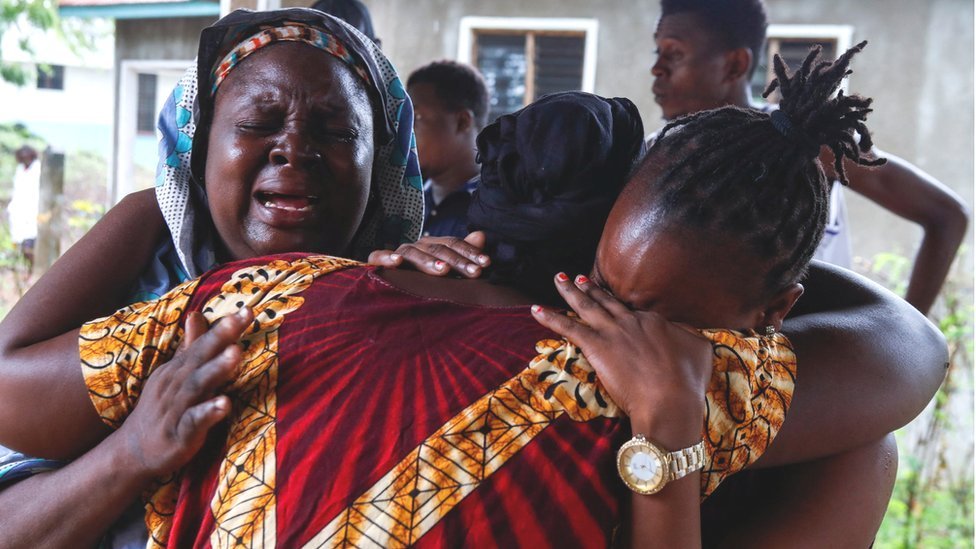
For families who lost children and other relatives, the convictions represent an important step towards accountability after years of investigations and court proceedings. They do not, however, undo the loss or answer every question about how the movement operated for so long.
The Shakahola massacre remains a stark reminder of what can happen when vulnerable people become isolated from outside support and religious authority is used to demand unquestioning obedience.
While the verdict has delivered a measure of justice, the wider task of understanding how the tragedy was allowed to unfold and preventing a similar disaster, remains.