What began as a dispute over pay, working conditions and the implementation of a Collective Bargaining Agreement is increasingly becoming a public healthcare crisis.
The nationwide nurses’ strike began on July 29 after the Kenya National Union of Nurses and Midwives (KNUNM) and the government failed to resolve outstanding issues, including the implementation of the 2017 Collective Bargaining Agreement (CBA), career progression and other employment concerns.
More than five weeks later, there seems to be an impasse.
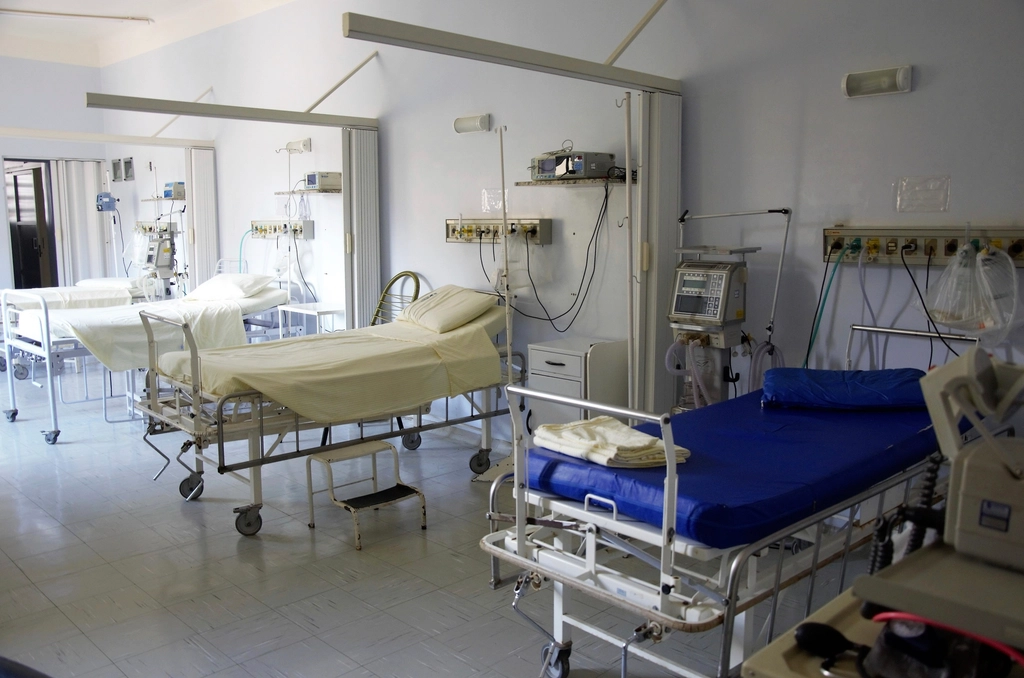
As it stands, public hospitals are operating with reduced nursing capacity, some patients are being turned away or referred elsewhere, maternity services are under strain and health professionals are warning that the longer the dispute continues, the greater the risk to patients.
The Kenya National Commission on Human Rights (KNCHR) said on September 5 that the situation had escalated from a labour dispute into a national public health and human rights crisis.
“The situation requires urgent action to prevent any further loss of life,” the Commission said, while calling for an independent verification of reported deaths during the strike.
What Is Keeping the Nurses on Strike?
At the centre of the dispute is the implementation of the 2017 CBA, alongside career progression guidelines and other outstanding grievances.
Before the strike began, KNUNM had also raised concerns over the employment terms of health workers recruited under the Universal Health Coverage programme and other workforce related issues. The union has maintained that the CBA remains the biggest obstacle to ending the strike.
When nurses demonstrated at the Salaries and Remuneration Commission (SRC) offices in Nairobi earlier this week, KNUNM Secretary General Seth Panyako said the strike would continue until the union’s demands were addressed.

“The nurses’ strike that commenced on 29th July is still on; it is still very active and energised and will go on until our demands are met,” Panyako said.
The dispute has involved the nurses’ union, the Council of Governors, the SRC and the national government, with various rounds of negotiations taking place without producing a final agreement.
The Council of Governors has called on nurses to return to work, while the union has insisted that returning without a resolution to the outstanding grievances is not an option.
The result is a stalemate whose impact is becoming increasingly visible in public hospitals.
At Mbagathi Hospital in Nairobi, patient numbers have reportedly fallen from about 1,000 a day under normal operations to fewer than 500, with health workers saying patients are staying away because they know services have been disrupted.
The hospital would normally deliver about 30 babies a day. That figure has fallen to roughly 20, while admissions have been restricted as the facility attempts to cope with limited nursing staff.
Some hospitals have brought in locum nurses to keep essential services operating, but health officials acknowledge that locums cannot completely replace the normal workforce.
The situation is also creating pressure elsewhere in the system where patients who would ordinarily receive treatment at county hospitals are being referred to larger facilities, including Kenyatta National Hospital. But referral hospitals have limited capacity of their own.
This creates a chain reaction: when a lower-level hospital cannot admit a patient, the patient moves to a higher level facility. When that facility reaches capacity, patients and their families are left searching for alternatives.
The consequences are particularly serious for patients who require continuous or specialised care, including dialysis, intensive care, maternity services and neonatal treatment.
The KNCHR has called for an emergency response to guarantee continuity of essential services, specifically highlighting maternity, neonatal, intensive care, dialysis, oncology, trauma, ambulance and referral services.
The Human Cost Is Becoming Harder to Ignore
Perhaps nowhere is the impact more worrying than in maternity and newborn care. On September 5, the KNCHR said it had taken note of reports of 79 deaths between August 31 and September 2.
The reported deaths comprised eight maternal deaths, 16 neonatal deaths and 55 perinatal deaths. Importantly, the Commission has not said that all 79 deaths were caused by the nurses’ strike7.
Instead, it has called for the Kenya Medical Practitioners and Dentists Council, the Ministry of Health and county health authorities to independently verify the deaths and determine the circumstances surrounding them.
Health professionals have nevertheless warned that the disruption of public health services is putting mothers, newborns and other vulnerable patients at greater risk.
Figures presented by health professional associations have also indicated 83 maternal deaths and 513 perinatal deaths during the period of the strike, although the organisations acknowledged that the figures may not capture the full extent of the disruption.
One of the problems is that fewer women are reaching health facilities to give birth.
Midwives have reported that some women are returning to their communities or seeking alternative forms of assistance because they are unable to access normal maternity services.
That creates a dangerous blind spot because while a woman who gives birth safely in a hospital can be counted, a woman who never reaches one because she expects to be turned away is much harder to track.
And a woman who develops complications while giving birth outside a properly equipped facility may only appear in the statistics after it is too late.
The numbers become easier to understand when viewed through individual experiences.
The Standard recently reported the case of a woman who arrived at Mbagathi Hospital ready to give birth but faced delays before being admitted. Another woman, Christine Naro, reportedly delivered in a waiting area after arriving as an emergency referral.
At Pumwani Maternity Hospital, pregnant women have reportedly been staying around the facility waiting until their labour becomes advanced enough to be admitted as emergencies.
The situation is not simply about inconvenience. For a family with money, a disrupted public hospital may mean finding a private facility. However, for a family living from one income to the next, it can mean borrowing money, travelling to another county or delaying treatment altogether.
Kenya’s Healthcare System Was Already Under Pressure
The nurses’ strike did not begin in a healthcare system operating without problems.
Kenya is still dealing with wider questions around the financing and management of healthcare under the Social Health Authority (SHA).
As we previously reported, private and faith-based hospitals have raised concerns over delayed reimbursements, unexplained deductions and disputes over the amounts owed by SHA.
Those financial pressures and the current workforce dispute are different problems, but they point to the same underlying challenge: Kenya’s health system needs hospitals, healthcare workers and government agencies to function together.
When one part breaks down, patients feel the consequences and when several problems occur at the same time, the pressure becomes much harder to absorb.
Kenya is also attempting to expand access to healthcare through SHA while dealing with continuing questions over the cost and accessibility of treatment.
The nurses’ strike therefore raises a bigger question than whether the government or the union will win the current CBA dispute.
The Nurses Have Rights. But what About the Patients?
Nurses have a right to fair labour practices, fair remuneration, safe working conditions and collective bargaining. The KNCHR has explicitly recognised these rights and called on the government to honour collective bargaining agreements with nurses and other health workers.
But patients also have rights. A right to healthcare, emergency medical treatment, dignity and life.
The government therefore faces two responsibilities: address the grievances that have kept nurses away from work while ensuring that essential and emergency services remain available to patients.
The KNCHR has called for structured, good faith negotiations involving the Ministry of Labour, the Ministry of Health, the Council of Governors, SRC and KNUNM, with a time bound resolution to the dispute.
On September 5, reports emerged of 11 deaths at Nakuru Level Five Hospital within 24 hours, including three neonates, five adults and three children. The reports also indicated that post Caesarean and postnatal wards had been combined because the available locum nurses were struggling to cope with the workload.
These reports require proper investigation, just as the KNCHR has demanded. But they also demonstrate why this dispute can no longer be treated simply as another disagreement between a union and government.
Neither the nurses nor the government officials are sitting at the negotiating table alone. The people waiting outside maternity wards, the families looking for another hospital and the patients whose treatment cannot simply be postponed are also part of this story – even though they have no seat at the table.