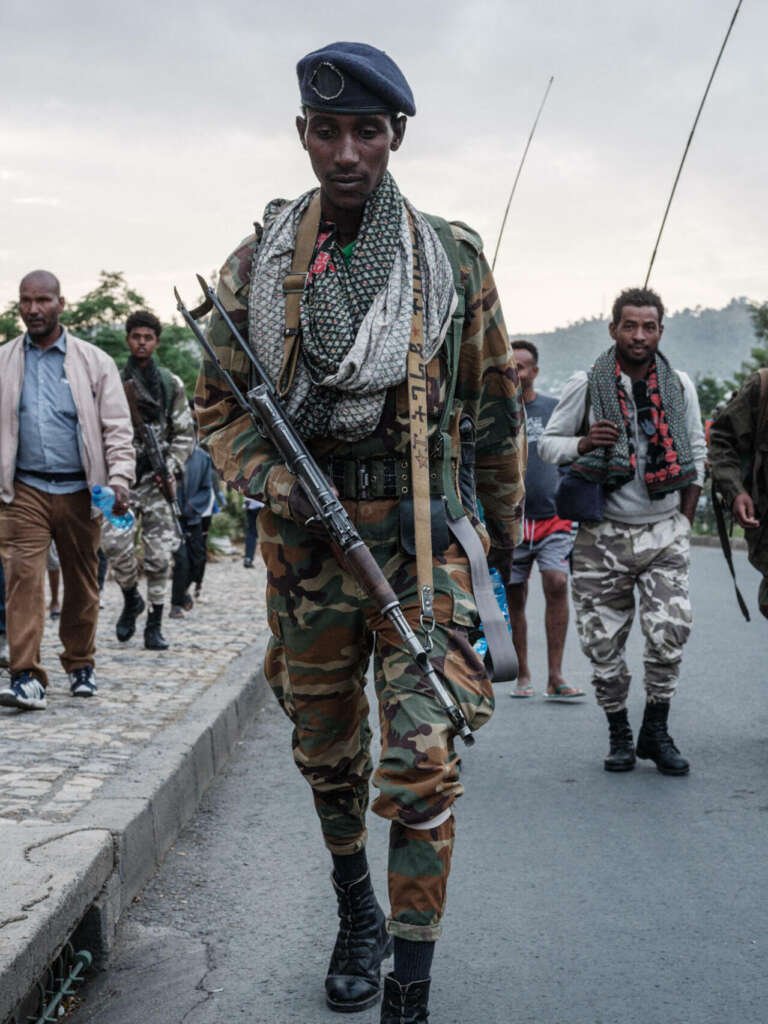
Something is happening in Ethiopia that should concern the entire Horn of Africa. Four years after a peace agreement brought an end to the devastating Tigray war, fighting has returned to northern Ethiopia. This time, however, some of the people now fighting alongside one another were enemies in the last war.
Seven armed groups have formed an alliance against Prime Minister Abiy Ahmed’s government, bringing together the Tigray People’s Liberation Front, or TPLF, the Amhara Fano National Movement and the Oromo Liberation Army, among others. Their stated objective is to remove Abiy’s government and establish a transitional administration – a remarkable development when you consider who these groups are.
The TPLF and Amhara forces were on opposite sides of the 2020 to 2022 Tigray war. Amhara forces fought alongside Ethiopia’s federal army against the TPLF. Now, they are part of the same anti-government alliance.
The alliance does not mean these groups have suddenly settled their old differences. They have different political ambitions, territorial disputes and grievances against one another. Their common ground, for now, is their opposition to Abiy’s government.
If you need a simple way to understand what is happening in Ethiopia, look at it this way: several conflicts that have been simmering separately are beginning to connect.
The immediate fighting is centred on Tigray, Ethiopia’s northernmost region, where Tigrayan forces have gone back to fighting federal troops. The latest escalation began around September 22 and quickly spread into neighbouring Amhara and Afar regions.
Tigrayan forces seized several strategic positions, including airports, while federal forces and their allies launched a counteroffensive. The Ethiopian government and the TPLF blame each other for starting the latest round of fighting. Tigrayan leaders say they are responding to attacks by federal forces, including drone strikes and heavy weapons. The government says the TPLF and its allies launched the offensive. Battlefield claims from both sides remain difficult to independently verify.
By September 28, government forces and allied fighters said they had captured Alamata, a strategically important town south of Mekelle, the capital of Tigray. Video verified by Reuters showed soldiers in the town. Alamata matters because it sits near the border with Amhara and is an important supply route for troops, food and fuel. Its capture could give federal forces a route towards Mekelle.
The fighting has also reached Afar, which is where this becomes much bigger than a dispute over Tigray.
Afar sits along the route connecting Ethiopia to Djibouti. Ethiopia is landlocked and depends heavily on Djibouti for access to the sea and for imports, including fuel. Any prolonged fighting around those routes could therefore have consequences for Ethiopia far beyond the battlefield.
For ordinary Ethiopians, meanwhile, the return of fighting is bringing back memories of the last war. The Tigray conflict that began in 2020 became one of the world’s deadliest recent wars. The African Union’s former mediator, Olusegun Obasanjo, estimated that about 600,000 people died from fighting, famine and the collapse of healthcare. Millions were displaced.
The November 2022 Pretoria peace agreement stopped the large scale fighting but did not settle everything. One of the biggest unresolved issues has been western Tigray, territory claimed by both Tigray and Amhara. Amhara forces took control of parts of western Tigray during the previous war, displacing large numbers of Tigrayans. Tigrayan leaders have continued to demand the return of the territory and the return of those who were displaced. Many Amhara reject Tigray’s claim to the land.
There were also unresolved questions over the political future of Tigray, the status of its forces and the implementation of the peace agreement.
The result was a peace that stopped the shooting without necessarily resolving the arguments that had produced it.
Now the shooting has started again, and there is another country watching this very closely: Eritrea.
Ethiopia and Eritrea were once bitter enemies. During the Tigray war, Eritrean forces fought alongside Ethiopian government troops against the TPLF, but their relationship with Abiy’s government has since deteriorated.
Speaking of Eritrea, there is another curious piece to the timing. Just days before the latest fighting erupted, Washington allowed sanctions imposed on Eritrea during the previous Tigray war to expire. The United States said the move was part of a shift in policy aimed at advancing its regional interests, particularly around the strategically important Red Sea and Eritrea, ofcourse, welcomed the decision.
That does not mean the United States caused the renewed fighting, and there is no evidence that lifting the sanctions was intended to give Eritrea room to intervene in Ethiopia. But the timing is difficult to ignore. Ethiopia’s relations with Eritrea have deteriorated sharply, and Ethiopia’s army chief has now accused Eritrea of supporting Tigrayan forces in the renewed conflict, an allegation Asmara denies.
Ethiopia has also made accusations involving Sudan and Egypt, both of which have rejected claims of involvement. These allegations have not been independently established.
Ethiopia is one of the most important countries in the Horn of Africa. It borders Eritrea, Sudan, South Sudan, Kenya, Somalia and Djibouti. It is also a country where several armed conflicts have existed at the same time.
The Oromo Liberation Army has been fighting the federal government in Oromia for years. The Amhara Fano movement has also been in conflict with the government. Tigray has its own unresolved confrontation with Addis Ababa.
While for years these conflicts have largely been treated as separate problems, the new alliance creates the possibility that they could begin working together against the same government.
That does not necessarily mean Ethiopia is returning to the exact war it fought between 2020 and 2022. The new alliance itself faces serious contradictions, particularly over territory and political power. Whether seven armed groups with different interests can actually coordinate a sustained military campaign remains an open question.
But the fact that they have come together at all tells us something about how serious the political breakdown has become, and the humanitarian consequences are already visible.
Médecins Sans Frontières has reported a sharp increase in war wounded patients in hospitals across northern Ethiopia. At hospitals in Korem and Alamata, the number of wounded patients reportedly rose from around 180 to more than 420 within 48 hours. Communications have also been disrupted in parts of Tigray, reviving memories of the information and humanitarian blackout during the previous war.
So, is Ethiopia heading back into another civil war?
Nobody can say that yet, but we can say with certainty that the peace agreement that ended the last war is under its most serious strain since it was signed. The TPLF is fighting federal forces again, former enemies have formed an alliance against Abiy and fghting has spread across Tigray, Amhara and Afar. Ethiopia’s deteriorating relationship with Eritrea also adds another potentially dangerous layer.
The nightmare scenario apart from another war in Tigray is the possibility that Ethiopia’s separate conflicts begin feeding into one another, pulling in neighbouring countries and creating a much wider crisis in the Horn of Africa.
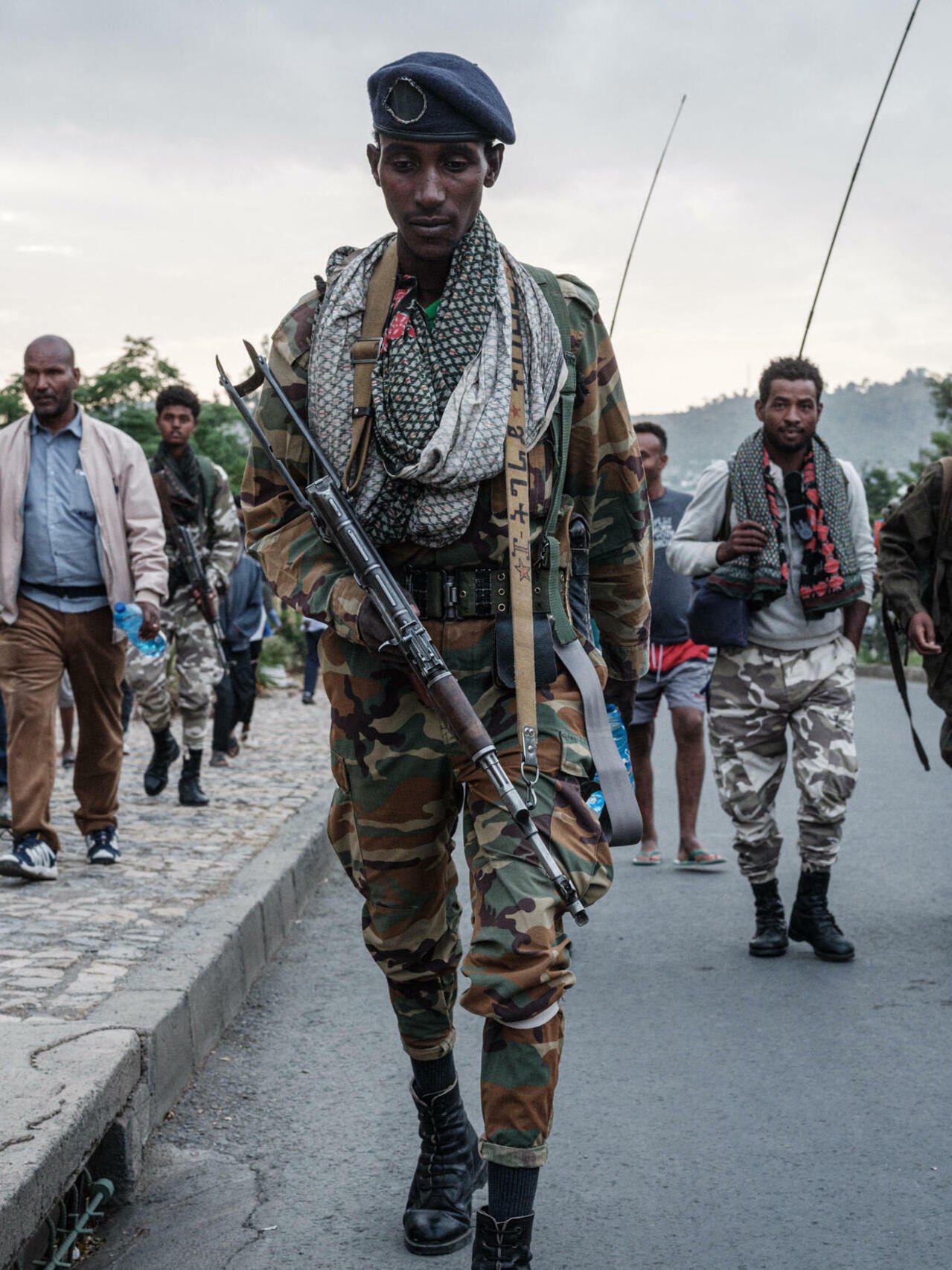
Whatever happens, there is something very frustrating about watching Ethiopia slide back towards a conflict that many had hoped was behind it. For all its political troubles, Ethiopia had spent the past decade building a very different kind of story about itself: new roads and railways, a rapidly expanding capital, major investment in aviation and manufacturing, ambitious industrial projects and a growing reputation as one of Africa’s countries with the capacity to think beyond the immediate.
Even in Kenya, where we are often quick to measure ourselves against our neighbours, there was a growing sense that Ethiopia was doing things worth paying attention to, and perhaps even a little envy. To see that momentum threatened by the return of guns is therefore frustrating not just for Ethiopians but for a continent that badly needs examples of countries turning their enormous potential into sustained development. Every war does more than destroy what has already been built. It consumes money, talent, infrastructure and years that could have been spent building something better.