There was a time when buying a mid range smartphone came with the understanding that it would serve you well for a few years, and then you would probably start thinking about replacing it.
And it wasn’t even about the phone not working after a while, but because the software was no longer getting updated. Sometimes newer apps became too demanding, or the battery had simply had enough. And sometimes, well, the phone just started feeling old.
Samsung is now making that idea a little harder to defend with the Galaxy A57 5G.
The new A-series phone comes with something that would have sounded surprisingly ambitious for a mid range smartphone not too long ago: Samsung promises up to six generations of Android OS and One UI upgrades, alongside up to six years of security updates.
You know, six years is a long time in the smartphone world.
So the more interesting question about the Galaxy A57 is not simply what is inside but whether long term software support is changing what we should expect from a mid-range phone in the first place.
A mid-range phone is no longer necessarily a short-term phone
For years, the smartphone conversation has been dominated by processors, cameras, screen refresh rates and how quickly a phone can charge.
All of those things matter, but there is another part of a phone’s value that is much easier to overlook: how long the manufacturer intends to keep supporting it.
A phone can still have perfectly usable hardware years after you bought it. But if it stops receiving security patches or major software updates, its usefulness can gradually become limited.
That is where the Galaxy A57’s six-year promise becomes interesting. Samsung says the A57 can receive up to six generations of Android and One UI upgrades and up to six years of security updates from the initial global launch date, although the availability and timing of updates can vary depending on the device model and market.
Notably, six years of security support does not mean you are guaranteed six major Android upgrades every year. Samsung’s wording is up to six generations of OS and One UI upgrades, alongside up to six years of security updates.
But even with that qualification, it’s clear that Samsung is designing the A57 to remain relevant for considerably longer than the traditional smartphone upgrade cycle.
It is worth remembering also that a phone can have years of software support ahead of it, but that only matters if the hardware can make it that far. Screens crack, batteries deteriorate and charging ports can eventually give up. That makes access to reasonably priced repairs just as important to the idea of keeping a phone for longer. Samsung has also been expanding access to more affordable repairs for Galaxy users across East Africa, making the question of smartphone longevity bigger than software updates alone.
So, what does that mean for the person buying one?
For someone who changes phones every year, perhaps not very much. But for someone who keeps a phone until it genuinely needs replacing, the calculation starts to look different.
Imagine buying a phone and knowing that several years down the line, you are still expected to receive security updates and new versions of the software. You are not necessarily being pushed into upgrading simply because the manufacturer has moved on to another generation.
That could matter particularly for people who use their phones for everything: banking, work, school, communication, photographs, shopping and accessing increasingly important digital services.
The A57 also combines that long software commitment with hardware features designed for longevity, including an IP68 rating for water and dust resistance and Corning Gorilla Glass Victus+ protection. Samsung says the phone is built with durability and long term use in mind.
And that brings us to the bigger issue.
Is “mid-range” becoming an outdated description?
The phrase mid-range phone used to tell you quite a lot because it generally meant you were getting something between an entry level device and a flagship. You could expect good performance and a decent camera, but there were certain compromises. And the assumption was often that people buying these phones were more price conscious and therefore more likely to upgrade based on value.
But smartphone manufacturers are increasingly putting features that were once associated with premium devices into cheaper ranges.
The Galaxy A57, for example, has a 120Hz display, 5G, IP68 protection, a 50MP main camera with optical image stabilisation and Samsung’s newer AI-powered features. It also gets the long software-support commitment that Samsung has traditionally used as an important part of its premium-device proposition.
That does not make the A57 a flagship. It is still part of Samsung’s Galaxy A series.
But perhaps the more useful way to think about mid range phones is changing. Instead of asking, “What did Samsung leave out to make this cheaper?”, consumers can increasingly ask, “How much useful life am I getting for my money?”
And this is where the A57 gets interesting
Samsung has already made a big push to bring useful AI and creator tools further down its smartphone range.
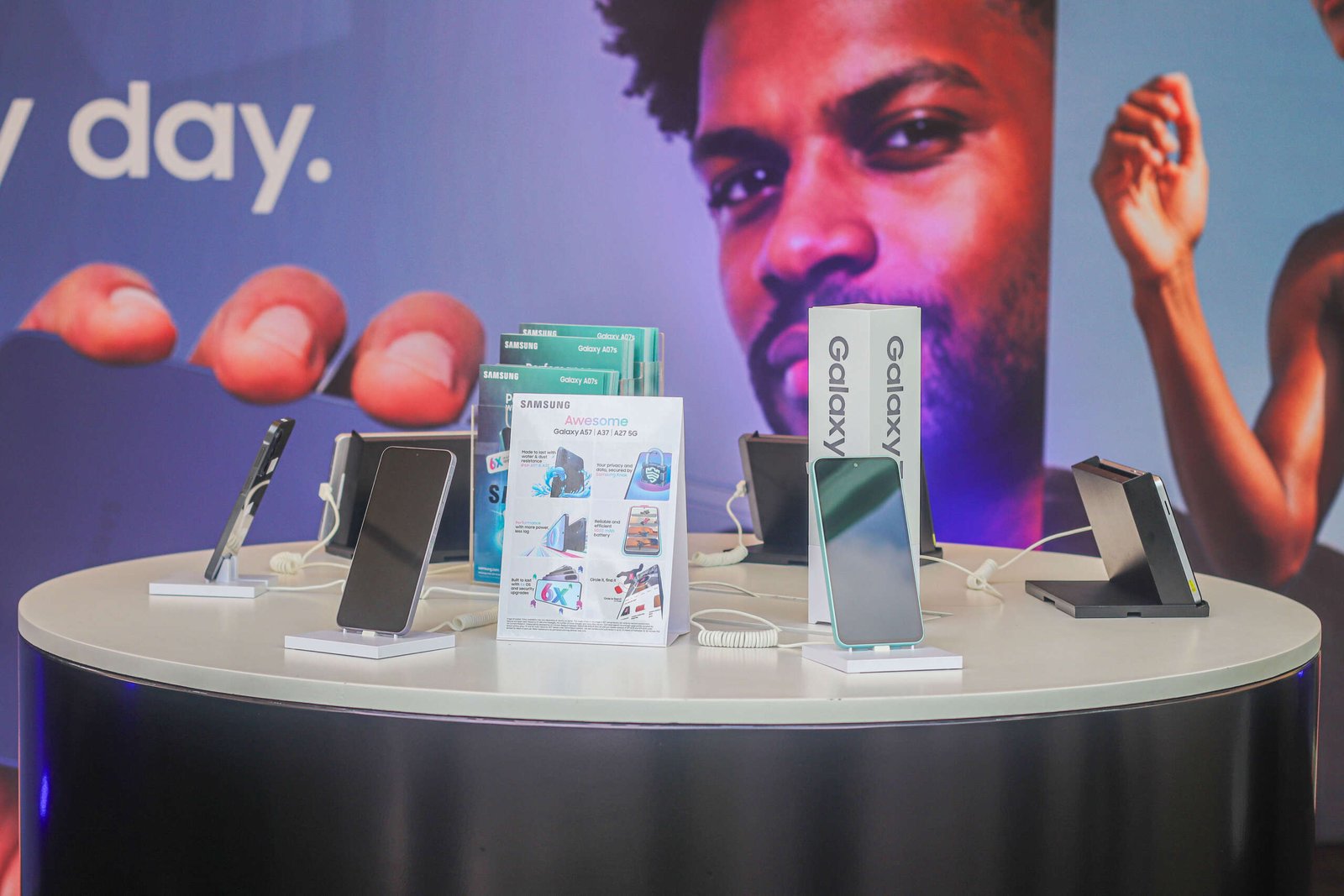
For the Galaxy A27 and A37, that story is particularly interesting for people who create content, run businesses or simply want more capable tools without moving into flagship territory.
The A57 gives us a slightly different conversation. It is not just about what you can do with the phone today. It is about whether the phone can continue doing it years from now – arguably one of the more important changes happening in smartphones. A phone that lasts six years on paper is one thing, but phone that remains secure and enjoyable to use for six years is another.
The bigger value question
So, the financial argument here is that a phone that costs more upfront but stays supported for longer can look different when you spread that cost across several years.
And arguably, someone who wants the latest processor, camera system or flagship feature every year will have different priorities. However, for people who would rather buy a phone and keep it until they have a genuine reason to replace it, long term support becomes part of the value proposition.
And perhaps that is where Samsung’s A57 is quietly challenging the old idea of a mid-range phone. The competition is no longer only about who can squeeze the most specifications into a certain price bracket. It is increasingly about how long those specifications remain useful.
That is a conversation Samsung’s flagship phones have been having for some time. The Galaxy S26 FE, for example, sits in an interesting space of its own, bringing several premium Galaxy experiences to a more accessible part of Samsung’s range.
The A57 asks whether longevity itself can become one of the reasons to choose a phone. Even the wider Galaxy ecosystem is moving in this direction, with devices such as the Galaxy Watch 9 sitting alongside smartphones that are increasingly expected to receive meaningful software support over several years.
Ultimately, Samsung’s promise is just that: a promise of support. Whether a Galaxy A57 bought today still feels like a good phone several years from now will depend on how well its hardware ages, how useful future software remains on it and how consistently those updates arrive for users in different markets.
But the direction is significant.
The mid range smartphone is no longer necessarily something you buy simply because you cannot justify a flagship.
It can be a deliberate choice: spend less than you would on a premium phone, get the features you actually need and keep the device for longer.
If that idea catches on, perhaps the question we ask when buying a mid-range phone will change from “How good is this phone compared with a flagship?” to “How long can I realistically keep this?”
And with six generations of OS and One UI upgrades and up to six years of security updates, Samsung is clearly betting that the answer for the Galaxy A57 can be a lot longer than we have traditionally expected from a mid range phone.