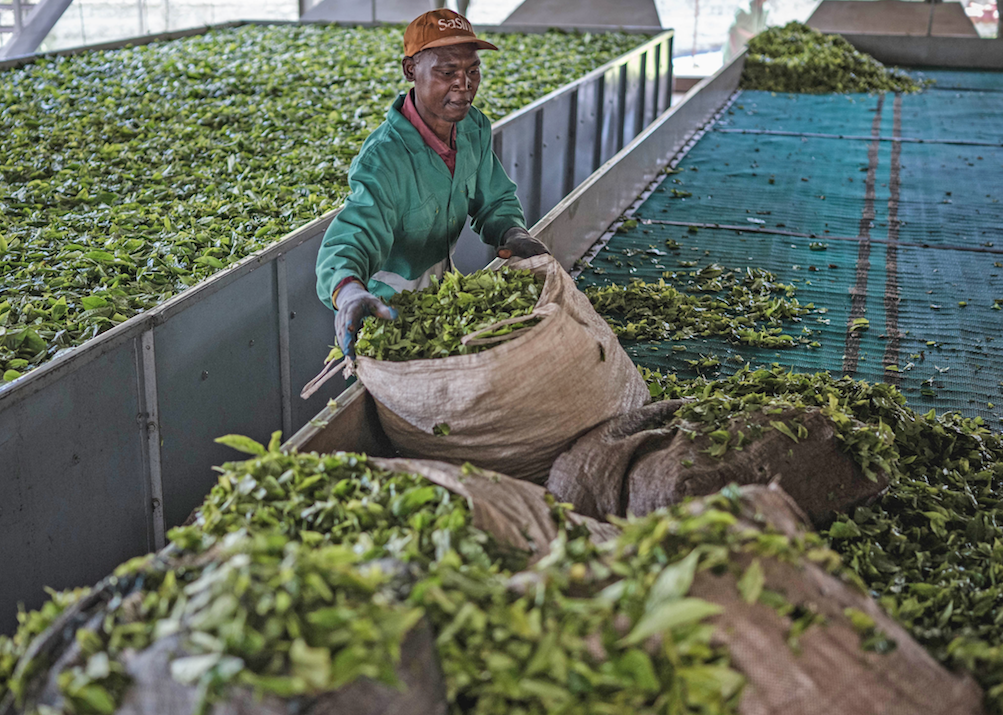
October has, for decades, been one of the most anticipated moments on the agricultural calendar for tea farmers across Kenya. The annual second payment, popularly known as the tea bonus, is supposed to reward farmers for a year’s worth of (for lack of a better word) hard labour.
But the excitement that once surrounded bonus season has increasingly given way to anger and difficult questions. For some farmers, the money that once paid school fees, financed home improvements and supported entire households has dwindled to a fraction of what they remember earning. Others are now wondering whether continuing to grow tea makes financial sense at all.
The latest figures have done little to calm those concerns. For the 2025/2026 financial year, factory level bonus declarations ranged from KSh 12.50 per kilogramme of green leaf at Kaptumo Tea Factory in Nandi County to KSh 50 at Rukuriri Tea Factory in Embu County. Meanwhile, farmers in Kisii and Nyamira have challenged the payment differences, with the dispute escalating into legal proceedings.
After last year’s If tea is Kenya’s pride, why are its farmers in poverty? it’s alarming that we are back again, at the same situation, if not worse. Why do farmers supplying different factories receive such dramatically different returns for growing the same crop? And with coffee earnings improving, should tea farmers start considering alternatives?
What happened to the tea bonus?
There was a time when tea farming was considered a reliable route to financial stability for many smallholder households. The annual second payment was money that families planned around, often using it to settle debts, pay school fees, buy livestock or invest in their homes.
The bonus was never guaranteed to be the same every year, but its importance to household finances was difficult to ignore. For some farmers, the monthly tea payments helped cover day to day expenses while the second payment provided the larger sum they had been waiting for.
Today, that expectation has become less dependable. Farmers are contending with rising production costs, including fertiliser, labour, transport and other farm inputs. When the final payment comes in lower than expected, the problem then becomes the gap between what it costs to maintain the farm and what the farm actually earns.
Are farmers running losses?
The latest declarations illustrate the problem. While Rukuriri announced KSh 50 per kilogramme, Kaptumo declared KSh 12.50. Kanyenyaini in Murang’a paid KSh 30, down from KSh 33.50 in the previous financial year and KSh 51(!) in 2023/2024. From 51 to 33 is sheer madness, at a time when living standards have sky rocketed. Rent is up, school fees are twice or even thrice what they used to be. A packet of milk is now going for 100, up from ksh 50 in 2023. But, ohh well, salaries (tea bonus) should dip. I mean, it’s just farmers, right?
These figures should not be mistaken for monthly tea payments. They refer to the annual second payment, which is calculated separately and varies according to the performance of individual factories. But before concluding that one region is being favoured over another, maybe let us take a look at how the system works.
Why do tea factories pay different bonuses?
Kenya’s smallholder tea industry does not operate on one uniform bonus rate. Factories sell their processed tea into the market and distribute the available revenue between operating expenses and payments to growers. The amount remaining for farmers depends on the revenue earned and the costs incurred.
According to the Kenya Tea Development Agency (KTDA), tea from different factories can fetch different prices depending on buyer preferences, quality, soil, altitude, climate and rainfall. Factory efficiency also matters. Expenses such as electricity, fuel, labour, transport, administration and loan repayments can affect how much money remains available for farmers.
In simple terms, two factories can receive similar quantities of green leaf but earn different amounts from selling their processed tea. One may fetch better prices or operate more efficiently, leaving more money for its growers. Another may face weaker prices, higher costs or outstanding financial obligations that reduce the amount available for distribution.
KTDA has previously attributed differences in factory payments to market forces, tea quality and regional dynamics. It has also argued that each factory operates its own accounts, meaning that its revenue and expenditure influence the final payment.
Speaking of quality, some farmers are already familiar with strict quality control at the factory gates. A farmer can arrive with a full basket of freshly plucked tea only to have almost half of it rejected as unsuitable. The farmer must then sort through the leaves, separating what the factory considers good quality from what does not meet its standards. In other words, quality control is not merely a policy on paper; farmers experience it firsthand, and rejected leaves mean additional work and potentially less income.
So the quality of the final product is good enough, but why does this effort not appear to translate into better returns? If farmers are being required to meet strict quality standards, there should be greater transparency about how that quality affects the price their tea fetches at auction and, ultimately, their second payment.
Are factories consistently rewarding better-quality leaf with better returns, or are farmers bearing the cost of quality control without seeing a meaningful financial benefit? That is a question KTDA and the relevant factory management teams need to answer.
It all boils down to the need for transparency. Farmers should be able to understand how their factory’s earnings were calculated, what it spent, how much was paid out and why its final rate differs from that of another factory.
Tea bonus 2025/2026: What did factories in different regions pay?
The latest declarations reveal considerable differences across Kenya’s tea growing regions. The following tables bring together reported factory rates for Kisii and Nyamira, the Rift Valley, and Central and eastern Kenya.
These are factory level rates reported for the 2025/2026 financial year, not county averages. The rates also should not be interpreted as the total annual income farmers received from tea, since monthly green leaf payments are separate.
1. Kisii and Nyamira tea factories
| Tea factory | 2025/2026 second payment per kg |
|---|---|
| Nyankoba | KSh 30.00 |
| Kebirigo | KSh 19.00 |
| Sanganyi | KSh 18.00 |
| Gianchore | KSh 18.00 |
| Nyansiongo | KSh 18.00 |
| Nyamache | KSh 16.00 |
| Tombe | KSh 16.00 |
| Kiamokama | KSh 15.00 |
| Ogembo | KSh 14.00 |
Source: Education News Hub’s compilation of reported 2026 tea bonus rates for Kisii and Nyamira.
The figures show that even within Kisii and Nyamira, the bonus is not uniform. Nyankoba’s reported rate of KSh 30 per kilogramme is more than twice Ogembo’s KSh 14. What accounts for the differences between factories serving farmers in the same broad tea growing region?
2. Rift Valley tea factories
| Tea factory | 2025/2026 second payment per kg |
|---|---|
| Momul | KSh 40.50 |
| Toror | KSh 19.00 |
| Litein | KSh 18.00 |
| Kapkoros | KSh 17.00 |
| Kapset | KSh 16.00 |
| Rorok | KSh 16.00 |
| Mogogosiek | KSh 16.00 |
| Boito | KSh 16.00 |
| Kobel | KSh 16.00 |
| Chebut | KSh 12.50 |
| Kaptumo | KSh 12.50 |
Source: Reported factory declarations carried by The Standard and the Daily Nation.
The Rift Valley figures tell a complicated story. Momul’s reported KSh 40.50 per kilogramme is substantially higher than the KSh 12.50 declared at Chebut and Kaptumo.
The region has seen strong dissatisfaction over low bonuses, particularly among growers in Nandi, Kericho and neighbouring tea growing counties. Farmers have pointed to rising fertiliser, labour and transport costs, arguing that the returns no longer justify the effort required to maintain their farms.
The gap between Momul and Kaptumo also makes it necessary to investigate what is happening at factory level. How much do the factories earn from selling their tea? What are their operating costs? How do their production volumes and market prices compare? Does this boil down to management issues?
3. Central and eastern tea growing factories
| Tea factory | 2025/2026 second payment per kg |
|---|---|
| Rukuriri | KSh 50.00 |
| Ngere | KSh 48.00 |
| Gathuthi | KSh 47.50 |
| Njunu | KSh 45.20 |
| Makomboki | KSh 45.00 |
| Mungania | KSh 43.80 |
| Kathangariri | KSh 40.00 |
| Gitugi | KSh 40.50 |
| Nduti | KSh 40.00 |
| Chinga | KSh 36.00 |
| Mataara | KSh 33.50 |
| Iriaini | KSh 33.00 |
| Kiru | KSh 31.00 |
| Githambo | KSh 30.30 |
| Kanyenyaini | KSh 30.00 |
Source: The Standard’s reporting on the 2025/2026 tea bonus declarations.
Central and eastern factories feature prominently among those reporting higher payments this season. Rukuriri’s KSh 50 per kilogramme is four times the KSh 12.50 declared at Kaptumo.
However, this is not evidence that every farmer in Central or eastern Kenya is earning more than every farmer in the Rift Valley or Gusii. The tables show individual factory rates, and there are differences even within the same region.
All farmers have a right of knowing, at this point, if the system is working as intended and whether the relevant institutions can explain these disparities in a way that they can understand and independently assess.
Why is tea farming becoming harder to sustain?
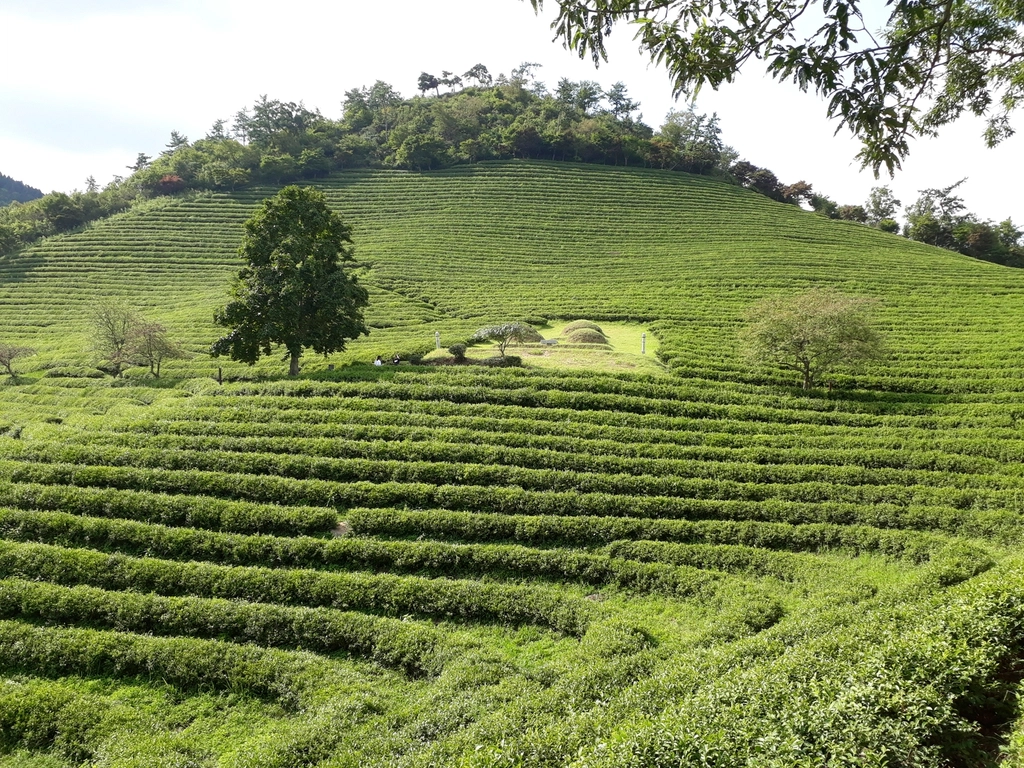
Tea is a long term crop. A farmer cannot simply change the farm’s entire production plan every time the market shifts. Tea bushes require maintenance, fertiliser, labour and regular plucking. Farmers also depend on collection systems and factories to process their green leaf and get the finished tea to market.
When costs rise faster than returns, the farmer absorbs the pressure. A lower bonus can mean less money available for farm maintenance, which can affect future yields and quality. That, in turn, can affect earnings. It becomes a difficult cycle to escape.
There are also questions about the value captured at different stages of the supply chain. Kenyan tea is sold into international markets, blended, packaged and distributed to consumers. The retail price of a packaged product is not directly comparable with the price paid for green leaf because processing, packaging, transport, marketing, taxes and retail margins all have to be accounted for.
Farmers are justified in asking whether they are receiving a fair and sustainable share of the value created by their crop.
The answer cannot simply be to tell farmers to pluck better tea (they are already doing that) or reduce costs. Those may be part of the solution, but they need to be accompanied by transparent accounts, efficient factory operations, reliable weighing systems, competitive markets and a payment structure that gives farmers a reasonable return.
Meanwhile, coffee is having a better season

While tea farmers are questioning their returns, coffee has been attracting renewed interest, with its farmers laughing all the way to the bank.
According to the Kenya News Agency, coffee sold through the Nairobi Coffee Exchange generated KSh 41.63 billion in the 2025/2026 coffee year, up from KSh 35.6 billion in 2024/2025. The increase of approximately KSh 6 billion reflects stronger overall sales earnings, supported by improved prices and market demand.
The coffee sector has also undergone reforms intended to improve transparency and the speed of payments. These include changes to marketing arrangements, the Direct Settlement System and financing through the Coffee Cherry Advance Revolving Fund.
In our earlier article, From Bean to Brew: How Kenya’s Coffee Reforms Are Reshaping the Industry, we explored how those changes were intended to improve the experience of coffee farmers.
Coffee farmers have reported encouraging returns. A July 2026 report by The Star profiled growers in Kirinyaga who received between KSh 104 and KSh 157.40 per kilogramme of coffee cherry in the previous season.
The contrast is worth examining. If coffee farmers are benefiting from stronger markets and reforms that improve payment transparency, tea farmers deserve to ask what comparable changes could improve their own earnings.
Should tea farmers switch to coffee?
It is tempting to look at the latest tea bonus figures and conclude that farmers should uproot their tea bushes and plant coffee instead. But that would be an oversimplification.
First, the two crops have different growing requirements. Not every tea growing area is equally suited to coffee, and farmers need to consider soil, altitude, rainfall, disease pressure and access to agricultural support before making a decision.
Second, changing crops is expensive. Farmers would need to consider the cost of establishing new plants, the time before they begin producing commercially and the income they would lose while transitioning. Uprooting an established tea farm based on one year’s bonus could leave a household without dependable income while a new crop matures.
Third, a higher selling price does not automatically translate into higher profit. What matters is the amount a farmer retains after production costs, labour, transport, processing and other deductions.
For some farmers, coffee may be a viable alternative. For others, diversifying into a suitable additional crop may be less risky than abandoning tea altogether. The right decision will depend on local conditions and the farm’s finances, not simply on which crop is receiving more attention in the news.
What farmers should be able to expect, however, is enough information to make that decision. They need realistic comparisons of net income, production costs, risks and market access, rather than promises based on headline prices.
My advice? Create room for coffee trees in your farm if you can.
In conclusion, factories need to provide growers with clear information about sales revenue, operating expenses, debts and the calculation of the second payment. Farmers should be able to ask questions about their accounts and receive meaningful answers. Where weighing irregularities or delays in handling green leaf are alleged, those claims should be investigated and addressed with verifiable evidence.
KTDA and other industry stakeholders also need to explain how they intend to improve market access, reduce avoidable costs and help factories that consistently deliver poor returns. Where quality is affecting prices, farmers need practical training and support, while factory management must account for the factors within its control.
The government, meanwhile, should continue examining whether the regulatory and market arrangements are delivering the outcomes farmers were promised. Tea remains an important export crop and a source of income for hundreds of thousands of smallholder growers. Its importance to the national economy makes the financial sustainability of those growers a serious concern.
If tea is to remain a source of national pride, the people who grow it must be able to see a future in it. That means fairer and more transparent systems, factories that manage costs effectively, markets that reward quality and a serious commitment to making farming economically worthwhile.
Otherwise, the next tea bonus season will bring the same questions, the same comparisons and the same frustration. And more farmers will begin asking whether it is time to grow something else.