This country is full of hilarious jokes, and we would all be laughing at the comedy while picking at our popcorn, if only it wasn’t sad at the same time.
Paradoxically, the current fodder for comedy comes from none other than a dangerous disease that goes by the name ebola. Yes, there is something almost Shakespearean about Kenya’s relationship with Ebola at the moment.
To have Ebola or not to have Ebola?
That is apparently the question. And depending on which announcement you are listening to, the answer could change before you say the word FAAAAAAAA (yes, that soundtrack).
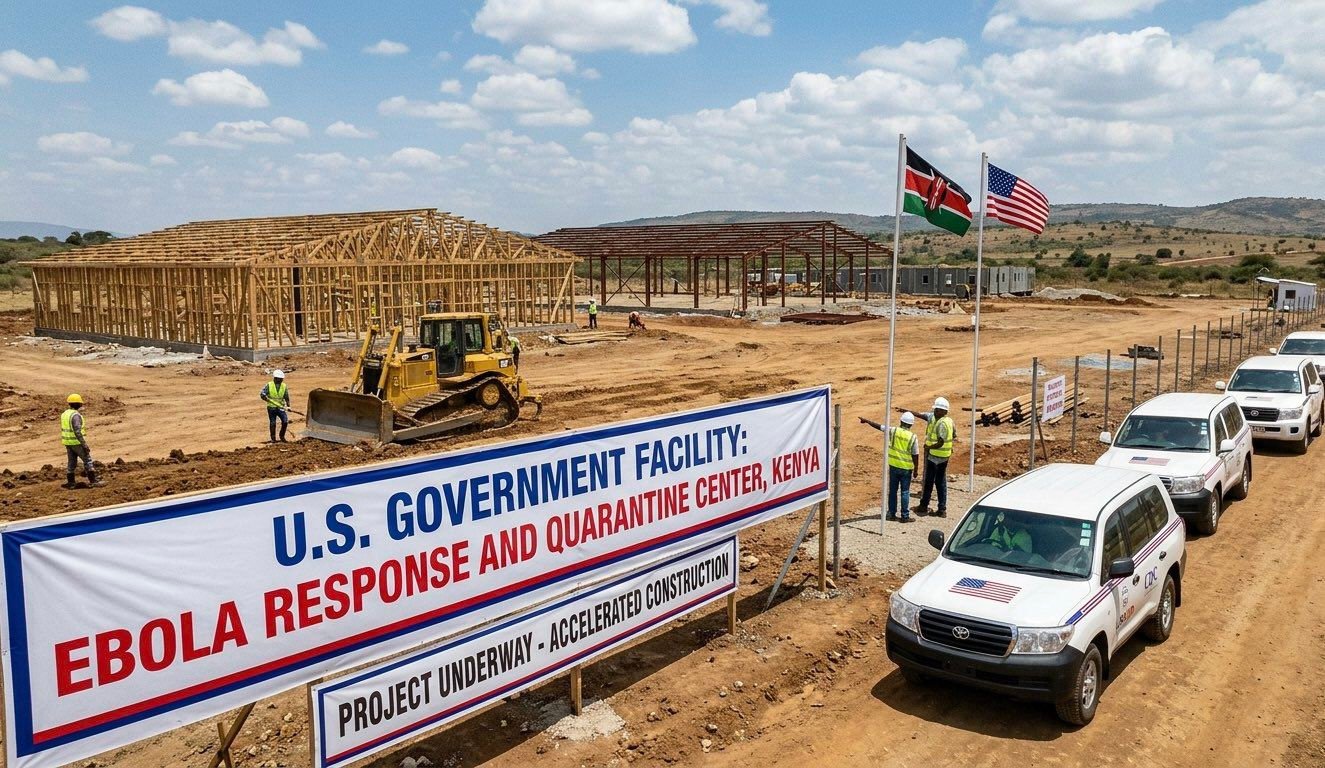
For months, Kenyans have been hearing about Ebola preparedness. We started with the infamous quarantine facility that the courts put a halt to, but which the government still went ahead and built anyway (this is africa, what do you expect?) We’ve been hearing about the regional outbreaks, surveillance and the need to remain vigilant. Then came the first confirmed case on October 6, followed by additional infections and, tragically, deaths.
But even before the situation could settle into a clear public understanding, the familiar business of questioning official narratives began.
Some Kenyans questioned the scale of the government’s response. Others wondered aloud whether the Ebola warnings and preparedness activities were being exaggerated, with allegations circulating that the situation was being used to attract international funding. While these are indeed serious allegations with no established evidence to show that the government manufactured or exaggerated cases to secure funding, the fact that such suspicions gained traction says something about the public’s relationship with official communication.
Then came the international attention. Nine confirmed cases and two deaths later, Kenya found itself having an uncomfortable conversation with the rest of the world. Countries began introducing travel restrictions with Saudi Arabia even going as far as suspending travel to and arrivals from Kenya.
Suddenly, Ebola was no longer just a public health matter. Before the government could shout FAAAAAAA, Ebola was threatening to become a tourism, trade, employment and diplomatic headache.
Voila! And just like that the national conversation acquired a new urgency. The biggest turnabout in history. Kenya was contained, safe and remained open for business! Please, for the love of the tourism industry, do not cancel your holiday to the Maasai Mara. Also, Ebola? What Ebola?
The government has since challenged Saudi Arabia’s restrictions, describing them as disproportionate and unsupported by scientific evidence. It argues that all nine confirmed cases belong to one cluster linked to an imported case, with no evidence of community transmission.
Fair enough. But one cannot help noticing how quickly the conversation has moved from preparing for a public health emergency to defending the country’s international reputation.
There is, of course, a legitimate scientific distinction between containing an outbreak and having no Ebola cases. The World Health Organisation’s guidance requires 42 consecutive days without a new case after the last confirmed patient has tested negative twice and been discharged, or has been safely buried in the event of death, before an outbreak can be declared over.
Kenya has not yet crossed that finish line. In fact, as of October 31, seven patients were still receiving treatment, even as the government reported that no new infections had been recorded since October 20.
So perhaps we should all exercise a little patience. Ebola has its own incubation period, and apparently so does the official declaration that we are finally free of it.
But the bigger question is how we got here. When a government communicates a public health threat, citizens need clear, consistent and credible information. They need to know what is happening, how serious it is, what measures are being taken and what the numbers actually mean. They should not have to piece together the national health situation from press conferences, diplomatic statements, social media posts and competing interpretations.
And while we are at it, perhaps the government should appreciate that international confidence is not secured simply by insisting that a country is safe. It is built through transparency and a response that inspires trust.
Tourism is important. So are trade, international relations and the livelihoods of Kenyans who depend on visitors arriving in the country. Nobody wants Kenya’s beaches, national parks and hotels to become casualties of an outbreak that health authorities say is contained.
Those concerned with this roller coaster should have thought of all that before rushing to announce a disease that might or might not even be existing ( my biggest drop jaw moment is the timeline of how it all went down, how the disease had to wait for a quarantine facility to be built first before it reared it’s ugly head.)
Should the desire to protect tourism become a reason to rush public reassurance ahead of the science?
For now, Kenya appears to be in that rather awkward space between having Ebola and not having Ebola. We have confirmed cases, patients receiving treatment, contacts completing quarantine and a government making diplomatic representations to countries that have decided they would rather not take chances.
Perhaps the rest of the world should wait for the science. And perhaps Kenyans should be allowed to ask questions without being accused of spreading panic.
Because at the end of this curious national drama, we should not need a diplomatic note to establish what is happening within our own borders.
To have or not to have Ebola? Let us leave that one to the scientists and, of course, those who stand to benefit the most from the country “grappling with cases”. I’m talking funds and what not.
The rest of us? Well, in the grand scheme of things, Who are we? Nobody gives a care in the world who you are. Just shut up and do what you do best – build the country.