The war was over, but the struggle for global power was only beginning. As Europe and Asia emerged from the devastation of World War II, the United States and the Soviet Union found themselves in a position to shape the future of the world. This is a story about the moon landing. But first, to understand how, and where, it all begun.
A world exhausted by war
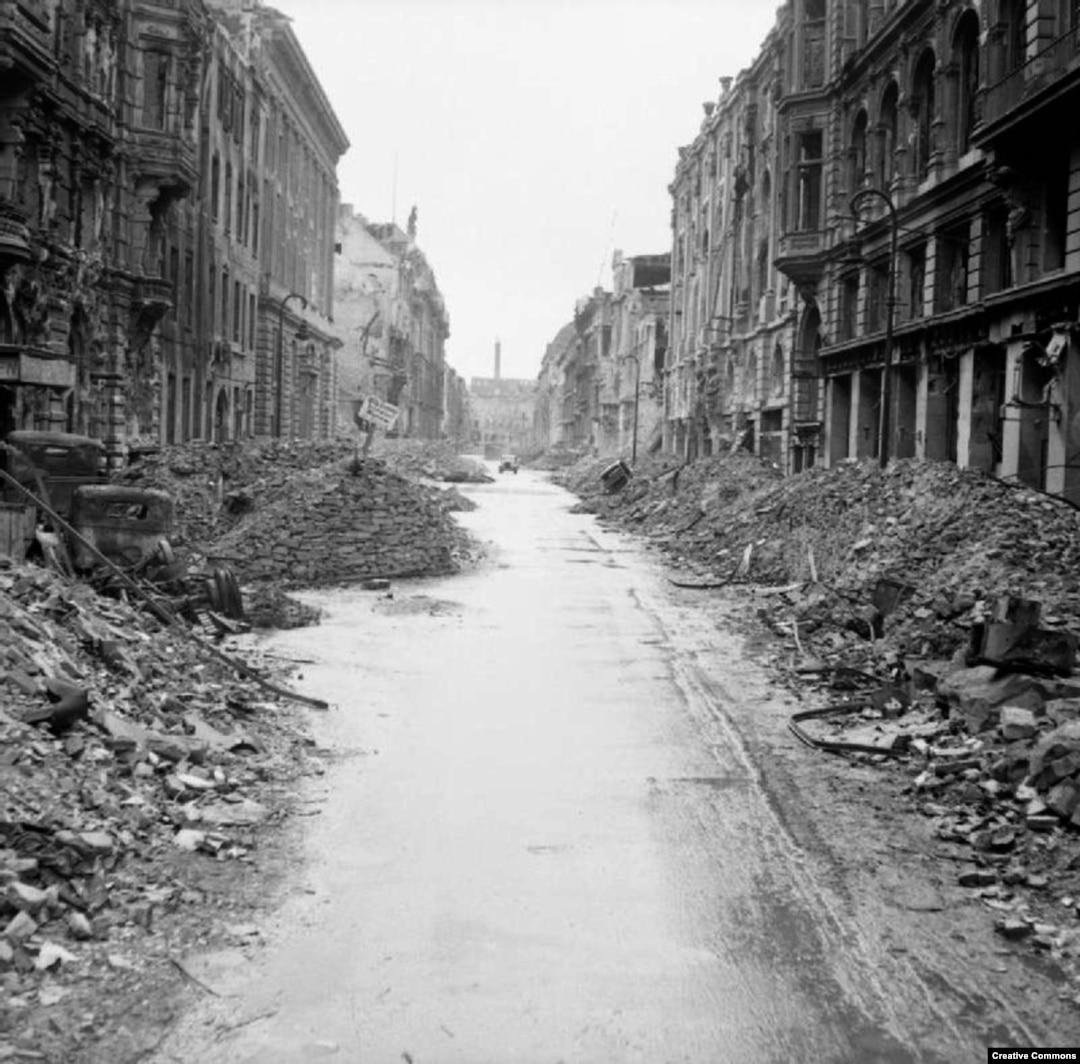
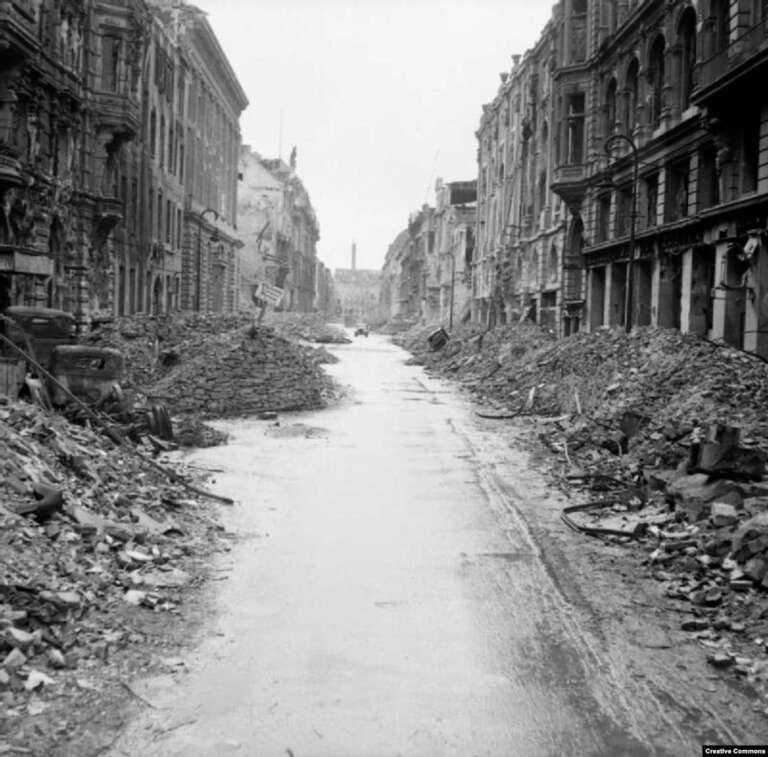
I cannot, for the life of me, imagine waking up in 1945. The brutal war that had consumed much of the world for six years was finally coming to an end, but there was little to celebrate in many parts of Europe and Asia. Cities had been reduced to rubble, railway networks and factories lay in ruins, millions of people had been displaced and the worst of it all – families were trying to find relatives they had not seen in years. For many, the end of the fighting was the beginning of a different kind of dread – rebuilding what had been destroyed.
Forget the confusion that was the first world war. The second World War had been unlike anything the world had experienced before. It had involved countries across several continents, drawn millions of soldiers into battle and brought civilians directly into the violence on an unprecedented scale. Estimates of the total death toll vary, but historians commonly place it at around 60 million or more, with the majority of those who died being civilians. The Holocaust had also exposed the full horror of Nazi Germany’s systematic persecution and the murder of millions of European Jews, alongside the persecution and killing of many more other victims.
Yes, Germany’s surrender on 8 May 1945 marked the end of the war in Europe, but the fighting in Asia and the Pacific continued. Japan remained at war with the Allied powers and its eventual surrender would come in August, with the formal surrender signed on 2 September 1945. Between those two events, the United States would use atomic bombs against Hiroshima and Nagasaki, introducing the world to a weapon capable of destroying entire cities in seconds.
The war was ending, but the world it had left behind was, for lack of a better word, unrecognisable.
There were “victors” ofcourse, but at what cost?
Among the countries celebrating victory were the United States, the Soviet Union and Britain; the (in)famous allies who had fought on the same side against Nazi Germany, but whose experiences of the war could hardly have been more different.
For the Soviet Union, victory had come at an almost unimaginable cost. Nazi Germany’s invasion in June 1941 had opened one of the most devastating military campaigns in history. Entire towns and villages were destroyed, millions of Soviet citizens were killed, and vast areas of the country’s western territory were occupied. The Soviet Union is widely estimated to have lost approximately 26 to 27 million people during the war, including military personnel and civilians.
The scale of the destruction was immense. Industrial facilities had been evacuated eastwards as German forces advanced, while those that could not be moved were frequently destroyed or captured. Agriculture, transport infrastructure and housing were badly damaged. The Red Army had helped defeat Nazi Germany, but the country it returned to was left with an enormous reconstruction challenge.
Britain had also endured years of war. German bombing campaigns had devastated parts of London and other cities, while rationing, mounting debt and the enormous expense of maintaining its military commitments had placed the economy under considerable strain. So while Britain remained a major international power, it is worth noting that the war had weakened its ability to maintain the global position it had held before 1939. Its empire was also entering a period of accelerated decolonisation.
In comes the United States.
Unlike much of Europe and the Soviet Union, the American mainland had not suffered widespread physical destruction during the war. Its industrial capacity had expanded enormously to supply its own armed forces and those of its allies. American factories produced ships, aircraft, vehicles, weapons and other equipment on a massive scale. By 1945, the United States accounted for more than half of global manufactured output and held a substantial share of the world’s monetary gold reserves.
We cannot, ofcourse, forget that it has also emerged with the world’s first atomic bomb.
This did not mean that the United States had escaped the human cost of war. Thousands of American families had lost loved ones and the country had made enormous sacrifices. But economically and industrially, it was in a remarkably strong position compared with the countries whose factories, cities and infrastructure had been destroyed – a difference that would matter enormously in the years ahead.
The Soviet Union had won the war. But what had it won?
No, really, what had it won?
From the outside, the Soviet Union looked like a country that had simply emerged victorious and was ready to take on the world, but the reality was considerably more complicated.
The Soviet Union had played a decisive role in defeating Nazi Germany. The Battle of Stalingrad, the siege of Leningrad and the Battle of Kursk were among the defining moments of the Eastern Front. The Red Army eventually advanced into Berlin and Soviet forces suffered enormous losses along the way.
Yet victory did not put food on the table, rebuild destroyed homes or restore the factories that had been lost. Millions of people were homeless, agricultural production had suffered and the country faced shortages of food and consumer goods in a scale never seen before. The Soviet population was expected to rebuild while the government also maintained its military strength and pursued its ambitions as a global power.
Remeber also, that Soviet leader Joseph Stalin had no intention of allowing the Soviet Union to emerge from the war vulnerable to another invasion.
The memory of the German invasion was fresh and the Soviet leadership wanted a security buffer between its borders and the countries of Western Europe. As Soviet forces occupied parts of Eastern Europe while pushing westwards during the war, Moscow gained enormous political and military influence in the region.
For Stalin, the postwar settlement was as much about rebuilding the Soviet Union as it was about ensuring the country would never again face an invasion from the West under the same circumstances. That ambition right there soon became one of the biggest sources of tension between Moscow and its former allies.
Germany: From the centre of the war to the centre of a new struggle
It was a political and territorial reckoning time for Germany.
Following its unconditional surrender, Germany was occupied by the Allied powers and divided into four zones, administered by the United States, Britain, France and the Soviet Union. Berlin, although located deep inside the Soviet occupation zone, was also divided into four sectors.
The arrangement was intended to prevent Germany from becoming a military threat again. The Allies agreed on the need to disarm the country, dismantle Nazi institutions, bring war criminals to justice and remove the influence of Nazism from German public life.
There was also the question of reparations. Germany had caused enormous destruction across Europe, particularly in the Soviet Union. The Soviet leadership wanted compensation, with the compelling argument that its country had suffered extraordinary losses. The Allied powers therefore agreed that Germany would pay reparations, including through the transfer of industrial equipment and other assets.
At the Potsdam Conference in July and August 1945, the United States, Britain and the Soviet Union agreed that the Soviet Union could remove industrial equipment from its occupation zone. It was also entitled to receive additional industrial equipment from the Western zones under an agreed arrangement, in exchange for commodities.
This would become part of a much larger story about how German industrial technology, factories, machinery and scientific expertise found their way into the hands of the victorious powers.
Remember, Germany’s division was not initially presented as a permanent arrangement. The Allies had agreed to administer the country through four occupation zones, with Germany to be treated as an economic unit. But their growing disagreements over its political and economic future would eventually contribute to the division of Germany into two separate states.
The country that had plunged Europe into war was now becoming one of the main geographical fault lines of the emerging Cold War.
Let us talk about the meetings that shaped the next world order. Even before the war ended, the Allied leaders had begun negotiating what the postwar world would look like.
In February 1945, American President Franklin D. Roosevelt, British Prime Minister Winston Churchill and Soviet leader Joseph Stalin met in Yalta, in Crimea. Germany’s defeat was becoming increasingly certain, and the leaders needed to discuss the occupation of Germany, the future of Poland, the reorganisation of Europe and the Soviet Union’s role in the war against Japan.
While on paper they were still allies working towards a common future, in practice, their priorities were beginning to diverge.
Stalin wanted a friendly and politically dependable belt of countries along the Soviet Union’s western border while Roosevelt and Churchill were concerned about the spread of Soviet influence and the political future of Eastern Europe. They also disagreed over how much control the Soviet Union should exercise in countries liberated by the Red Army.
A few months later, in July 1945, the leaders met again at Potsdam, near Berlin. But the political atmosphere had changed.
Roosevelt had died in April and had been succeeded by Harry S. Truman. Churchill attended the beginning of the conference, but after losing Britain’s general election, he was replaced by the new Labour Prime Minister, Clement Attlee.
The war in Europe was over, Germany had surrendered and the United States had successfully tested its first atomic bomb in July. The leaders were now negotiating from different positions of power and with increasingly conflicting visions of the future.
The meetings produced agreements, but they did not resolve the growing distrust between the Soviet Union and the Western powers. In a nutshell, the alliance that had defeated Hitler was beginning to fracture.
A new kind of power was emerging
While the Soviet Union was focused on rebuilding and securing its borders, and Britain was trying to manage the financial consequences of war, the United States was helping establish a new international economic system.
In July 1944, before the war had even ended, representatives from 44 countries had met at Bretton Woods in New Hampshire to discuss the future of international finance. Their discussions led to the creation of the International Monetary Fund – what would later become the World Bank. The intention was to establish a more stable international monetary system and support postwar reconstruction.
The United Nations was also established in 1945, with the hope that international cooperation could prevent another catastrophic global conflict.
But the most consequential development was taking place between the United States and the Soviet Union. Both countries had emerged from the war with enormous military capabilities and ambitions that reached far beyond their own borders. They represented fundamentally different political and economic systems and each viewed the other’s growing influence with suspicion.
The United States had an atomic bomb. The Soviet Union had an enormous army, growing industrial capacity and influence across Eastern Europe. Both understood that the next stage of global power would depend not only on territory and military strength, but also on technology, science and the ability to develop weapons capable of changing the balance of power.
In the years that followed, the rivalry would extend into nuclear weapons, intelligence operations, propaganda, military alliances and scientific research.
It was this same rivalry that was taken beyond Earth. Yes, it was taken to the heavens. Literally.
The world had barely begun to recover from one war when it found itself entering another kind of confrontation. And beacuse this time the two principal rivals would not fight each other directly in a conventional war, they chose to compete for technological superiority and global prestige.
Somewhere in the middle of that competition would be a small satellite, a German rocket engineer, a Soviet scientist whose name the world was not allowed to know and a race that would eventually take human beings to the Moon.
sources:
The National WWII Museum: The Cost of Victory — the human and economic consequences of the war.
University of Warwick research: Counting the Soviet Union’s War Dead — the 26–27 million Soviet death estimate and the historical debate around it.
US Department of State: The Potsdam Conference, 1945 — the Allied negotiations over Germany.
German History in Documents and Images: The Yalta Conference and The Potsdam Agreement — primary historical documents and the agreements themselves.
Federal Reserve History: Creation of the Bretton Woods System — the foundations of the postwar financial order.
The National WWII Museum: Great Responsibilities and New Global Power — America’s economic position at the end of the war.