Rainwater harvesting has always been a practical way for Kenyan households to supplement their water supply. Not only does it reduce water bills, it also helps prepare for periods when water is scarce. And it is not just for those living in rural homes – even those in urban estates or those living in an apartment with access to a rooftop, collecting rainwater can help make better use of a resource that would otherwise flow into drainage systems.
However, collecting rainwater is not simply a matter of placing a bucket under a roof and waiting for it to fill. The water can pick up dirt, bacteria, animal droppings, chemicals and other contaminants as it moves from the roof into storage.
This means that even water that looks clear and clean may not necessarily be safe for drinking or cooking. Proper collection, storage and treatment are essential, particularly for households that rely on harvested rainwater as an alternative source of domestic water.
Here is how to collect and store rainwater safely at home.
1. Choose the right roof for rainwater harvesting
The roof is the first point of contact between rainwater and your collection system. Its condition and material can therefore affect the quality of the water you harvest.
Metal roofs, particularly clean iron sheets, are commonly used for household rainwater harvesting. Properly maintained tiled roofs can also be suitable.
However, avoid collecting water from roofs with peeling paint, potentially hazardous coatings or materials that may release harmful substances into the water. Old roofing materials and surfaces that may contain lead or asbestos require particular caution.
Before the rainy season begins, inspect your roof for accumulated dust, leaves, bird droppings and other debris. Clean the surface where possible and remove overhanging branches that attract birds or allow leaves to accumulate.
The World Health Organization (WHO) warns that rainwater can become contaminated by substances collected from roofs, gutters and storage facilities.
2. Install clean gutters and downpipes
Once rainwater runs off the roof, it needs a clean and properly maintained route into the storage tank.
Install gutters along the roof edges to direct water towards a downpipe connected to your collection tank. Ensure the gutters are correctly positioned, free from leaks and regularly cleared of accumulated dirt.
A mesh screen or leaf guard can help prevent leaves, insects, twigs and other debris from entering the system.
Pay attention to the joints between gutters and downpipes. Poorly maintained connections can allow contaminated water to enter the collection system or cause water to spill before reaching the tank.
Kenya’s Ministry of Health mechanical works specifications identify leaf screens, filters and first-flush diverters as important components of rainwater harvesting systems.
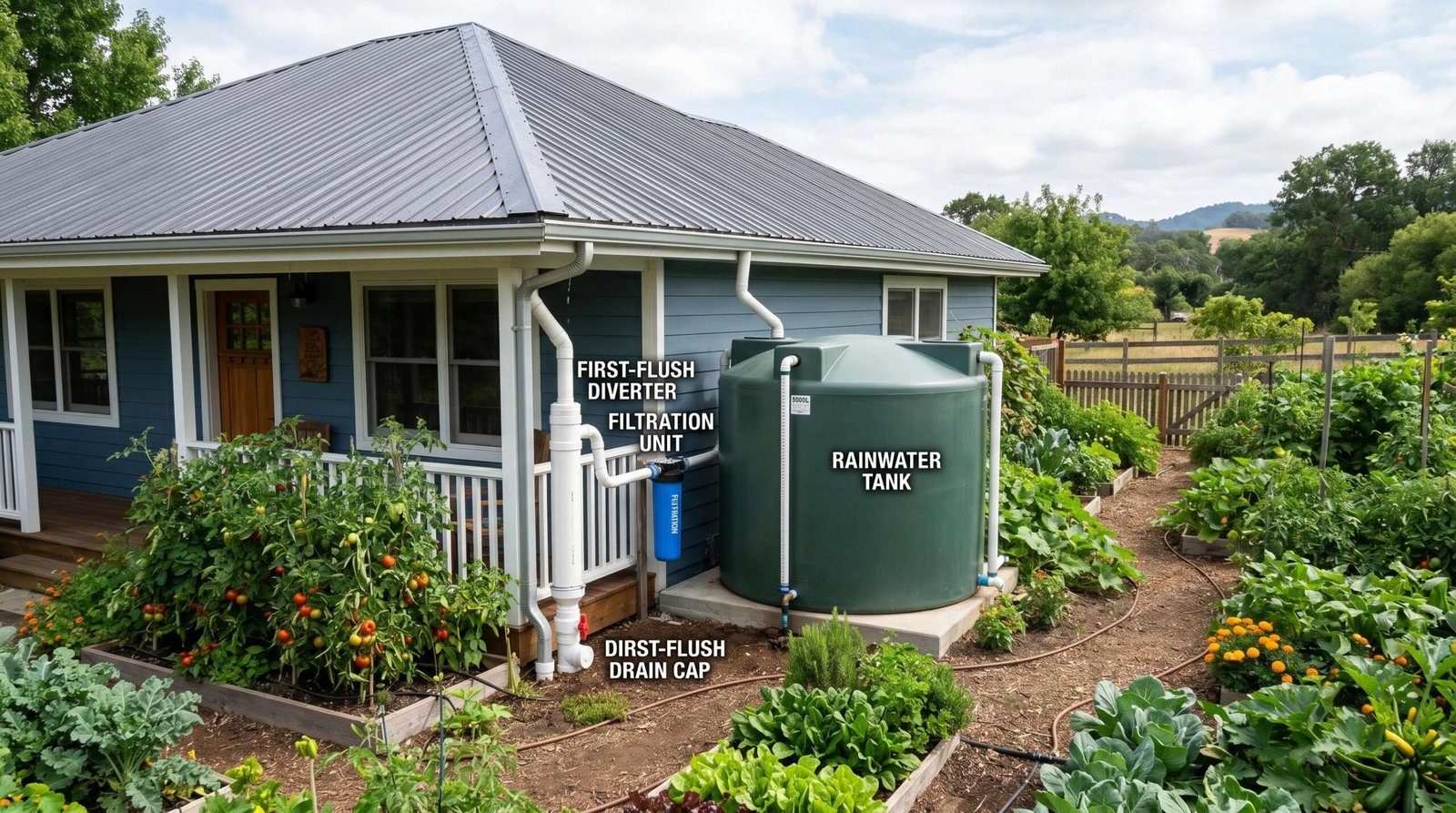
3. Use a first-flush diverter

This is one of the most important steps in collecting rainwater safely.
After several dry days, dust, bird droppings, leaves and other contaminants may have accumulated on the roof. When it starts raining, the first water flowing off the roof carries much of this material into the gutters.
A first-flush diverter is a simple device installed along the downpipe. It temporarily collects or redirects the initial flow of rainwater, preventing it from entering the main storage tank.
Once the diverter fills, cleaner runoff can flow into the tank.
If you cannot afford a commercially manufactured first-flush system, a detachable downpipe can provide a manual alternative. Simply redirect the initial roof runoff away from your storage container before reconnecting it.
Remember to empty and clean the diverter after rainfall so that it is ready for the next shower.
The WHO recommends first-flush systems as a way of reducing contamination from roof surfaces.
4. Choose the right water storage tank

The next step is choosing an appropriate storage facility.
Depending on your household’s needs and budget, you can use a plastic water tank, a properly constructed underground tank or smaller storage containers.
When selecting a tank, consider the following:
- Food-grade material: If the water may eventually be treated for drinking, choose a tank made from materials approved for contact with drinking water.
- A secure lid: The tank should remain covered to prevent insects, dust, rodents and other contaminants from entering.
- A screened inlet: Cover openings with appropriate mesh to keep out leaves and insects.
- An overflow outlet: This allows excess water to drain safely once the tank is full.
- A tap or outlet: A properly fitted tap allows you to draw water without dipping cups, buckets or hands into the tank.
Place the tank on a stable, level foundation capable of supporting its weight when full. For underground tanks, ensure they are properly constructed and protected against contamination from surrounding soil, drainage and wastewater.
Avoid using containers that previously held chemicals, fuel or other potentially harmful substances.
5. Filter and treat rainwater before drinking
One of the biggest misconceptions about rainwater is that it is naturally clean because it comes directly from the sky.
While rainwater may initially contain relatively few impurities, it can collect microorganisms and chemicals during harvesting and storage.
For this reason, water intended for drinking, cooking and brushing teeth requires appropriate treatment.
There are several household water treatment options:
Boiling: Bringing water to a rolling boil is an effective way of killing disease-causing microorganisms. However, boiling does not remove chemical contaminants, heavy metals or other dissolved pollutants.
Chlorination: Appropriate household water treatment products can disinfect water when used according to the manufacturer’s instructions. The correct dosage depends on the product and the quantity and quality of water being treated.
Filtration: A suitable water filter can remove suspended particles and, depending on its design and certification, some microorganisms and other contaminants. However, not all filters disinfect water, so filtration may need to be combined with disinfection.
Ultraviolet treatment: Properly installed UV systems can inactivate microorganisms in water. However, the water usually needs pre-filtration because suspended particles can interfere with disinfection.
Importantly, no single household treatment method removes every possible contaminant. If the roof, gutters or tank may have introduced chemical contamination, boiling or chlorination alone will not make the water safe.
Where rainwater is regularly used for drinking, consider having it tested for microbiological and chemical contamination through an appropriate water testing laboratory.
The US Centers for Disease Control and Prevention (CDC) also advises that rainwater should not automatically be considered safe for drinking, even when it appears clean.
6. Keep your storage tank clean
Collecting safe water is only half the job. How you store it determines whether it remains safe for household use.
A poorly maintained tank can become contaminated even if the water entering it was relatively clean.
Here are some maintenance practices to adopt:
- Inspect your tank regularly for cracks, leaks and damaged covers.
- Clean the tank periodically, removing accumulated sediment and dirt.
- Keep the lid securely closed at all times.
- Clean inlet screens and filters to prevent blockages.
- Check overflow pipes to ensure they are functioning properly.
- Prevent children, animals and unauthorised persons from accessing the tank.
You should also ensure that water is drawn through a tap rather than by dipping containers into the tank. This reduces the chances of introducing bacteria and other contaminants.
Remember that tanks with uncovered openings can also become mosquito breeding sites. Proper covers and mosquito-proof screens help prevent this.
7. Store water in clean household containers

Not every household has a large storage tank. Some families collect rainwater in drums, buckets and smaller containers for everyday use.
If this is your preferred method, ensure the containers are clean, food-grade and fitted with tight covers.
Wash containers before refilling them and avoid using those that previously stored detergents, pesticides, fuel or other chemicals.
Where possible, use containers with taps to minimise direct contact with stored water. Keep them away from toilets, waste disposal areas, chemicals and other potential sources of contamination.
If you are storing treated drinking water, keep it in a separate, clearly identified container to avoid mixing it with untreated water.
8. Separate rainwater from your piped water supply
Some households use both harvested rainwater and water supplied by their local water utility.
While this is a practical arrangement, the two systems should be kept separate to prevent contamination.
Rainwater should not flow back into pipes carrying treated municipal water. This can introduce contaminants into an otherwise safe water supply.
If you intend to connect both systems to your household plumbing, consult a qualified plumber about the appropriate arrangement, including backflow prevention.
9. Use harvested rainwater for the right household activities
Not all harvested rainwater needs to undergo the same level of treatment.
If you have not treated or tested your collected water, it is safer to reserve it for activities that do not involve swallowing it.
These include:
- Watering ornamental plants and gardens.
- Washing outdoor surfaces and vehicles.
- Cleaning floors and other household surfaces.
- Flushing toilets.
- Washing clothes, depending on water quality and the cleaning requirements.
For drinking, cooking, brushing teeth and washing fruits and vegetables, use a verified safe water source or appropriately treated rainwater.
Bathing also requires caution, particularly if the water may be contaminated. Avoid using untreated water in ways that could result in swallowing it or exposing open wounds to contamination.
How much rainwater can you collect from your roof?
One advantage of rooftop rainwater harvesting is that even a relatively modest roof can collect a considerable amount of water during the rainy season.
The amount depends on the size of your roof, rainfall received and how efficiently your collection system channels runoff into storage.
You can estimate your potential collection using this simple formula:
Water collected (litres)=Rainfall (mm)×Roof area (m²)×Runoff coefficient
For example, consider a house with a 100-square-metre roof receiving 20mm of rainfall.
Assuming a runoff coefficient of 0.9 for a suitable metal roof:
20×100×0.9=1,800L
EXAMPLE RAINWATER HARVEST
1,800 litres
Potential collection from a 100m² roof during 20mm of rainfall, assuming a 0.9 runoff coefficient.
This is an estimate, not a guarantee. Actual collection may be lower because of evaporation, leaks, overflow and other losses.
Nevertheless, it demonstrates why rainwater harvesting can be useful for households looking to supplement their water supply.
Frequently Asked Questions About Rainwater Harvesting in Kenya
Is rainwater safe to drink in Kenya?
Not automatically. Rainwater can collect bacteria, parasites, dust, animal droppings and chemical contaminants from the atmosphere, roof surfaces and storage systems. It should be appropriately treated before drinking, and regular users should consider water quality testing.
Can I collect rainwater from iron-sheet roofs?
Yes, provided the roofing material and its coating are suitable for rainwater collection. The roof should be in good condition, free from hazardous coatings and regularly cleaned. Water intended for drinking should still undergo appropriate treatment.
Can I store rainwater in plastic tanks?
Yes. Use a tank made from materials suitable for water storage, preferably food-grade material if the water is intended for drinking after treatment. Keep it covered and clean it regularly.
How long can harvested rainwater be stored?
There is no universal safe storage period. Water quality depends on the original water quality, treatment, temperature, storage conditions and maintenance. Regularly inspect the tank, prevent contamination and avoid assuming that stored water remains safe simply because it is covered.
Can I use rainwater for cooking?
Yes, but only if it has been appropriately treated and is safe for drinking. Untreated rainwater should not be used to prepare food or beverages.
Does boiling rainwater make it safe?
Boiling kills many disease-causing microorganisms but does not remove chemical pollutants or heavy metals. If you suspect chemical contamination, use a verified safe alternative and have the water tested.
Final Thoughts
Rainwater harvesting is a practical household investment that can help families manage water shortages, make better use of seasonal rainfall and reduce their dependence on other water sources.
However, the benefits should not come at the expense of household health. A clean roof, properly installed gutters, a first-flush diverter, a suitable storage tank and appropriate water treatment can make a significant difference.
Ultimately, collecting rainwater is only the first step. Making sure the water remains safe from the roof to the tap is what makes the investment worthwhile.
This article draws on Kenya’s Ministry of Health technical specifications, WHO drinking-water guidance and CDC household rainwater safety recommendations. Useful references for further reading:
- Kenya Ministry of Health: Rainwater Harvesting Specifications
- WHO: Rainwater Collection and Storage Safety
- CDC: Collecting Rainwater and Your Health