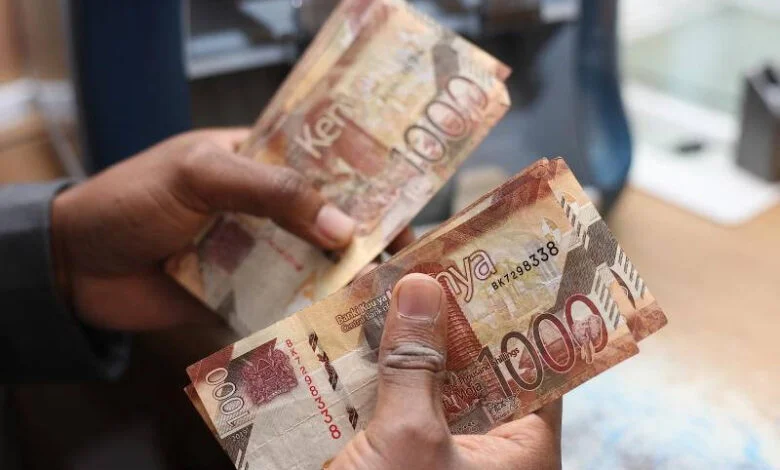
Wash wash and money laundering are often confused in Kenya. We take a look at what the two terms mean, how they differ and where they overlap, and why knowing the difference matters.
If you have followed Kenya’s recent crackdown on suspected wash wash syndicates, you have probably encountered the term money laundering repeatedly because the two are often mentioned in the same breath. In everyday conversation, someone involved in a wash wash scheme may be described as a money launderer, while stories about suspicious cash transactions are sometimes casually labelled “wash wash.”
But they are not actually the same thing. Wash wash generally describes fraudulent schemes designed to deceive people and obtain their money while money laundering, on the other hand, is about disguising the origins of money obtained through criminal activity and making it appear legitimate.
The distinction matters because a person can commit fraud without laundering money, and money laundering can involve proceeds from crimes that have nothing to do with what Kenyans commonly call wash wash. And sometimes, the two can overlap.
What Does “Wash Wash” Mean?
“Wash wash” is an informal Kenyan term associated with elaborate financial scams, particularly schemes promising victims that their money can be doubled or multiplied.
The scam may involve fake currency, chemicals, mysterious financial processes, counterfeit gold, bogus investments or other convincing demonstrations designed to make the victim believe that a large amount of money is waiting for them.
The ultimate objective is usually pretty straightforward and simple – to convince someone to hand over their money. The fraudsters may initially allow a victim to make a small profit or show them what appears to be genuine money. Once trust has been established, the victim is encouraged to provide a much larger amount.
This is why wash wash is better understood as a type of confidence based fraud rather than a technical legal term.
We explored how these schemes work in our article Inside Kenya’s Wash Wash Underworld: How Sophisticated Scammers Trap Their Victims, including the psychological tricks scammers use to convince victims to keep handing over money.
So, What Is Money Laundering?
Money laundering happens when someone attempts to conceal or disguise the criminal origin of money or other property so that it can be used as though it came from a legitimate source. Imagine someone makes money through an illegal activity. Simply spending that money openly could attract attention, particularly if the person’s lifestyle suddenly becomes inconsistent with their known legitimate income.
The laundering process is intended to create distance between the money and the crime that generated it. It can involve complicated financial transactions, businesses, property, investments, assets or other methods designed to obscure where the money originally came from.
The most interesting difference between the two is that unlike “wash wash”, money laundering is a specific criminal offence recognized under Kenyan law.
The Simplest Way to Understand the Difference
Think about it this way:
Wash wash:
“Give me your money and I’ll make it grow.”
Money laundering:
“How can I make illegally obtained money look legitimate?”
The first primarily involves deceiving a victim to obtain money while the second involves concealing the criminal origin of money or assets. And that right there, is the fundamental difference.
But then it gets even more interesting in how they overlap. A fraudster could run a wash wash scam, obtain millions from victims and then attempt to disguise or conceal those proceeds. At that point, the original fraud and subsequent money laundering could potentially become two separate offences.
For example, imagine a fictional syndicate that convinces victims to hand over KSh10 million through a fake money doubling scheme. The act of deceiving the victims and obtaining their money could constitute fraud-related offences.
If the syndicate then moves the proceeds through different accounts, purchases assets through complicated arrangements, or uses businesses to conceal where the money came from, those actions could potentially raise money laundering issues.
The important point is that money laundering happens after, alongside or in connection with the underlying criminal activity; it is not simply another name for the scam itself.
The Three Stages Often Associated With Money Laundering
Money laundering is frequently explained using three broad stages: placement, layering and integration.
Placement is when illicit money is introduced into the financial system. For example, criminals may attempt to deposit, transfer or otherwise introduce proceeds of crime into legitimate financial channels.
Layering involves creating layers of transactions that make it harder to establish where the money originally came from. The more complicated the trail becomes, the harder it may be for investigators to connect the money to the original criminal activity.
Integration is when the money eventually appears to have a legitimate source. It may be used to acquire assets, invest in businesses or fund other apparently legitimate activities.
Notably, the movement of money has become increasingly digital. Mobile money, bank transfers and cryptocurrency can all feature in financial fraud investigations, making it important to understand not only how criminals obtain money but also the channels through which it moves. Recent NC4 findings shed more light on this changing landscape in Your Phone Is the New Crime Scene: How Mobile Money Became Kenya’s Biggest Fraud Channel.
Can a Legitimate Business Be Used to Launder Money?
Yes. And actually, that is kinda the whole point, also one reason money laundering can be difficult to detect.
A legitimate business can potentially be abused to disguise criminal proceeds. The business itself does not necessarily have to be created for criminal purposes.
Industries involving large transactions, complex ownership structures, property, luxury goods or substantial cash flows can present opportunities for criminals where financial controls are weak. That does not mean that businesses in those industries are inherently suspicious.
A hotel, construction company, car dealership or property business can be completely legitimate. The issue is whether criminal proceeds are being introduced into or moved through the business in an attempt to disguise their origin.
This distinction is important because simply having cas -heavy operations or wealthy clients is not evidence of money laundering.
Is Every Wash Wash Scam Money Laundering?
No. Someone who tricks a victim into sending money through a fake investment scheme has potentially committed fraud even if they never attempt to launder the proceeds.
Money laundering becomes a separate issue when there is an attempt to conceal or disguise the criminal origin of those proceeds, which is why investigators may examine not only how money was obtained, but also where it went afterwards.
Is Every Money Launderer Involved in Wash Wash?
Also no. Money laundering can involve proceeds from many different types of crime. The underlying offence could involve corruption, fraud, drug trafficking, theft, tax offences, organized crime or other criminal activity.
This means that someone can potentially be involved in money laundering without ever running a money-doubling scam or anything remotely resembling what Kenyans call wash wash.
The distinction is more than semantics. When the public understands the difference between fraud and money laundering, it becomes easier to understand what investigators are actually looking for.
A wash wash investigation may focus heavily on victims, deception, false promises and the methods used to obtain money.
A money laundering investigation may follow the money after the original crime, examining financial transactions, assets, companies, accounts and the movement of funds. In complicated cases, investigators may be looking at both.
What Does the DCI Have to Do With It?
The Directorate of Criminal Investigations investigates a wide range of serious crimes, including financial crimes and organised criminal activity, and is why the recent crackdown on suspected wash wash networks is bigger than simply arresting people accused of scamming victims.
Investigators may also be interested in identifying the wider network, tracing proceeds, establishing who benefited from the alleged criminal activity and determining whether other offences were committed.
What About the Financial Reporting Centre?
Kenya’s fight against money laundering also involves institutions beyond the DCI.
The Financial Reporting Centre (FRC) plays an important role in the country’s anti money laundering and counter-financing-of-terrorism framework, including receiving and analysing suspicious transaction reports from reporting institutions.
This is one reason financial institutions may ask customers questions about the source of funds or flag transactions that appear unusual.
A bank asking where your money came from does not automatically mean you are suspected of a crime. Financial institutions have regulatory obligations designed to help detect and prevent financial crime.
At the end of the day, you do not need to become a financial crime expert to protect yourself. The most important lesson is to question financial opportunities that promise extraordinary returns with little risk.
Be particularly careful when someone:
- promises to double your money;
- insists that an opportunity must remain secret;
- pressures you to provide cash quickly;
- refuses to provide verifiable documentation;
- asks you to pay additional money before releasing your supposed profits;
- claims to have special connections that guarantee a return;
- asks you to receive or transfer money on their behalf.
And if you encounter a suspicious investment or financial scheme, don’t simply walk away silently. Keep the evidence and report it to the appropriate authorities.
Wash Wash, Fraud and Money Laundering: The Bottom Line
The easiest way to remember the difference is this:
Wash wash is about the scam while money laundering is about the money and its criminal origin.
A wash wash operation can generate proceeds that are subsequently laundered, but not every wash wash scam necessarily involves money laundering, and not every money-laundering operation involves wash wash.
As Kenya intensifies its fight against financial crime, understanding that distinction is becoming increasingly important. The flashy cars, suspicious businesses and mysterious wealth that often dominate conversations about wash wash may only be the visible part of a much larger financial trail.
And ultimately, following that trail is where the real story begins.
Frequently Asked Questions
Is wash wash a legal term in Kenya?
No. “Wash wash” is a popular term used in Kenya to describe various fraudulent schemes. It is not a specific legal offence called “wash wash.”
What is the difference between wash wash and money laundering?
Wash wash generally refers to deceptive schemes used to obtain money from victims, while money laundering involves concealing or disguising the criminal origin of money or property.
Can wash wash money be laundered?
Yes. If proceeds obtained through fraud are subsequently concealed or disguised to make them appear legitimate, the conduct may also involve money laundering.
Can a legitimate business be involved in money laundering?
A legitimate business can potentially be abused to move or disguise criminal proceeds. However, operating a particular type of business is not evidence of money laundering.
Who investigates financial crimes in Kenya?
Financial crime investigations can involve several government institutions depending on the nature of the suspected offence. The DCI investigates criminal activity, while other agencies have specific roles within Kenya’s anti-money-laundering framework.
What should I do if I suspect a money-laundering scheme?
Do not participate in suspicious transactions or move money on someone else’s behalf. Preserve relevant evidence and report your concerns to the appropriate authorities or financial institution.