Germany had lost the war, but its scientists, factories and inventions were about to shape a new battle for global supremacy. The technology developed for Hitler’s weapons programme would become part of the foundation of the Space Race, (which is what this series is all about.)
In The World After World War II: How 1945 Created Two Superpowers, we explored how the devastation of the war left the United States and the Soviet Union in positions of extraordinary global influence. While much of Europe lay in ruins, these two countries emerged as the dominant military and political powers of the postwar world.
Our second article, The Day the World Drew Lines Through Germany, followed the decisions that divided Germany into four occupation zones administered by the United States, Britain, France and the Soviet Union. What was initially intended as a temporary arrangement for governing a defeated country gradually became a source of growing tension between former allies. Their disagreements over Germany’s future would eventually produce two separate German states and turn the country into one of the central battlegrounds of the Cold War.
But, there was another contest taking place in the ruins of Germany. On top of fighting over territory and political influence, the victorious powers also wanted German technology. They wanted industrial machinery, military research, technical documents and most importantly, the scientists.
It was no secret that Germany had spent years developing weapons that were far ahead of much of what the Allies possessed. Among them was a rocket that could travel hundreds of kilometres, cross national borders and strike a target without a conventional aircraft or pilot.
The weapon was called the V-2. And the scientists who had helped develop it were about to become some of the most sought after people in the world.
Germany’s defeat became a race for its technology
When Allied forces entered Germany in the final months of the war, they found more than destroyed cities and abandoned military installations. They also found factories, laboratories, research centres, technical drawings and weapons programmes that had been developed under the Nazi regime.
For the United States and Britain, the immediate concern was to identify and secure German technology before it could be captured by the Soviet Union. The Soviets had similar ambitions. They wanted equipment and expertise that could help rebuild their war damaged industries and strengthen their military capabilities.
This was not an entirely new idea. During the war, Germany had invested heavily in military research, directing considerable resources towards technologies that could give its armed forces an advantage. And now that it had been defeated, those developments were available for the taking.
The Potsdam Agreement of August 1945 had established that Germany would pay reparations for the destruction it had caused. Each occupying power was entitled to remove industrial equipment from its own zone. The Soviet Union was also entitled to receive additional equipment from the Western zones under an agreed arrangement.
The agreement provided for 15 per cent of certain industrial equipment removed from the Western zones to be transferred to the Soviet Union in exchange for goods and commodities, while another 10 per cent would be transferred without payment. These were not simply informal seizures. They formed part of the complicated reparations arrangements negotiated by the Allies, although disagreements over what should be removed and how much Germany could afford to lose would become another source of conflict.
For the Soviet Union, the issue was particularly urgent. German forces had devastated enormous parts of Soviet territory, destroying factories, mines and entire towns. Stalin wanted German industrial assets to contribute to the reconstruction of the Soviet economy and to ensure that Germany could not quickly rebuild its military strength.
Industrial equipment was dismantled and transported east. Factories, machinery, railway equipment and other assets were removed from the Soviet occupation zone. The scale of the operation was substantial, and the process was not without controversy. It disrupted production in Germany, sometimes removing equipment that was also needed to keep local industries operating.
The Western Allies were also collecting German industrial and military technology, although their approach and priorities differed. Their interest extended beyond machinery. They were searching for technical knowledge that could be used in aircraft, missiles, radar, nuclear research and other areas of military and scientific development.
At this point, it was much about who would own the machines as It was about who would understand how they worked and be able to build something better.
The rocket that changed the conversation
Long before the first satellite entered orbit, German engineers had been experimenting with the possibilities of rocket powered flight.
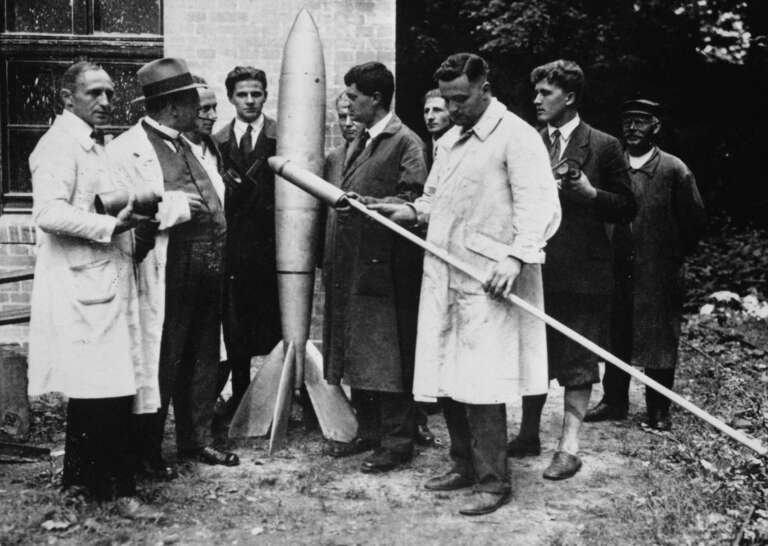
One of the most important centres for this work was Peenemünde, a research and development facility on the Baltic coast. Established by the German military in the 1930s, it brought together engineers, scientists, technicians and military personnel working on increasingly powerful rockets.
Among the people at the centre of the programme was Wernher von Braun, a young engineer who had become fascinated by space travel but was now working for the German Army on rocket development.
The programme eventually produced the A-4, later renamed the V-2 by Nazi propaganda officials. The name stood for Vergeltungswaffe 2, or Vengeance Weapon 2.
The V-2 was a remarkable technological achievement for its time. It was a liquid fuelled rocket capable of travelling at several times the speed of sound and reaching targets hundreds of kilometres away. It was the world’s first operational long range ballistic missile and represented a major step forward in rocket technology.
But it was not developed as a peaceful scientific instrument. It was a weapon designed to strike Allied cities and military targets.
Germany began using the V-2 against Allied targets in September 1944. Rockets were launched against cities including London and Antwerp, causing destruction and killing civilians. Because the missile travelled at such high speed, people often had little or no warning before it struck.
The V-2 was also an expensive and militarily disappointing weapon. It consumed enormous resources, and its impact on the course of the war was limited. But its technological significance would outlive the Nazi regime.
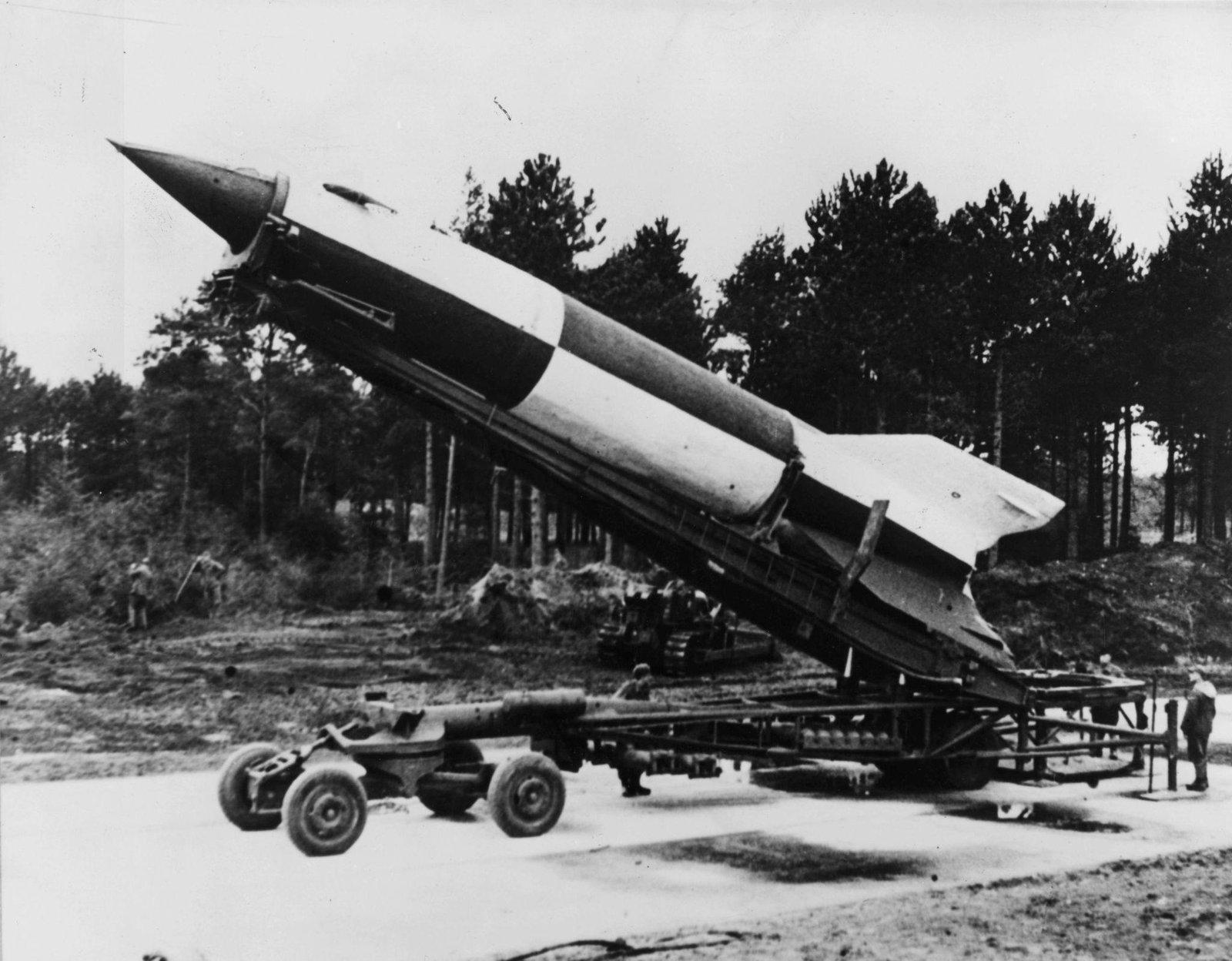
The rocket demonstrated that a vehicle could be propelled beyond the atmosphere and travel over enormous distances. Its engineering principles, including its propulsion systems, guidance technology and structural design, would influence the development of postwar missiles and launch vehicles.
For the Americans and Soviets, the V-2 – a weapon left behind by a defeated enemy – represented a starting point.
The human cost behind the V-2
There is a part of the V-2 story that should never be separated from its technological achievements.
As Allied bombing threatened the Peenemünde facility, Nazi authorities moved much of the rocket production programme underground. Production was established at Mittelwerk, a factory complex built inside tunnels in the Harz Mountains, near Nordhausen.
The labour force included prisoners from the Mittelbau-Dora concentration camp system. These prisoners were forced to excavate tunnels, construct production facilities and assemble rockets under appalling conditions.
Many were housed inside the tunnels themselves, sleeping in makeshift bunk beds in overcrowded underground chambers. Sanitation was catastrophic, food was inadequate and disease spread easily. Prisoners who were unable to work were subjected to brutal treatment.
The Mittelbau-Dora Memorial records that many thousands of prisoners died in the first months of the underground operation alone. The V-2 programme, while representing an achievement of a group of brilliant engineers, was unfortunately sustained by a system of forced labour and extreme human suffering.
The uncomfortable reality is that more people died producing the V-2 than were killed by the rockets themselves(!) The weapon that would later be celebrated as an ancestor of modern spaceflight had been manufactured through the exploitation and deaths of concentration camp prisoners.
Some of the engineers who later found employment in the American space programme had worked within this system and therefore, their technical contributions cannot be understood honestly without acknowledging the conditions under which the technology was developed.
Everybody wanted the scientists
As the war approached its end, German rocket specialists understood that their future would depend heavily on which occupying power reached them first.
Von Braun and members of his team were aware that the Soviet Army was advancing from the east. They eventually decided that surrendering to American forces offered them a better prospect of continuing their work.
In 1945, von Braun and other members of the German rocket team surrendered to American forces. The Americans secured a considerable amount of German rocket hardware, documents and technical material, including components from the V-2 programme.
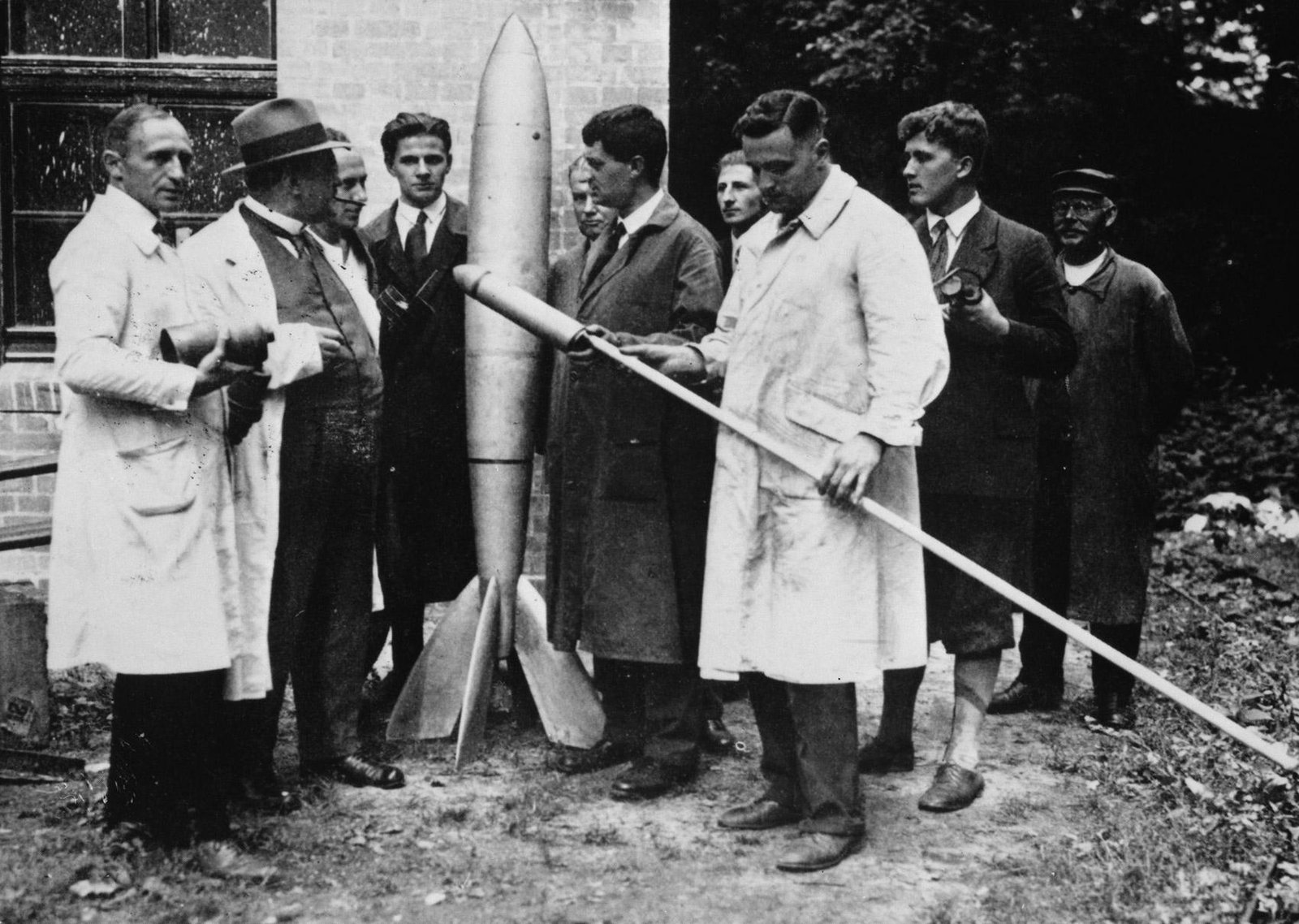
The United States had already begun organising efforts to acquire German scientific expertise. An early operation, known as Operation Overcast, was authorised in July 1945 to bring selected German and Austrian specialists to America. The programme later became known as Operation Paperclip.
The American military was interested in people who could contribute to its missile and weapons programmes. The war had demonstrated the importance of technological superiority, and officials were increasingly concerned about the possibility of the Soviet Union gaining access to the same expertise.
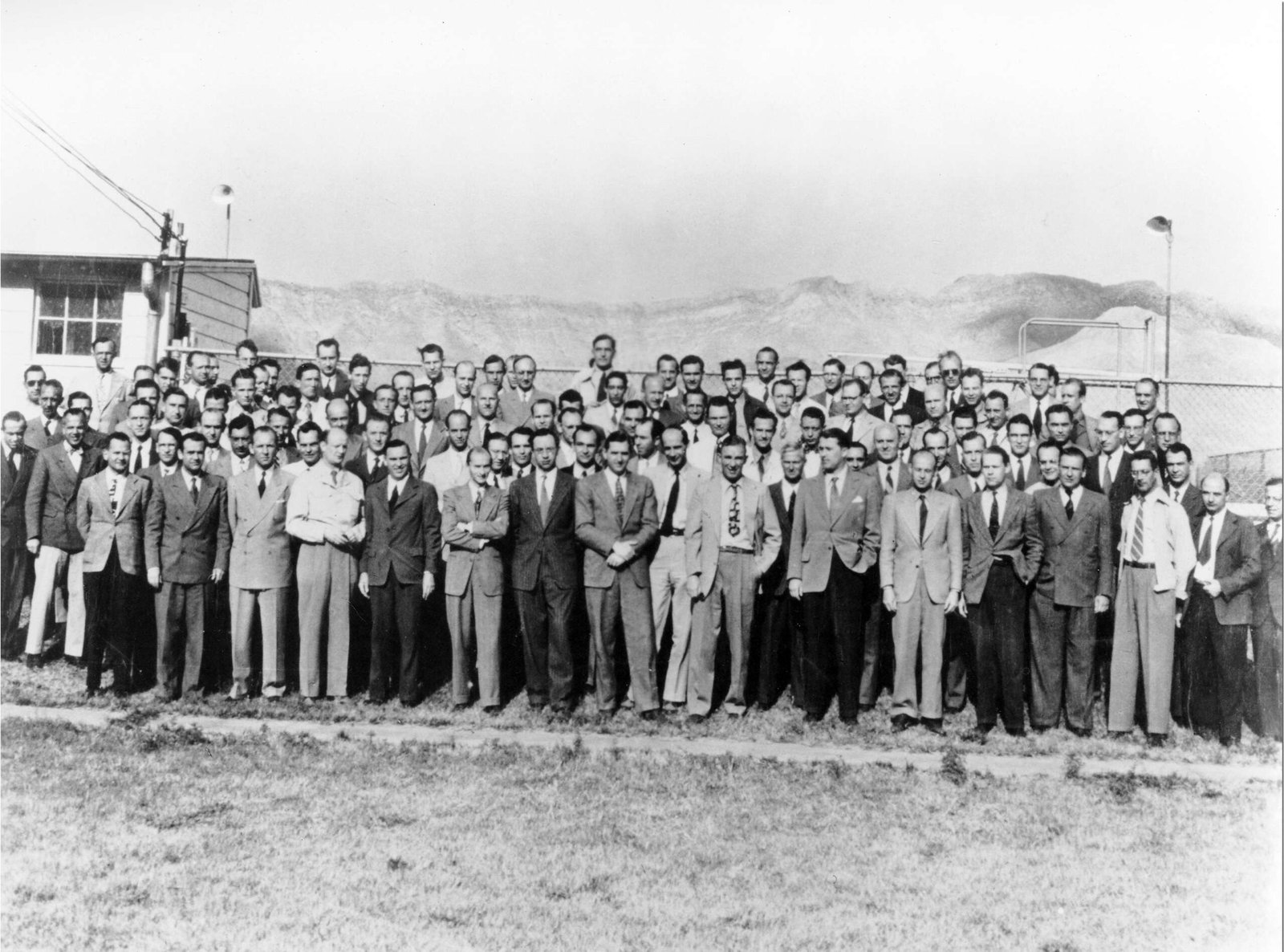
Von Braun and around 120 members of his rocket team were brought to the United States. They initially worked with the American military at Fort Bliss in Texas and White Sands in New Mexico, where captured V-2 rockets were assembled, tested and launched.
But this was only part of a much wider recruitment effort. According to the US National Archives, 765 scientists, engineers and technicians were brought to the United States under Overcast, Paperclip and related programmes between 1945 and 1955. The records also reveal that many had belonged to the Nazi Party or other Nazi organisations.
Meanwhile, the Soviet Union was pursuing its own programme.
It had captured German rocket facilities, equipment and technical material as the Red Army advanced through Germany. Soviet engineers studied the V-2 and worked with captured components and German specialists to understand the technology.
In October 1946, the Soviet Union launched a much larger operation to move German scientists, engineers and technicians into Soviet territory. Known as Operation Osoaviakhim, it took place on 22 October, when Soviet authorities transported thousands of German specialists and their families to the USSR.
The operation covered several areas of military and scientific research, including aviation, rocketry and other weapons technologies. German specialists were placed in Soviet research facilities and worked under Soviet supervision. Some were able to return to Germany in the early 1950s, while others remained longer.
The two powers had taken different routes, but their objectives were remarkably similar with neither wanting the other to gain a decisive technological advantage.
Operation Paperclip: America’s controversial recruitment drive
Operation Paperclip was not simply an exercise in bringing talented engineers to America. It involved difficult decisions about the Nazi pasts of the people being recruited.
President Harry Truman, having set conditions for the programme, insisted that active Nazi supporters should not be recruited and that only those classified as nominal Nazi members could be considered.
However, the process did not always follow the rules as intended.
The US National Archives documents how officials within the Joint Intelligence Objectives Agency sought to have some scientists’ security reports revised when their Nazi affiliations or wartime activities threatened to prevent their recruitment. The military was keen to secure their expertise, and some officials believed that losing these specialists to the Soviet Union would be a serious strategic mistake.
Von Braun himself had joined the Nazi Party in 1937 and had become a junior SS officer in 1940. His team had worked on the V-2 programme, which relied on forced labour at Mittelwerk. And yet, these details did not prevent him from becoming one of America’s most prominent rocket engineers.
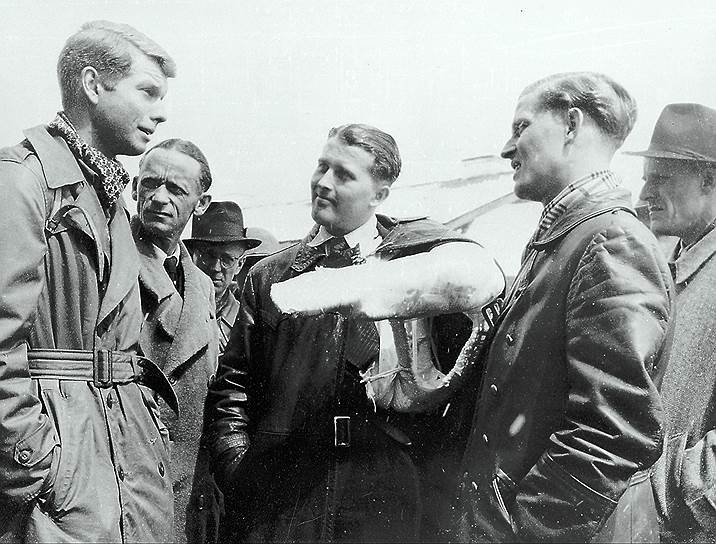
The ethical questions surrounding Paperclip became more complicated as some of the recruited scientists moved into positions of influence in American military and space research.
One particularly troubling example was Arthur Rudolph, a V-2 project engineer who later worked on the Saturn V programme. In the 1980s, an investigation by the US Department of Justice’s Office of Special Investigations examined his role in the persecution of forced labourers at Mittelwerk. Rudolph left the United States in 1984 and surrendered his American citizenship.
The American government had publicly committed itself to prosecuting Nazi war criminals and dismantling the institutions that had supported the regime. Yet, in the emerging Cold War, it was also prepared to recruit people whose wartime records raised serious questions.
National security and scientific advantage had become powerful arguments, sometimes powerful enough to push accountability aside.
From captured rockets to the American space programme
The German specialists did not arrive in America and immediately begin preparing to send astronauts to the Moon. Their first assignments were largely military.
The United States used captured V-2 rockets to study high-altitude flight, propulsion, guidance and atmospheric conditions. The launches provided valuable experience and helped American researchers develop their own rocket programmes.
Von Braun and his colleagues continued working on military missiles, including the Redstone and Jupiter rockets. In 1950, the team moved to the Redstone Arsenal in Huntsville, Alabama, where they became part of the American Army’s missile development effort.
When the Soviet Union launched Sputnik 1 in October 1957, the United States was forced to confront the possibility that it was falling behind in the new technological contest.
In January 1958, an American rocket based on the Jupiter-C programme successfully placed Explorer 1 into orbit, giving the United States its first satellite. Von Braun’s team had played an important role in that achievement.
In 1960, the Army’s rocket development centre became part of the newly established National Aeronautics and Space Administration, or NASA. Von Braun became the first director of NASA’s Marshall Space Flight Center and led the team responsible for developing the Saturn V rocket – a rocket that would eventually carry the Apollo astronauts towards the Moon.
The journey from the V-2 to the Saturn V was not a straight line, and it was certainly not the work of one man or one group of German engineers. American scientists, engineers, military researchers, universities, contractors and thousands of other workers contributed to the programme. But the German rocket team brought experience and technical knowledge that helped accelerate America’s development of large rockets.
And what did the Soviet Union do with its German expertise?
The Soviet Union also used German rocket technology as a foundation for its own missile development.
Captured V-2 rockets and components were studied, assembled and tested. In 1947, the Soviet Union launched a V-2 assembled from German parts. The following year, it tested its own version, the R-1, which was heavily based on the German design.
Soviet engineers gradually moved beyond the original V-2, developing more powerful rockets with longer ranges. The German technology was not the only foundation of the Soviet programme, but it provided an important early reference point.
The Soviet Union also had its own talented engineers and scientists. Among them was Sergei Korolev, who would become one of the most influential figures in Soviet rocketry and space exploration.
Korolev had been working on rockets long before the end of the war. He was not a German recruit, and the Soviet space programme was not simply a continuation of the V-2 project. The Germans provided useful knowledge and experience, but Soviet engineers would go on to make their own advances.
It is important to remember this distinction. The Space Race was not won by one group of German scientists working for either side. It emerged from decades of research, national investment, military competition and the work of thousands of people across different countries.
Nevertheless, the scramble for German expertise gave both superpowers an early advantage as they began developing the rockets that would eventually carry satellites, animals and human beings into space.
The strange journey from war to space
There is something extraordinary, and deeply uncomfortable, about the journey of the V-2.
It began as a weapon developed by Nazi Germany to destroy cities and kill people. It was manufactured using forced labour in concentration camp tunnels. After Germany’s defeat, its technology, components and engineers were divided between the victorious powers.
The United States and the Soviet Union would then build upon that knowledge as they developed increasingly powerful missiles and, eventually, space launch vehicles.
The same technology that had been used to deliver explosives across national borders would help place the first artificial satellite into orbit. It would contribute to the rockets that carried the first human beings into space and, eventually, the Apollo missions to the Moon.
But the story is bigger than the V-2 and the scientists who survived the war. It is also about a world in which scientific achievement, military power and political ambition had become closely intertwined.
The United States and the Soviet Union were preparing for a new kind of competition. They wanted the strongest weapons, the most advanced technology and the ability to demonstrate that their political and economic systems could deliver what the other side could not.
It was about ego and pride, and Germany’s defeat had given them access to a remarkable collection of scientific knowledge. What they did with it would help define the next chapter of the twentieth century.
And the race was about to move beyond captured German rockets. In October 1957, the Soviet Union would launch a small metal sphere into orbit and send a message that the entire world would hear.
Its name was Sputnik.
For the first time in human history, an artificial object was circling the Earth.
And thus begun The Space Age.