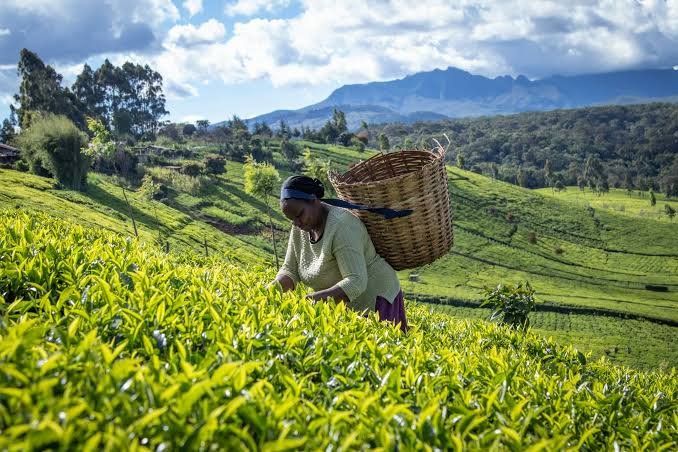
At this point, the paradoxically quiet yet loud question in our minds is if Tea farming is as economically viable as it was back then.
And rightfully so.
What was once considered a rich man’s crop is now in shambles. As the economy keeps going to the pits and the cost of living keeps going up, the price of tea has remained almost as it was years ago, with the increase being almost negligible. A crop that once paid school fees for families with multiple children now cannot even feed them for a month.
Tea Bonuses were once bountiful businesses where even husbands would disappear months on end after receiving them only to reappear once they ran out of the cash. Now, the same bonus cannot even make side pieces happy, and men cannot afford to disappear because there is nothing worth disappearing for. The least they can do is visit local busaa dens and clear the debts they had accumulated.
What is happening?
Many farmers report that the bonus payments – by the way, by bonus I mean the extra payment after the green-leaf has been sold and profits shared – are extremely low and highly variable. For example, farmers in the West Rift region reported bonuses of KES 20 per kg while others in the East Rift got about KES 62 per kg. Here is where it gets even more interesting – the farmers in Kisii and Nyamira counties received a meagre KES 10 per kg! How come the disparity is so glaring? Is it because the farmers in especially Nyamira are known to be meek and do not fight back? Are we as Kenyans, paying different taxes to different governments? What exactly is this?
The truth is, returns from tea farming are no longer sufficient to cover input costs, labour and household needs.
The so called bonus from this year was so pitiful it couldn’t even cover labour costs!
I am honestly so disappointed in my heart as I write this, and I wouldn’t blame anyone who decides enough is enough and it is now time to uproot the plant.
I understand economies, packaging, transporting and everything in between, but a farmer being paid 10bob a kg for a plant that ends up on supermarket shelves selling at 1,200 a kg (forget the low quality ones we get sold in the country) is – as Kenyans fondly love to say – diabolical.
And do not even get me started on manipulation and unfair practices at factory & buying centre level
Even the Tea Board of Kenya (TBK) has accused factories of manipulating weighing scales at buying centres and reducing the amount farmers are paid. Apparently farmers are losing between 0.5 and 1 kg in every sack of green tea leaves.
And then of course delays in weighing/processing leaves meaning leaf quality drops before sale, which also reduces value.
Circling back to Kisii, farmers said leaves often took 2-3 days to be weighed at local buying centres, by which time they had withered and lost value! What kind of incompetence is this?!
It would be best that you remember while the selling price has stayed constant throughout the years, the cost of fertiliser, labour and inputs are increasing at an alarming rate.
Simply, as if the pitiful bonus was not already a big blow, it was deducted even more to pay for taxes and ferterliser.
And then there is the not so small issue of trust. Many farmers believe that the factory system (e.g., small‐holder farmers supplying to a factory under the Kenya Tea Development Agency (KTDA) umbrella) lacks transparency and that farmers have limited voice in decision-making. Which by the way I have experienced first hand. Aka tundubari, unyanyasaji huendelea hapa Wacha tu! Farmers are calling for separation of factories (satellite factories) to give them more autonomy and better returns.
Something has to give by the way, na si tafadhali. Farmers need more voice, they need to be heard. As things stand, it seems to be business as usual, with the system in those factories being the authoritarian type that was left behind by colonial masters.
Punda amechoka!