
62 Years On
I have recently found myself scratching my head on what the African Union really does. Since the last elections they held, these thoughts have been popping up in my head randomly. The more I thought, the less I understood. So I decided to make it easy for myself. If only i could get one thing right about the AU….then maybe, just maybe.
So I asked my sisters one day in the middle of conversation, “who is your most memorable AU chairperson?” They stared at me as if I had gone mad, probably wondering what kind of trick question that was.
“Please elaborate on your question,” my sister Alice said with a glint in her eyes. Alice loves challenges you see, and is the most critical thinker in our family.
“Well, who do you think is the most famous AU chairperson to date?”
“I can only think of Koffi Annan,” my younger sister Grace quipped confidently. I waited for Alice to say something, but she didn’t. She seemed to be in agreement. I, too, said nothing. Until recently, I had also believed that Koffi Annan was a former AU chairperson.
Here’s the twist though: Kofi Annan was never AU Chairperson. He led the United Nations.
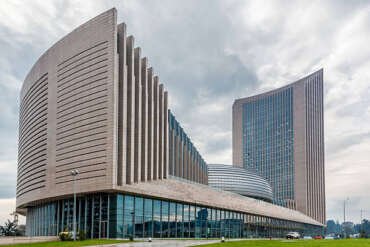
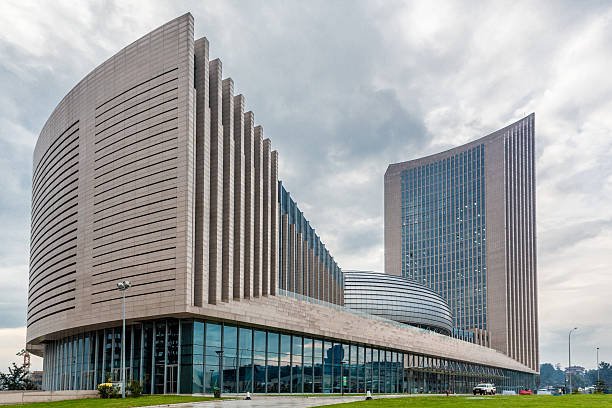
A telling confusion that speaks volumes. For an institution that was meant to showcase African strength and virtues, the African Union has remained curiously invisible to the people it claims to represent. Once in a while you might hear of its high-level summits in Addis Ababa. You definitely have heard of its rotating leadership (this is when they are most active, truly showing their political intentions) and its declarations on “continental priorities.” But on the streets of Nairobi or even Bujumbura, ask someone what the AU has done for them lately (or ever), and you’ll likely be met with a shrug.
The fact that if you ask an average African to name you one African Union chairperson from the last two decades and they will maybe mention Kofi Annan shows how invisible AU leaders are to the public.
It also highlights how non-African institutions like the UN have sometimes felt more present than the AU. I am sure Annan had his shortcomings, but his work on the continent loomed large. He felt like what an AU leader should have been.
Annan was Secretary-General of the United Nations and yet, decades later, his legacy feels more tangible than that of any actual AU chairperson. That alone says something.
This year marks 62 years since the founding of the Organisation of African Unity (OAU) and 23 years since it rebranded into the African Union, with the goal of being more people-centered and more relevant. But after decades of promises and pan-African rhetoric, we, the average African, can’t help but ask: Is the African Union still for the people or has it become just another political club?
When the Continent Cries, Who Listens?
In times of crisis, when entire populations flee, one would hope that Africa’s own union would be the first to act. But more often than not, the African Union either speaks last, softly or not at all.
Take Sudan. As one of the most brutal wars in recent African history continues to decimate Khartoum and Darfur, the AU is – as usual – nowhere to be seen. No bold peacekeeping intervention or significant pressure on warring generals. Just condemnations while the bodies of dead civilians keep piling and the region hangs on the brink of collapse.
In Mali, Burkina Faso and Niger, coup after coup has shaken West Africa, exposing deep cracks in democratic governance. Yet the AU keeps doing what it does best; suspensions, then silence. Meanwhile juntas are consolidating power and ECOWAS is stumbling.
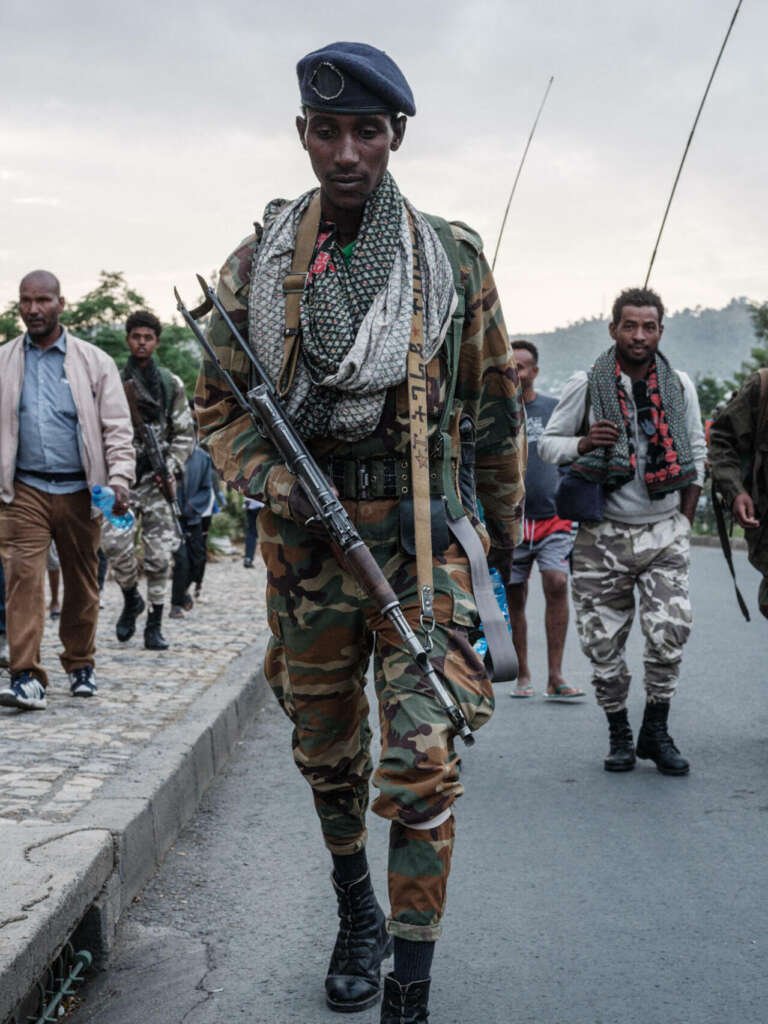
Even in the country that hosts the AU headquarters, when civil war erupted in Tigray and spread into other regions, the AU remained paralysed by politeness, reluctant to call out member states for human rights abuses. If it weren’t for global outrage and mediation efforts from outside powers, I do not think any meaningful dialogue would have even been tabled.
But, the question is, what really can the AU do? Do they even have a military? Well, on paper, there’s an African Standby Force (ASF), a pan-continental military meant to respond to war, genocide and large-scale human rights violations. It’s backed by the AU’s Constitutive Act, which even allows intervention in a member state in cases of war crimes.
But after more than two decades, this “standby” force has never stood up (pun intended). Not only does it stay fragmented, it is also underfunded and politically fragile – blocked by state interests, lack of funding and a glaring obsession with “sovereignty.” Simply, no African government wants other African soldiers intervening in their territory, AKA “sovereignty.”
No teeth. No bite…..toothless, that’s what.
ECOWAS Is Crumbling
If the African Union is meant to be the continental umbrella, then regional blocs like ECOWAS are supposed to be the limbs that help it stay closer to the ground and more attuned to local dynamics. But how, when those limbs are faltering?
In the last three years alone, Niger, Mali and Burkina Faso have all undergone military coups. They have rejected their civilian governments and suspended constitutions. They are even turning away from long-standing democratic alliances. As if they are not doing more than enough already, In 2024, all three countries withdrew from ECOWAS in what can comfortably be termed as dramatic style – accusing the bloc of being Western-controlled and out of touch with the region’s security needs.
I am sure they have their reasons, and to be honest I can not claim to be that conversant with what Ecowas really entails, their job description or what else they have going on.
My concern however is with the AU’s response. Slow, as usual. Once again, it issued statements and called for calm. But while words were being typed in Addis Ababa, the military juntas in these countries have since formed their own alliance known as the Alliance of Sahel States. This alliance prioritizes sovereignty and mutual military support over pan-African unity.
It’s a diplomatic minefield especially for the AU’s long-standing vision of “an integrated, united Africa.”
If regional bodies like ECOWAS can’t keep their members together and the AU can’t step in to mediate or repair the fractures, then who will? The UN? (Bombastic side eye. We all know whose interests they serve, and it’s definitely not African.)
The AU and the Youth: Water and Oil?
Here is a fun fact you probably didn’t know. Over 70% of Africa’s population is under 30.
Yes, Africa is the youngest continent on Earth. These young people are the ones tweeting through blackouts, surviving economic collapse while still managing to create revolutionary music and risking their lives to vote (or not, in instances where they want to send a message). And yet, when they look up to the African Union all they see is nothing. A faraway bureaucracy that has never spoken their language.
For an organisation that speaks a lot about “youth engagement,” The AU actually feels like an organisation built for presidents, not people. Its communication often feels disconnected from the daily grind of joblessness, migration and police brutality.
But as the swahili people so famously say, mgala muue na haki yake mpe, loosely translating to “give a person blame if earned, and praised equally, if earned. Once in a while, the AU does get it right.
During Kenya’s 2007–2008 post-election violence (the darkest moment the country has ever witnessed,) the AU stepped in with mediation. Through the Panel of Eminent African Personalities led by Kofi Annan, (again, note how he overshadows the actual AU leadership!) The AU forced dialogue and paved the way for long-term political reform. So yes, they did help in brokering peace in Kenya.
Here is a case of the AU being present and effective.
If only that success could become a template instead of an outlier. Safe to say that Kenya was the exception while Sudan, Ethiopia and Congo are the painful norm.
Is the AU Just Another Political Club?
When the African Union was born out of the ashes of the Organisation of African Unity in 2002, it promised to be bolder and declared it would be ready to intervene in cases of genocide, war crimes and crimes against humanity, even if that meant stepping on the toes of powerful member states.
But two decades later, most of us have come to view it as the continental old boys’ club, where heads of state toast each other in grand halls and rotate leadership roles like musical chairs. Like my sister Alice stated as our conversation progressed, to be a dictator in Africa today is to enjoy near-total impunity, as long as you show up at AU summits.
When countries fall apart AU leaders often choose solidarity over scrutiny. Sovereignty, they argue, must be protected. But of what use is sovereignty when the people are suffering?
At what point does it stop being “non-interference” and becomes complicit?
Is it that the AU is powerless or it just chooses self-preservation over meaningful action?
If it looks like a political club and speaks in well-rehearsed diplomatic clichés…..then maybe that’s what it has become.
Is There Hope? What the AU Could Become
For all its failings, the African Union is not beyond redemption. It holds within it the memory of liberation movements, the echoes of pan-African dreams, and the infrastructure for something better.
Any African that loves their continent dreams of a united Africa. If we are being honest, I doubt there is a single African that does not love Africa. And to quote a line that us Kenyans love to use, We are Africans and Africa is our business.
We see it in the demand for visa-free travel across borders (Kenya has already started acting on this). In the call for a stronger African Continental Free Trade Area (AfCFTA) that lifts small traders and rural entrepreneurs. We see it in pan-African protests; whether it’s young Nigerians marching against police brutality or Congolese activists demanding peace.
These are the movements that the AU should be amplifying.
If the AU wants to regain its relevance, it must:
- Put citizens before states
- Value courage over consensus
- Show up when it matters, not just when it’s safe
It must decentralize its power and drop the façade of neutrality when neutrality equals violence.
Pan-Africanism was never supposed to be polite. Actually, pan africanism has never been polite. It was radical and restless. Built on the backs of people who believed the continent deserved more than a pretence at democracy.
The African Union must remember that. And it must decide if it will remain a monument to what might’ve been, or if it will finally become a force that ordinary Africans can build with.