
Africa has been doing some amazing things of late, and amongst those, Ethiopia currently vies for top position on outstanding performance.
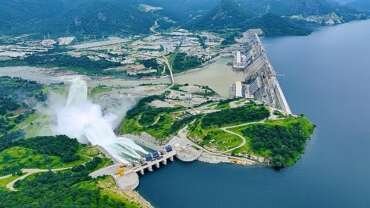
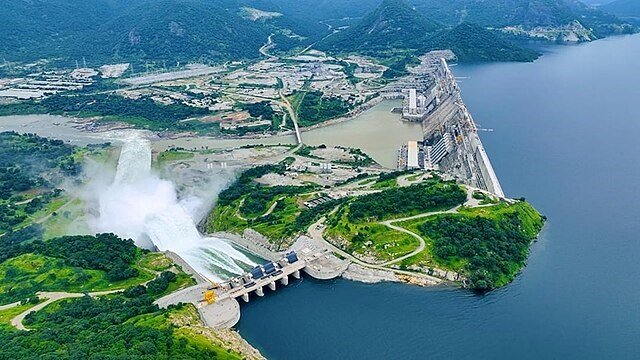
Less than 48 hours ago, (September 9, 2025,) Ethiopia officially inaugurated the Grand Ethiopian Renaissance Dam (GERD) that is now officially Africa’s largest hydroelectric project and one of the most ambitious infrastructure feats the continent has ever witnessed. Rising 170 meters above the Blue Nile and creating a reservoir capable of holding 74 billion cubic meters of water, the $5 billion project might be just a power plant to the rest of the world but for Ethiopians, it represents the promise of a brighter future.
But are the usual suspects when it comes to matters Nile happy?
Downstream in Egypt and Sudan, the mood is far less celebratory. Everyone knows that these two nations depend heavily on the Nile’s flow and the GERD has become this matchstick for regional tensions. Is it a gamble that could end up destabilizing an entire region, especially Egypt, who have always had the Nile on a chokehold for the longest time and strongly opposed any “interference” from other nations?
A lot lies in stake for Ethiopia, who consider the Grand Renaissance Dam a national mission. For a project that was first announced in 2011, it has taken more than 10 years to get to this point. What makes this even more remarkable is that GERD became a rallying point for a country determined to prove it could achieve greatness on its own terms.
While the $5 billion price tag is jaw dropping, Ethiopia turned down offers of foreign aid and loans, aware that these same favours are the ones used later on to undermine a nation’s sovereignty. Instead, it relied on contributions from its citizens at home and abroad, as well as state-led fundraising. This is a feat very few nations in Africa – let alone the world – can boast of. No foreign donors, no IMF or the world bank and most importantly, no sly chinese.
The government has framed the dam as the backbone of its development strategy. Generating over 5,000 megawatts is enough to power factories, modernize cities and bring light to rural communities where millions still live without reliable access to power.
And it is not even about economics alone. Ethiopia derives immense pride in never being colonised and has long seen itself as a defender of African independence. Completing the dam was no mean feat, what with the years of opposition from Egypt and international pressure. That in itself, reinforced its self-image as a sovereign nation unwilling to bow to outside forces.
Egypt’s Fears
No country has watched Ethiopia’s dam project with more alarm than Egypt, and for obvious reasons. For Cairo, the Nile is a lifeline they never want to be messed with.. More than 95% of Egypt’s population lives along its banks, and nearly all of the country’s fresh water comes from the Nile. it is no wonder then, that any disruption to its flow is seen as an existential threat.
According to Egyptian leaders, the GERD could reduce water levels downstream and threaten agriculture. They say it could disrupt drinking supplies and food security for a nation of over 110 million people and that years of drought or mismanagement of the reservoir could intensify these risks. The more you look into the issue, the more you realise that their fear is not really about immediate shortages but the realisation that Ethiopia now holds the power to control (at least partially,) the river on which Egypt depends for survival.
When the British brokered the treaties from 1929 and 1959, they granted Egypt and Sudan the lion’s share of Nile waters and gave Egypt veto power over upstream projects. But Ethiopia has outrightly rejected the treaties as outdated and claims to never have been a party to the deals when they were being created in the first place. It is all good for Ethiopia but not so for Egypt, to whom losing such privileged control feels like a profound national vulnerability.
Sudan’s Balancing Act
Where Egypt has been quite vocal in its opposition to the GERD, Sudan has taken a more nuanced position. While Khartoum recognizes the dam’s potential benefits, they are also aware of the fact that a regulated flow from the Blue Nile could reduce the devastating seasonal floods that have long damaged Sudanese farmland and infrastructure. The project also promises to help Sudan ease its chronic power shortages.
Yet even the Sudanese leaders are not without their fair share of worry. They are concerned that since the GERD’s massive reservoir lies just a few dozen kilometers from the Sudanese border, a structural failure could trigger devastating flooding. They also worry about being sidelined in negotiations and while torn right in the middle of Ethiopia’s determination and Egypt’s resistance.
At the end of the day Sudan finds itself at a crossroads. It stands to gain much from the GERD, but also has the most to lose if things go wrong.
Various nations and organisations have tried to broker talks, all failing terribly. Negotiations brokered by the African Union, the United States and the World Bank have repeatedly bore little to no fruit. It always boils down to Ethiopia insisting on its right to develop and operate the dam without outside interference, while Egypt and Sudan demand a binding agreement on how the reservoir is filled and managed.
Ethiopia feels like its sovereignty is being undermined. Egypt on the other hand insists that anything less than a binding legal framework endangers its water security.
When the heat became too much, Egyptian officials resorted to veiled threats, warning that “all options are on the table” to protect their water rights. Ethiopia, refused to be intimidated and dismissed such rhetoric as outdated strong-arm politics, underscoring instead its determination to complete the project on its own terms.
The GERD has become a test case for how nations share rivers in an age of climate stress and growing populations. The Nile (flowing through eleven countries) is one of the most complex rivers out there. Ethiopia, Egypt and Sudan need to find common grounds, otherwise the risk of escalation will remain.
Yet the dam has a rare opportunity to knit together regional energy markets, reduce dependence on fossil fuels and drive industrial growth across East Africa. By sharing electricity grids, cooperation amongst the countries becomes a necessity.
More than a decade of talks has failed to bridge the divide, and the future of the Nile hangs in the balance. What is clear is that no single nation can claim the river as its own. Meanwhile, the rest of the world will sit and watch the future of Africa’s most storied river unfold.