You have probably heard of the old joke about the difference between finish and complete. It goes, What’s the difference between complete and finished? If you marry the right woman, you are complete. If you marry the wrong woman, you are finished. And if the right woman catches you with the wrong woman… you are completely finished.
How does this relate with Gen Z? You are probably wondering. Well, as it goes, If you want to finish a Gen Z, take away their phone. If you want to completely finish a Gen Z, take away their phone and the Wi-Fi.
It’s funny….until it’s not. Plus it also stings with truth. For Kenya’s youngest adults, the internet is their friend, classroom, shopping mall and a hangout spot all rolled at the palm of their hand. Being online is second nature, but at what point does it stop being normal and starts raising alarm? For a generation that scroll eats into sleep and has their phone at hand even during conversations at the dinner table, the question that cannot be ignored anymore is: are Gen Z Kenyans too online for their own good?
For Gen Z Kenyans, the internet is the world. From morning to evening, they will orbit from TikTok dances to Instagram Reels, circle to WhatsApp groups and X (formerly Twitter) threads. Repeat process. Maybe spend a few minutes on facebook. To most of them, social media is where they learn. It is where they organise their protests and even earn. If you are wondering how coordinated the young people have been from their protests and everything in between – for instance recently purchasing ¾ of the match tickets in a neighbouring country’s quarter final match – herein lies your answers.
What are the numbers?
According to this article by Medium, Kenyans spend an average of 4 hours 19 minutes on social media each day, significantly above the global average of about 2 hours 23 minutes.
In 2025, TikTok’s ad reach hit 15.1 million users aged 18+, which is nearly 47% of Kenya’s adult population and 55% of all internet users.
Instagram reaches around 3.5 million adults (about 10% of all internet users), while YouTube hits approximately 11 million Kenyans. DataReportal – Global Digital Insights
Across Africa, Kenyans are among the top in smartphone engagement. Spending nearly 4 hours 57 minutes per day glued to their screens, they rank 2nd in Africa just behind Ghana.
As one local study in Western Kenya revealed, 35% of Gen Z adolescents spend over 6 hours daily on social media and mobile devices, and this, often unsupervised.
Life in Filters and FOMO
Remember when Instagram used to make us envy our neighbour’s vacation? Well, TikTok has taken it to another level, making us envy strangers we’ll never meet. It is on tiktok where everyone is living a curated “soft life”, attending brunches at Nairobi hidden gems rooftops. It is also here where campus kids flex thrifted outfits that look designer and Gen Z lives in a highlight reel where everything seems shinier than it actually is in real life.
But beneath the filters lies a constant hum of FOMO (fear of missing out.) When your friends are at a concert and you’re stuck at home, you don’t just hear about it the next day but witness it live, in high definition and in real time. Even downtime feels performative: a simple cup of dawa becomes a photo op with the right caption.
This endless comparison game unfortunately comes at a price. The pressure to keep up often spills into finances. Finances that most young people understandably do not have. Now, they are pushed into spending beyond their means just to maintain an online aesthetic. In a world that keeps getting increasingly superficial, those who cannot keep up or afford this lifestyle are often looked down upon.
The result is a young demographic that is constantly competing while measuring their worth against carefully filtered lives which, at the end of the day, aren’t even the reality.
The Mental Health Question
Psychologists have been warning us for the longest time about the link between excessive screen time and mental health struggles. Truth is, Gen Z Kenyans are no exception. Studies show that prolonged exposure to social media can heighten feelings of anxiety, depression and loneliness especially when online interactions make one do away with real-world connections.
One can’t help but notice the irony: that at a time when the world is as connected as never before, the majority feel isolated in a way that has never been witnessed before. Where does one draw the line and realise that online platforms are one big theatrical stage? When online friendships blur with real ones, how does a young person tell the difference between genuine support and digital performance? Memes about burnout and jokes about therapy circulate widely and yet somehow, beneath the humor we can all tell there is a collective unease.
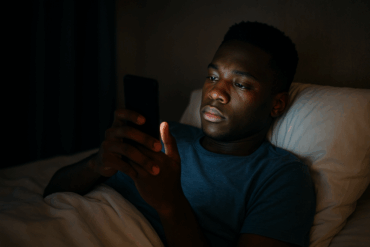
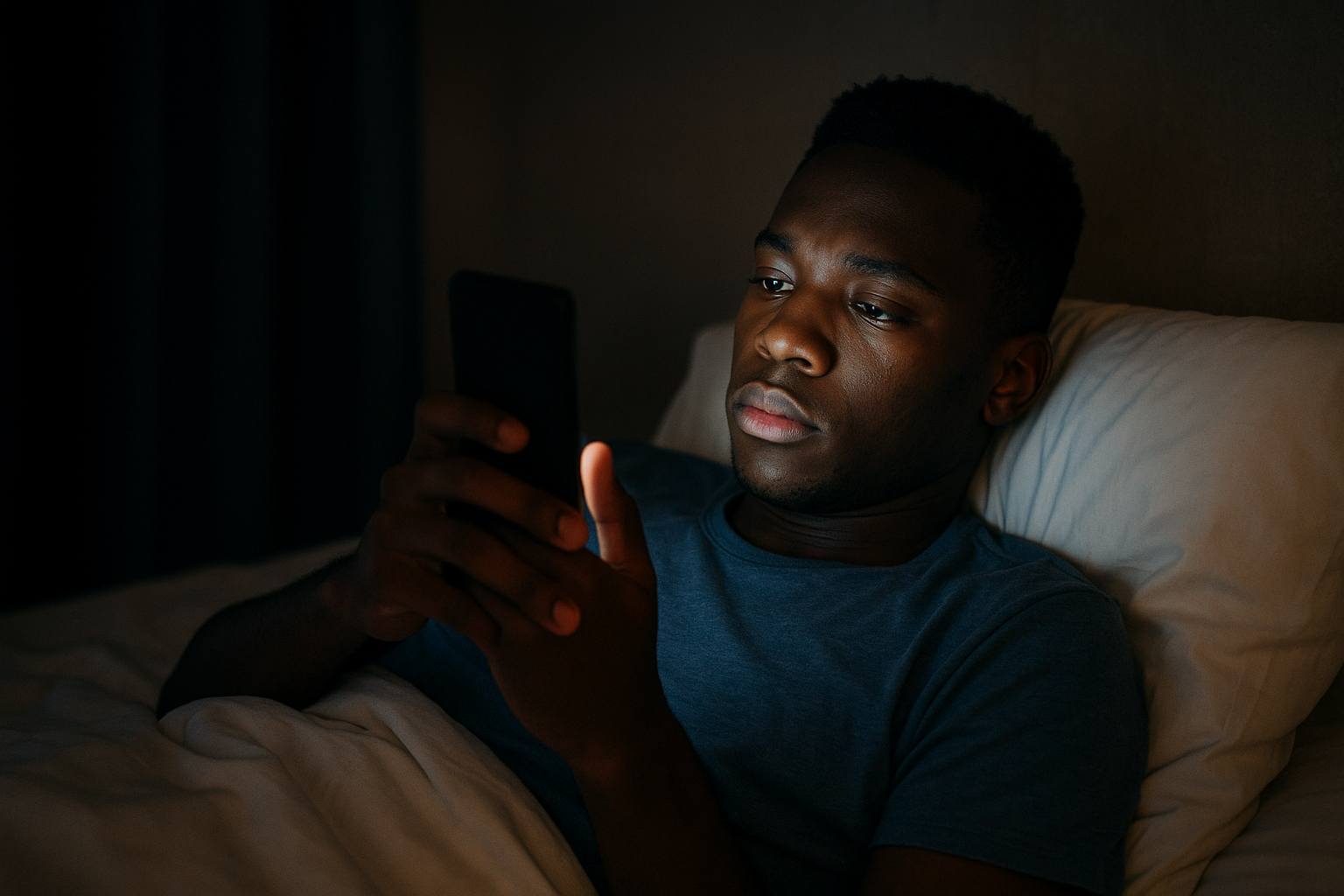
Sleep has become collateral damage. It always starts as one more video or one more post and before you know it you are now into the early morning hours, cutting into rest and feeding a cycle of fatigue and irritability. It is worse for students who now have to deal with lower concentration in class. And as for young workers, it means reduced productivity and constant distraction.
It’s not all gloomy though because social media has also given Kenyan Gen Z a platform to openly discuss topics that were once taboo. Topics on mental health including depression, anxiety and therapy – just to mention a few. Online communities provide solidarity, peer support and resources for those who might never seek help offline.
The challenge, then, is less about whether social media is harmful and more about how to handle its double-edged nature.
Is Being Too Online a Bad Thing?
We circle back to the million dollar question, are Gen Z Kenyans too online for their own good? If only the answer was a simple “yes” or “no.” We have disrupted sleep, rising anxiety, financial pressure and a culture of comparison that leaves many feeling inadequate as the price to pay. Being constantly connected means being constantly exposed, and not positive things either. Judgment, algorithms and a relentless pressure to keep up that can chip away at self-esteem.
But the same digital spaces have also unlocked unprecedented opportunities. This is the generation that mobilized protests through hashtags, launched businesses from Instagram shops and found solidarity in online mental health communities. Creativity, activism and entrepreneurship are thriving precisely because Gen Z is “too online.” Not to forget that Kenyan youth are among the people that know their rights the most in Africa.
The real question, then, is about balance. We have to accept facts, one of them being that going online is no longer optional but the water Gen Z swims in. But even fish need to come up for air. When the screen becomes the only lens through which life is lived, something essential is lost. Logging off isn’t about rejecting technology but remembering that life outside the feed still matters.
There’s an inside joke between my nieces and I that if you want to finish a Gen Z, you take away their phone and if you want to completely finish them, you cut off the Wi-Fi. But maybe the real danger isn’t losing connection but never disconnecting at all.
For Gen Z Kenyans, being online is a source of creativity. It is where they do their activism and meet the community, but it can also be a trap of endless comparison and quiet exhaustion. The challenge is learning how to step in and out of it with intention. Because at the end of the day, the most important connection is the one you make with family and friends – people who will genuinely come to you at your hour of need and not some actors in this grand stage called online.