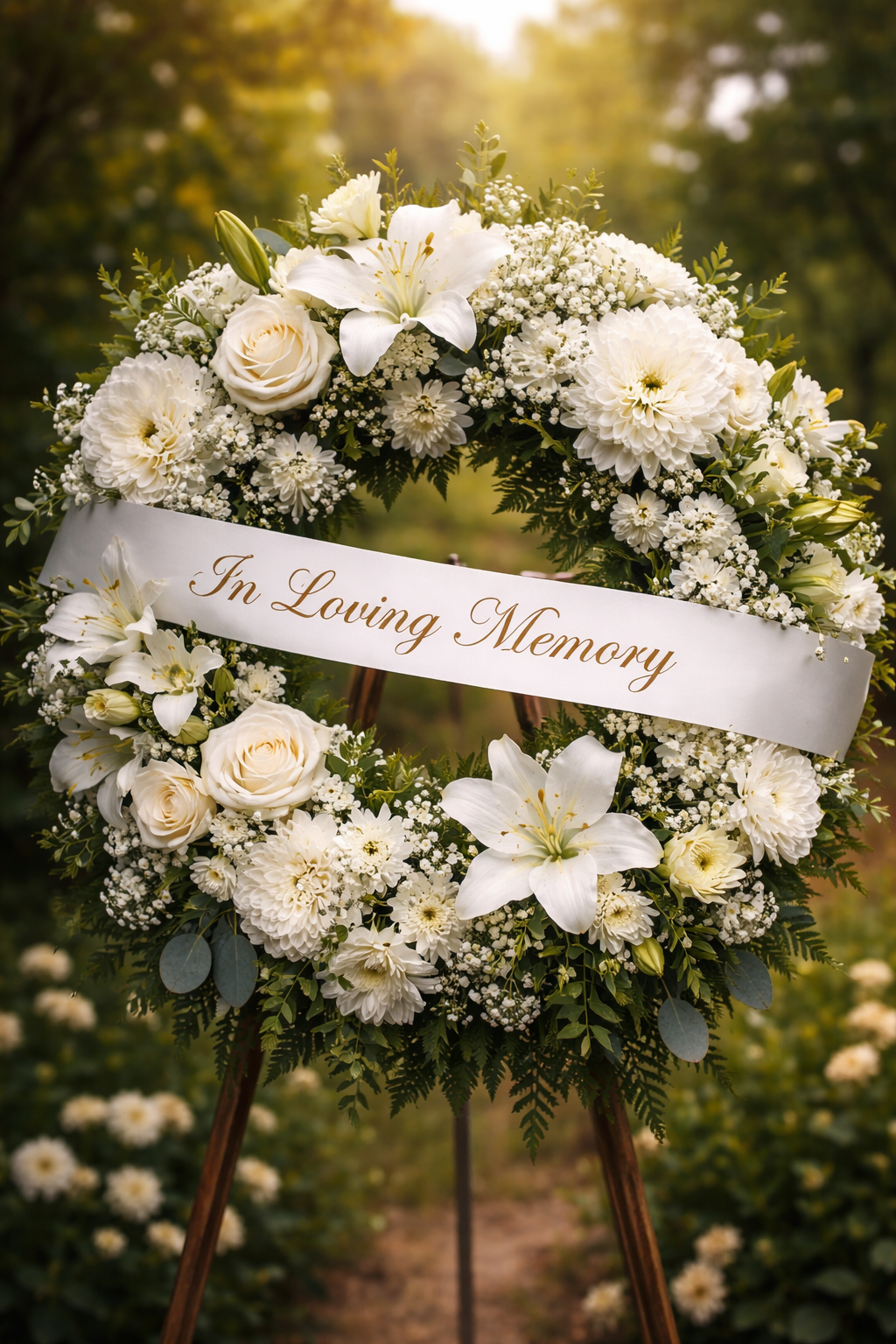
In a Funeral, whether you like it or not, you have to pause. Funerals gather us abruptly into the reality of loss, asking us to sit with something we spend most of our lives avoiding. And yet, for something so inevitable, very few of us are ever taught how to behave when we arrive at these moments.
Even though we do show up with good intentions, we are still unsure of where to stand, what to say, how long to stay or simply how to carry ourselves in the presence of someone else’s grief. So we rely on instinct and what we have seen others do, on cultural cues that are sometimes clear and other times clearly confusing.
Funeral etiquette at its core, is not about rigid rules or performance. It is about respect. It is about understanding that grief is a fragile space, and that how we show up within it matters more than we often realize. It asks us to be present without taking over and offer comfort without forcing it, Funeral etiquette demands us to recognize that sometimes the most meaningful thing we can do is simply to be there….genuinely be there.
1. Showing Up Is Not About You
One of the most common missteps at funerals is the shift from supporting the bereaved to centering ourselves. Sometimes it isn’t even intentional. It happens in small ways, almost unconsciously. We begin telling long stories about our own experiences with loss and before long dominate conversations. Other times we expect the grieving family to receive and accommodate us emotionally.
But a funeral is not an opportunity to process your own grief unless it is directly shared and relevant. It is, first and foremost, a space for those closest to the deceased.
This means allowing them to lead. Tempting as it is, resist the urge to fill every silence with words. By doing so, you at least understand that your presence is already enough, and that support does not need to be loud to be felt. Sometimes, sitting beside someone in silence carries more weight than any carefully constructed sentence ever could.
2. The Things We Say, And What They Carry
Language becomes particularly delicate in the presence of grief. Faced with loss, many of us reach for familiar phrases, hoping they will comfort but often landing the wrong way. For example, telling the bereaved to “be strong,” “at least they lived a long life,” or “everything happens for a reason” can feel dismissive, even when they are meant kindly.
Grief needs to be acknowledged, not corrected or softened. A simple “I’m so sorry” or “I’m here for you” often holds more sincerity than anything more elaborate. And beyond words, tone and timing matters. In some instances even choosing not to speak at all is the most respectful option.
The goal is not to say the perfect thing but rather to avoid saying something that unintentionally places pressure on the grieving to respond or justify their feelings, or to move through their pain quicker than they are ready to.
3. Presence Over Performance
In many communities today, funerals have quietly become social gatherings, where the lines between mourning and socializing begin to blur. People catch up and expectedly, phones are constantly in use. In some cases even moments are recorded and shared as though they were ordinary events.
There is nothing wrong with connection. In fact, community is one of the most important pillars of mourning. But there is a difference between respectful interaction and behavior that disrupts the emotional tone of the space and funeral etiquette asks us to be mindful of that line.
It asks us to lower our voices and be very intentional with our presence. Always resist the urge to document everything, and remember that while this may be a moment to reconnect with others, it is first a moment of loss for someone else. The atmosphere matters, and each person present contributes to it whether consciously or not.
4. Cultural Sensitivity and Unspoken Rules
Across African communities, funerals are communal experiences shaped by tradition and shared responsibility. There are often unspoken rules about dress, conduct, participation and even timing. While these rules may not always be explained, they are felt.
Understanding this requires attentiveness. It may mean dressing appropriately, even when no explicit instructions are given. It may mean participating in communal contributions, whether financial or practical. It may mean observing before acting, allowing those familiar with the customs to guide the flow of events.
What matters most is humility. Recognizing that you are stepping into a space that carries meaning beyond your own perspective, and being willing to adapt your behavior in a way that honors that.
5. After the Burial: The Quiet Disappearance of Support
One of the most overlooked aspects of funeral etiquette is what happens after the burial, when the crowds thin out and the structure of mourning begins to fade. In those moments, the reality of loss often settles most heavily on the bereaved. During the funeral, support is visible and abundant. But in the days and weeks that follow, it can disappear just as quickly.
True presence extends beyond the ceremony. It is in the follow up message or the visit days later. It could also be continued check in long after others have moved on, remembering that grief does not end when the funeral does, and that showing up consistently, even in small ways, can mean far more than a single appearance on the day itself.
In conclusion, Funeral etiquette is not about perfection. It is about awareness, understanding that in moments of loss people are often more vulnerable than they appear, and that our actions, however small, can either support that vulnerability or unintentionally disrupt it.
To show up well at a funeral is to practice empathy by listening more than you speak, observing more than you assume and offering your presence without expectation of recognition or return. In the end, what people remember is not whether you said the right words but how, in one of the most difficult moments of their lives, you made them feel supported and not alone.