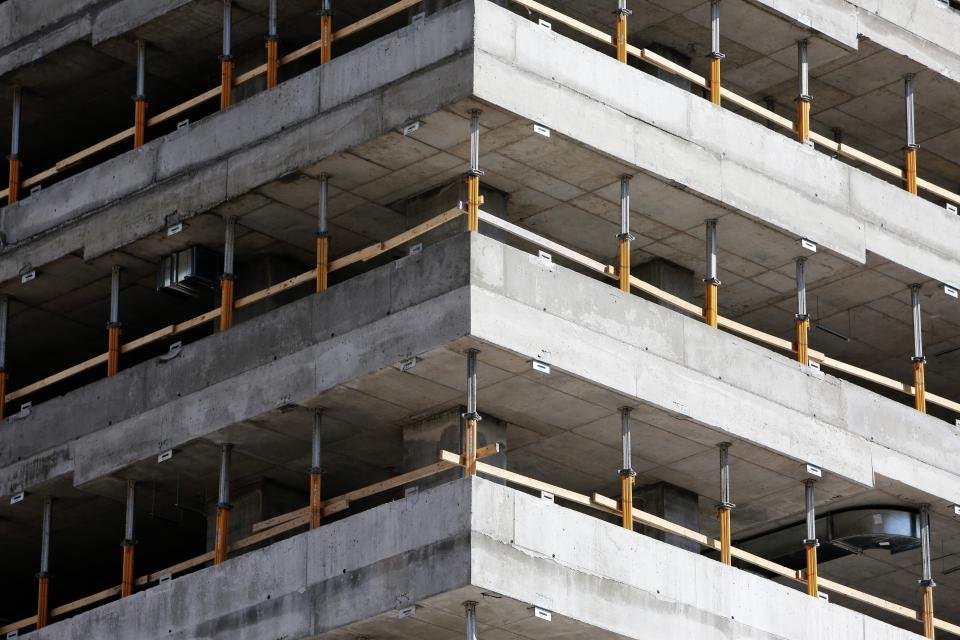
Nairobi is growing faster than it can understand itself.
Everybody is under pressure, from the national government, county governments and even the citizens themselves. The city must grow, otherwise how will we prove ourselves online as the “capital city of Africa?” It feels like a race against time, and the city is starting to feel the strain. New estates and housing projects appear almost daily. Cranes dominate the skyline. And let us not even begin on the Traffic and the storm drains that overflow. If you moved out of your hood today and came back 3 years later, chances are you might not recognize it.
This is the city of ambition and momentum. Yet on the ground, it is choking. Choking with traffic and drainage systems that fail at the first heavy rain. As if the cost of living is not already a war being fought on the daily, communities find themselves fighting developments they barely knew were coming.
This is a story about what happens when a city builds faster than it plans.
Over the past decade, Nairobi has experienced intense development pressure driven by investment demand and political urgency. Rural urban migration is still a thing, and it doesn’t help that pupulation growth is rapid and housing shortages are real. You do not even have to look further. Just look at Kilimani and Kileleshwa to understand what I am talking about. Governments are under pressure to deliver quickly and at scale. In this environment where speed becomes currency, projects that move fast are celebrated while those that ask difficult questions are treated as obstacles.
Much of Nairobi’s development surge has occurred against a backdrop of outdated zoning plans and weak enforcement. Areas originally designed for low density living now host high rise apartments. We are seeing more commercial buildings rise in residential zones. And because everyone wants to eat, fat envelopes exchange hands at the expense of Infrastructure capacity. Water, sewerage, roads, schools, you name it – are they properly assessed before approvals are granted? Instead, the assumption is that solutions will follow construction.
Public participation, a constitutional requirement, often becomes procedural rather than meaningful. Notices are issued and meetings are held yes, but are the communities every involved, or do they usually report learning about major developments when construction is already underway? By which time investments have been sunk and positions hardened.
It is at this point that the city begins to push back.
Take the recent halt of the Lang’ata affordable housing project. The court did not stop the project because homes are bad but because rules were ignored and there was almost zero public participation. That pause is costing money and momentum. when that happens, Investors hesitate and developers face rising costs. Court cases halting developments, resident protests and environmental petitions are often framed as disruptions to growth while in reality, they are symptoms of planning failure.
Is it not ironic then, that in the rush to build fast, developers end up meeting the very delays they sought to avoid in the first place.
From a business perspective, poor planning is not just a governance problem. It is a financial risk because at the end of the day, projects stalled by litigation bleed money. Assets tied up in legal disputes lose value and unclear land use decisions create long term liabilities. An unpredictable city becomes less attractive to serious investors.
Well planned cities, by contrast, reward certainty. Clear zoning, proper infrastructure, genuine public participation, environmental compliance – all the nine yards. Slower beginnings often lead to faster, smoother completion.
Nairobi’s challenge, then, is not growth itself, which happens to be inevitable and necessary. The challenge is aligning ambition with discipline. And discipline we do not have. The faster and bigger, the better for everyone involved, right? Yes even for you, the tenant. Yet, Development must be matched by strong institutions and the political courage to say no when conditions are not right.
Building better planned projects, even if it means building fewer, may achieve more than building many that stall halfway. Affordable housing and commercial developments will only succeed if communities trust the process behind them.
Nairobi stands at a crossroads. It can continue building at speed and paying later through conflict and rising costs. Or it can choose a more deliberate path, one where planning is treated as an investment and not a hindrance.