Africa. The land of traditions, rituals, complex customs and beliefs. Home to thousands of ethnic communities, each with its own ceremonies and practices passed down through generations. It is amazing, really, how one custom could be practised in west africa, southern Africa and the East of Africa. How did our forefathers share all these traditional practises, when there were no telephones or a “sophisticated” way of sharing information?
From elaborate initiation ceremonies, dowry payments, marriage arrangements and rituals surrounding death, these traditions that were somehow shared across most of Africa offer a glimpse into how different communities understand family, identity, adulthood and the spiritual world.
While some of these practices are well documented, others are frequently described in travel articles and online lists without enough context, their meanings differing between communities and generations.
1. Spitting as a Greeting and Blessing Among the Maasai
The Maasai are a pastoralist community found mainly in Kenya and Tanzania, and known for maintaining many cultural traditions, including distinctive forms of greeting and ceremonies marking important stages of life.
One practice described in accounts of Maasai culture is the use of spitting as a greeting or blessing. In some contexts, a person may spit into their palm before shaking another person’s hand. Spitting may also be used symbolically when offering a blessing to a family member or another person.
The practice is connected to cultural understandings of goodwill and the significance of saliva in certain social interactions. It differs from the way greetings are commonly understood in many other societies, where spitting is usually associated with disrespect.
Some accounts also describe beliefs concerning newborn babies, including the avoidance of excessive praise. Apparently, speaking too positively about a baby was believed to attract misfortune. Therefore, the maasai would utter negative sounding words to protect the child.
2. The Hamar Bull Jumping Ceremony in Ethiopia
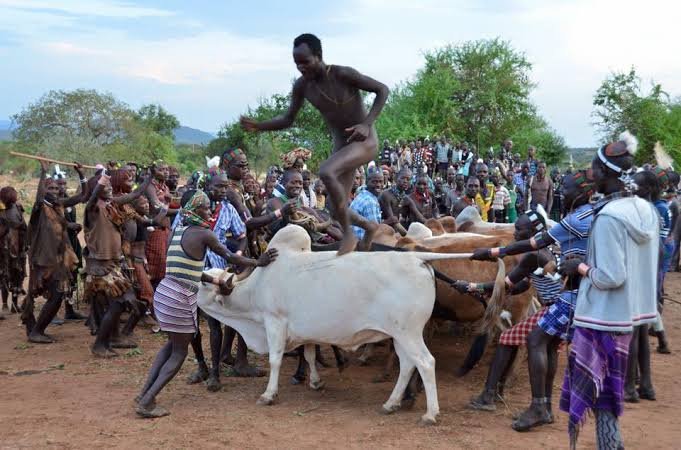
Among the Hamar people of southwestern Ethiopia, bull jumping is a traditional ceremony associated with a young man’s transition into adulthood and his readiness for marriage.
The ceremony involves arranging a line of cattle that the initiate must run across, jumping from one animal’s back to another. The young man typically makes repeated passes across the line and must attempt to complete the task without falling.
The event is attended by family members and the wider community and is an important social occasion that brings together relatives, marking a significant stage in the initiate’s life.
Women who have close relationships with the initiate, including female relatives and friends, may participate through singing, dancing and other ceremonial activities. In some documented forms of the ceremony, women deliberately present themselves for ritual whipping by recognised male participants. The resulting scars may be understood as signs of loyalty(!), solidarity and commitment to the initiate.
The ceremony has attracted attention from outside Ethiopia because of the physical demands placed on both the young man and the women involved. Within the community, however, it forms part of a wider system of kinship, social obligations and the recognition of adulthood.
3. Marriage Preparations Among the Banyankole of Uganda
The Banyankole, also known as the Ankole people, are found mainly in southwestern Uganda. Traditionally, marriage has involved not only the couple but also their extended families, with relatives participating in negotiations, preparations and advice for the prospective bride and groom.
This is where it gets interesting. A woman’s paternal aunt may have an important role in traditional marriage preparations (and not in any way you would even imagine). In some accounts, the aunt is described as advising the bride on marital life, including expectations surrounding intimacy and the responsibilities of marriage.
But it doesn’t just stop there. There are claims that an aunt would have sexual intercourse with the prospective groom to test his potency or would observe or listen to the couple during intercourse.
Personally, I think this just goes to show that extended family members in Africa played a big role in traditional marriage arrangements. In many African societies, marriage has historically been treated as a union between families as well as between two individuals.
4. Lip Plates and Scarification Among the Suri and Mursi of Ethiopia
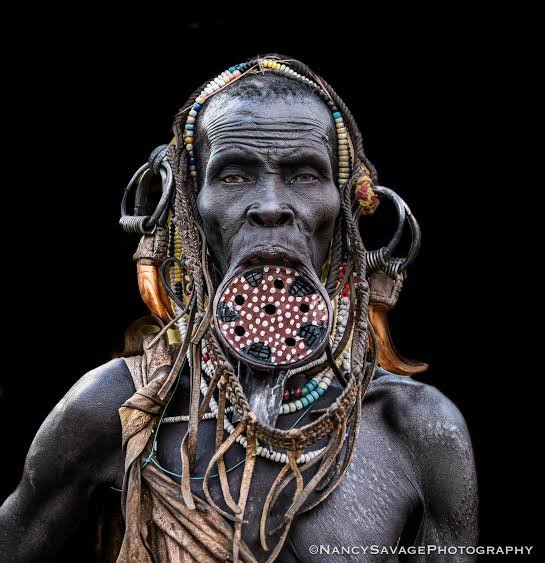
Few African cultural practices have attracted as much fascination and misunderstanding as the Mursi woman’s lip plate. Over the years, outsiders have offered different explanations for the tradition, including the claim that women stretched their lips to appear less attractive to slave traders. However, this theory has limited historical evidence, and the practice’s origins appear to be more complex. Anthropological accounts of the Mursi point to its social and cultural significance. Traditionally, lip stretching begins during adolescence, around the ages of 15 or 16, and the size of the plate has been associated with bridewealth and the marriage arrangements made between families.
The plate can also signify a woman’s transition into adulthood and her social standing within the community. Women may remove it when eating or sleeping, and the extent to which it is worn can vary. The enduring slave-trader explanation illustrates how easily outsiders can impose their own interpretations on unfamiliar customs, overlooking the meanings that the people who practise them attach to their own traditions.
The process of lip stretching generally begins with an incision in the lower lip. After the wound heals, a small plug or plate may be inserted, with progressively larger plates used over time to increase the opening. The size of the plate varies between individuals, and not all women participate in the practice.
Scarification is another form of traditional body modification found among several African communities, including some in Ethiopia and South Sudan. It involves making controlled cuts in the skin that heal into raised scars or patterns. Depending on the community, scarification may be associated with beauty, identity, social status, initiation or personal achievement.
5. The Gerewol Festival of the Wodaabe
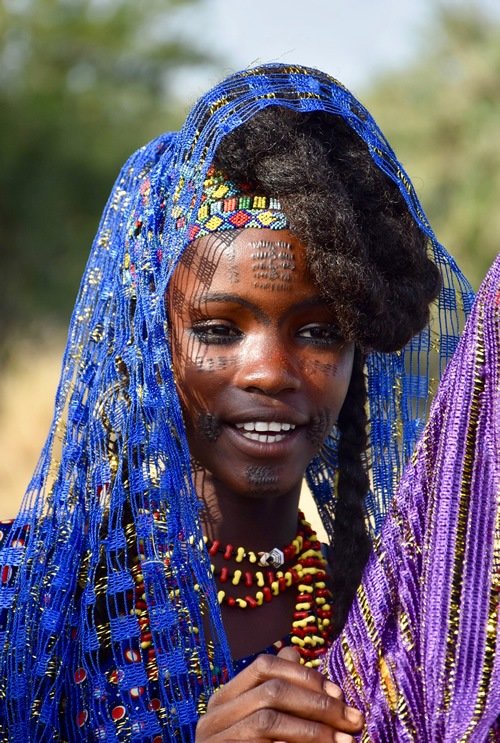
photo: https://www.transitionsabroad.com/listings/travel/articles/chad-wodaabe-ritual-beauty-contests.shtml
The Wodaabe – a subgroup of the Fulani people – live across parts of the Sahel, including Niger, Chad, Cameroon and neighbouring countries. They are particularly known for the Gerewol, a cultural gathering associated with courtship and elaborate male adornment.
During the festival, men may spend considerable time preparing their appearance. They apply facial makeup, emphasise their eyes and lips, arrange their hair and wear colourful clothing and ornaments.
One of the best known events involves rows of men performing coordinated dances and singing. They may emphasise facial expressions, display their teeth and move rhythmically as women observe the performances. Physical appearance and stamina can all form part of the courtship display.
The festival is often described as a setting in which women assess potential partners, reversing the more familiar image of men competing for female attention.
Some accounts also associate Wodaabe marriage customs with wife-stealing, a term used to describe relationships formed when a man and a woman leave an existing marriage or partnership to establish a new union. Simply, if your wife decides during the ceremony that she wants to leave with another man, there is really nothing you could do about it. Because, you know, tradition.
The Gerewol is part of a broader cultural setting in which courtship, marriage, beauty and social relationships are expressed through public ceremonies.
6. Chewa Funeral Traditions and the Gule Wamkulu
The Chewa are Bantus found mainly in Malawi, Zambia and Mozambique. Their cultural traditions include elaborate ceremonies associated with initiation, community life and death.
One of the best known Chewa traditions is Gule Wamkulu, a masked dance performed by members of a secret society. Performers wear distinctive masks and costumes representing different characters, spirits and figures from society. The dances can communicate moral lessons and cultural knowledge.
Funerals are also important communal events, bringing together relatives and members of the wider community. The ceremonies may include mourning, prayer, music, food and other practices that reflect local beliefs about death and the relationship between the living and the deceased.
There have been dramatic claims about Chewa funeral procedures, including descriptions of a corpse being washed internally and the resulting water being used to prepare communal food.
As with many African communities, funeral practices can differ according to locality, religion, family preference and changing social circumstances.
7. Shaving a Widow’s Hair After Her Husband’s Death
I think this is one of the practices that was carried out in all if not almost all of African communities. It is no secret that a woman’s transition into widowhood was accompanied by mourning rituals that included changes in clothing, restrictions on social activities, periods of seclusion and the shaving of the head.
Where head shaving is part of the tradition, the widow’s hair may be cut by a relative or another person designated to perform the ritual. The timing varies: it may take place shortly after the husband’s death, during the funeral period or at another stage of mourning.
The act can carry different meanings depending on the community. It may symbolise mourning, the end of one stage of life, the removal of the past or participation in a cleansing ceremony. In some settings, the widow may also be expected to wear particular clothing or observe specific rules during the mourning period.
It is at this point where we can’t help but wonder, what exactly was ever expected of Widowers? Were there mourning customs for them?
8. Wife Inheritance in Some African Communities
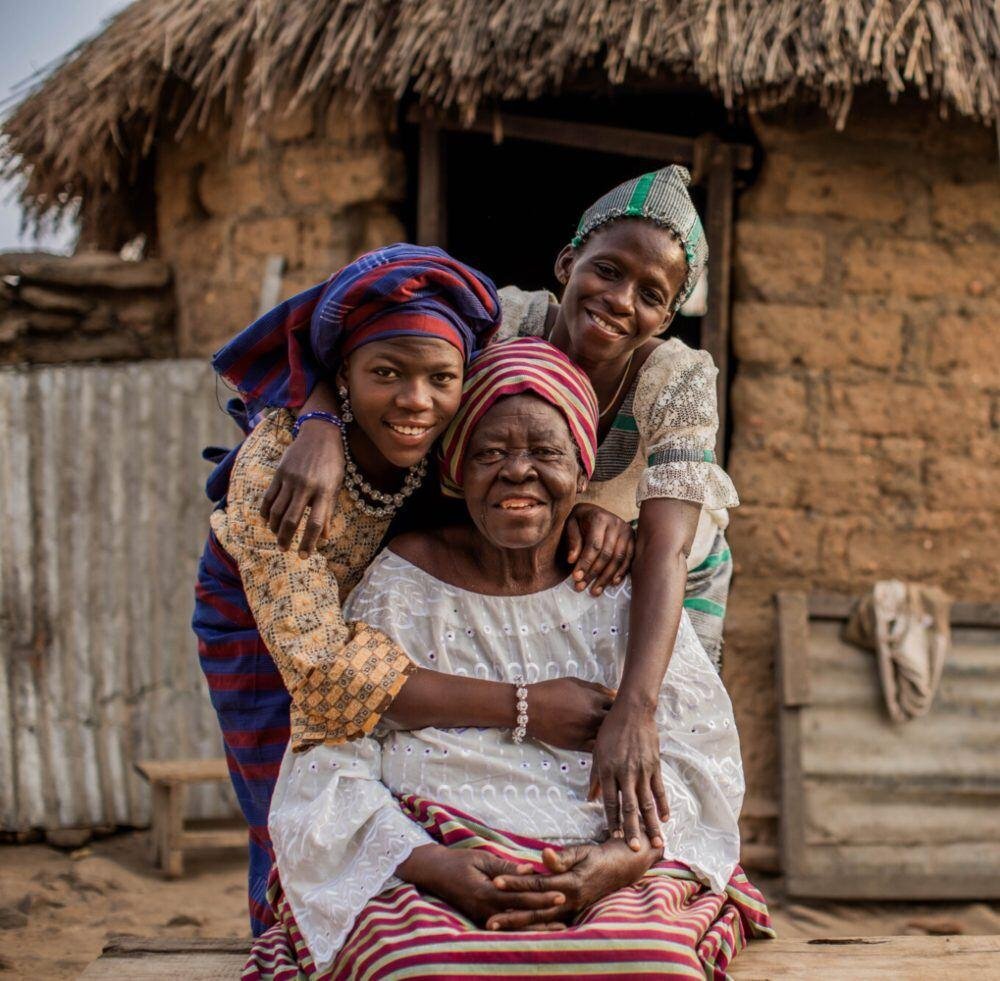
Wife inheritance is also another rampant one – a practice documented in some African communities in which a widow enters a relationship with a male relative of her deceased husband or another man designated through customary arrangements.
The practice has taken different forms. In some settings, the man may assume responsibilities towards the widow and her children, helping maintain family ties and providing social or economic support. In others, the arrangement has been connected to lineage, inheritance, the continuity of a household or beliefs about the spiritual and social implications of widowhood.
The practice has been documented in parts of East Africa, including among some communities in Kenya. However, it is not universal, and the details vary across ethnic groups, families and historical periods.
Wife inheritance is sometimes discussed alongside widow cleansing, but the two are not identical. Cleansing refers to rituals associated with mourning or a transition after death, while wife inheritance concerns the formation of a new relationship or union following a husband’s death. In some settings, the practices may be linked; in others, they are separate.
The contemporary practice is also contested within communities, particularly where widows face pressure to enter relationships they do not want. Legal protections, changing attitudes towards marriage and women’s economic independence have influenced how such customs are understood and observed.
9. Female Genital Mutilation as a Rite of Passage
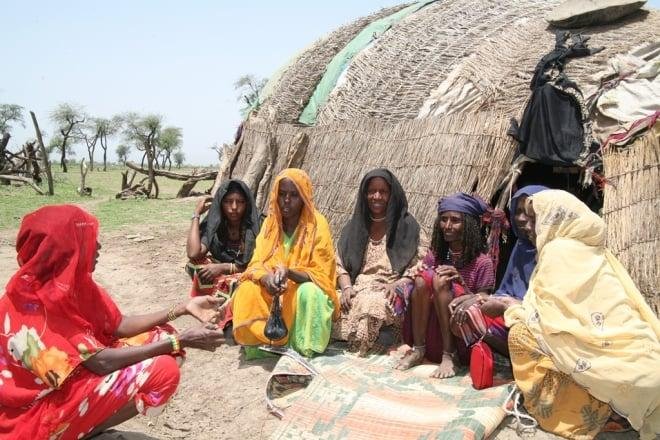
Female genital mutilation (FGM) refers to procedures involving the partial or total removal of external female genitalia, or other injury to female genital organs, for non medical reasons.
The practice has been documented in a number of countries in Africa and elsewhere. The procedures, ages at which girls undergo them and social meanings attached to them differ between communities.
In some settings, FGM has traditionally been associated with initiation into womanhood, marriageability, social acceptance or ideas about purity and sexual behaviour. The procedure may be carried out during childhood or adolescence, sometimes as part of a wider ceremony involving family gatherings and celebrations.
Historically, families may have viewed participation as necessary for a girl to be recognised as an adult or accepted within the community. It is sad that even to date some communities still practise it, even though it is a custom that has mostly been outlawed. Social pressure has been playing a major role in sustaining the practice, even when individual families have concerns about its consequences.
FGM is associated with serious health risks, including bleeding, infection, chronic pain and complications during childbirth. And let us not even begin on the way it messes with a woman’s head and self esteem.
FGM is recognised internationally as a violation of the rights of girls and women.
In Kenya, the practice is prohibited under the Prohibition of Female Genital Mutilation Act, 2011.
10. Child Marriage and Traditional Marriage Arrangements
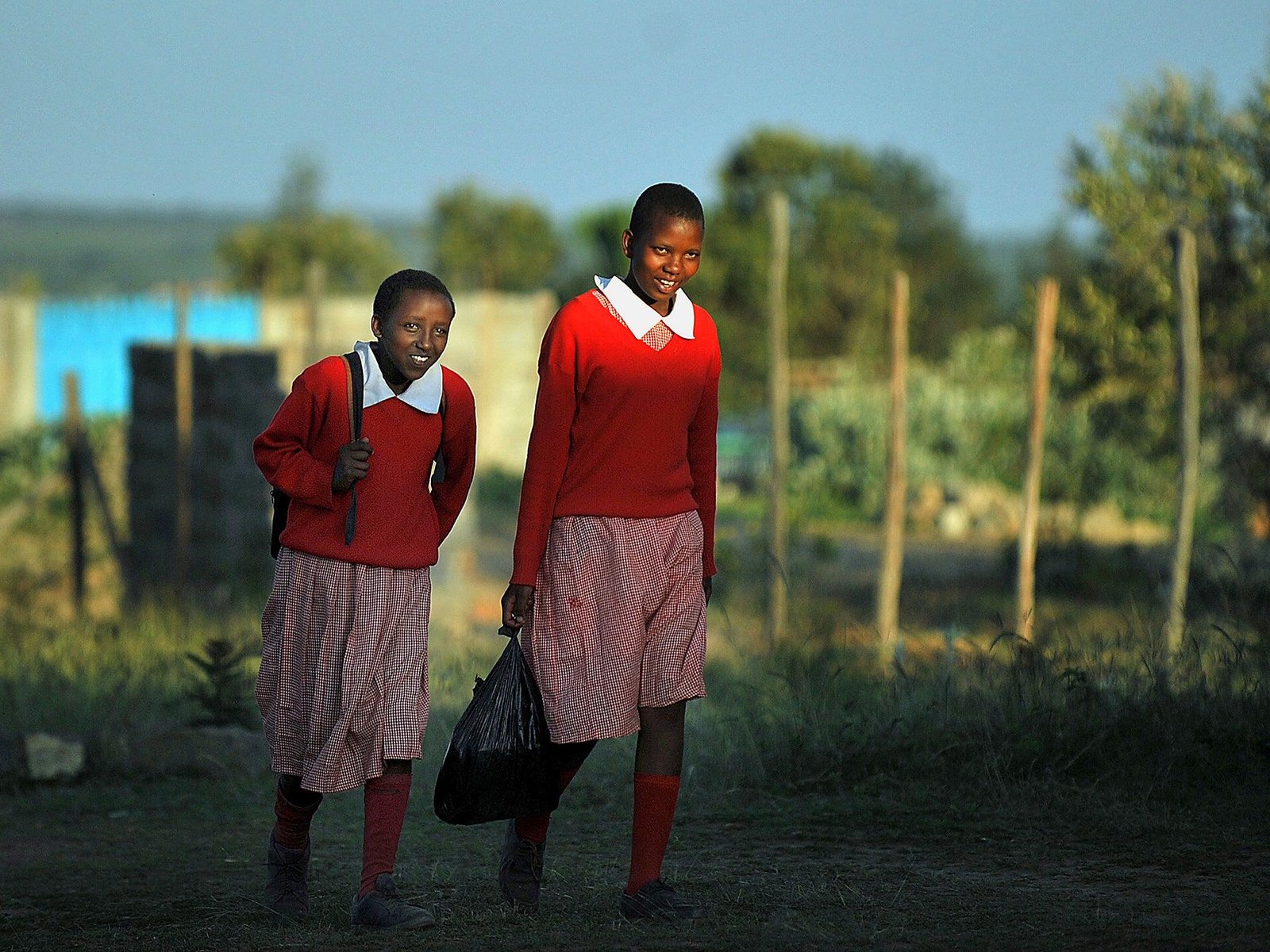
Child marriage refers to a marriage or union in which at least one person is under the age of 18. It has occurred in different parts of the world and has been associated with economic and cultural factors that vary from one community to another.
In some settings, marriages have historically been arranged by families, with considerations such as kinship, bridewealth, family alliances and economic security influencing the decisions. Where child marriage occurs, these arrangements can result in girls entering marriages before they have completed their education or reached adulthood.
When it comes to early marriages, i think we can all agree that poverty is the biggest culprit. Insecurity, social expectations and concerns about sexuality can also influence decisions, with girls having little or no say in who or when they marry.
Child marriage can have serious consequences for education, health and economic independence, particularly where it leads to early pregnancy or makes it difficult for a girl to leave an abusive relationship.
In Kenya, the minimum legal age for marriage is 18. Efforts to address child marriage therefore involve not only legal enforcement but also education, community engagement and support for families facing economic hardship.
When Daughters Are Denied Their Inheritance
Most African communities excluded their daughters from inheriting family land because it is considered the responsibility of sons to preserve ancestral property and pass it down through the male line. The reasoning is often that daughters will eventually marry and become part of their husbands’ families, while sons remain to carry on the family name.
This can leave girls growing up knowing that the land they call home may one day belong to their brothers, regardless of their own relationship with the family or the contributions they make. This is why more and more women are taking a step back when it comes to family matters. For example, why renovate a home you will never inherit?
Widows may also find themselves excluded from property or pressured to surrender land to their late husbands’ relatives. These customs reflect longstanding beliefs about lineage, family and land ownership, but they can have significant consequences for women’s economic security and independence.
In Kenya, the Constitution prohibits discrimination on the basis of sex, and the Law of Succession Act provides a legal framework for inheritance. However, customary expectations can still influence family decisions and disputes over property.
Treating widows as suspects after their husbands die
Is it only me, but anytime a man dies, the wife will somehow, almost always, be viewed as a suspect? And I use the term suspect loosely because, even if the man died peacefully in his sleep, some form of suspicion regarding the circumstances of his death will always arise.
And then comes the theatrics.
In some settings, a widow may be subjected to humiliating rituals after being accused of causing her husband’s death. She will be forced to undergo cleansing ceremonies or denied access to property until she complies with family demands.
Imagine losing your partner and then having to prove your innocence to people who should be supporting you. These practices can turn bereavement into persecution and leave women vulnerable to poverty, dispossession and abuse.
Understanding the Traditions We Inherit
African cultural practices are diverse, and their meanings cannot always be understood from a short description or an account written by someone unfamiliar with the community. A custom that appears unusual to an outsider may have a history connected to kinship, spirituality, identity or social responsibility.
At the same time, traditions are not fixed. They change as communities respond to new circumstances, and practices that once held a particular social meaning may be adapted or abandoned over time.
Understanding these customs requires more than describing them as strange. It means looking at how they are carried out, what they mean to the people involved and how their place in contemporary society is changing.
Botrom line, therefore, is that the stories behind African traditions are often far more complex than the brief descriptions that circulate online.