It’s difficult not to have an opinion when you are Kenyan. Sometimes, you want to act indifferent and mind the business that pays you, but alas! There is always something going on that brings out a reaction.
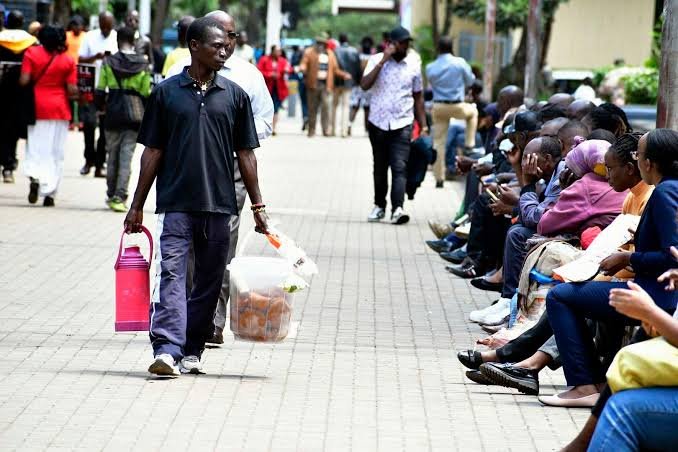
Yes, It is becoming increasingly difficult as a Kenyan to stay out of what is happening around us. The country feels like it is constantly on fire (literally, as seen in the Mt Kenya fire that is ongoing) and metaphorically in many others. Yet somehow, our national conversation has found a way to centre itself around foreign hawkers selling mandazi.
I seem to be missing something..
The President spoke about undocumented foreigners, which we all agree, is a conversation that needs to be had. Undocumented foreigners can be a thorn in the flesh because frankly, if they commit a crime and then disappear, what happens, and where do you begin searching for them? Documentation is a necessary step. So now, if the problem is documentation, then surely the issue should be whether someone has the legal right to be here, not whether they are Burundian, Ugandan, Tanzanian, Somali or Congolese.
So why does it increasingly feel as though Burundians are the ones being singled out?
That matters because Kenya is part of a region. Kenyans live, work and do business all over East Africa. What happens when statements made here create fear or hostility towards Kenyans elsewhere?
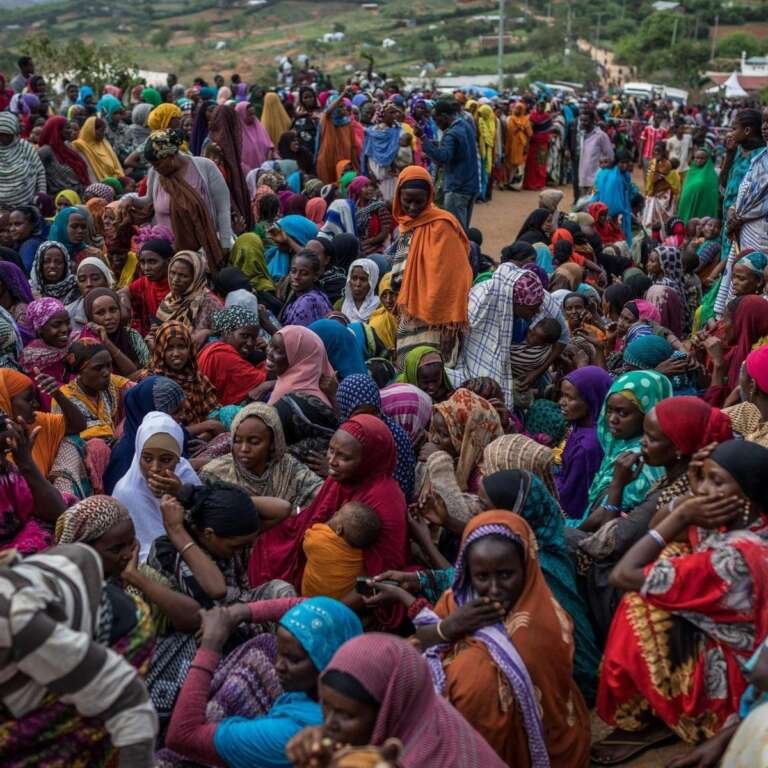
We have already seen how quickly this can get out of hand. Burundians reportedly rushed to their embassy in Nairobi amid fears of a crackdown, while the Kenyan government has since had to emphasise that it does not tolerate harassment, intimidation or xenophobia.
The most important question here is, what is really happening in Burundi? Do they even have a government?! Why are their people running away that hard from their country! From what I’ve seen, they are also being targeted in Tanzania. The government of Burundi should be ashamed of itself. Very ashamed!
Alot is going on, wueh!
Are we returning to the era of presidential declarations made by the roadside?
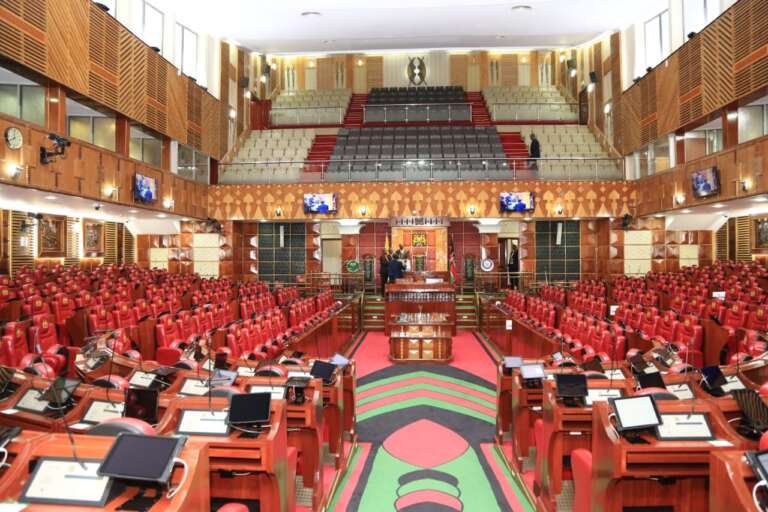
Where are the Cabinet Secretaries, and whatever happened to delegation? Does the President really have to announce everything himself?
There are entire ministries whose job it is to formulate policy, communicate it and deal with the consequences. The President should provide direction. But when every sensitive policy issue has to come directly from him, we lose the institutional buffer that allows experts to check the facts, consider the diplomatic consequences and, frankly, tell the President when something may not be a good idea.
Presidential communication is not ordinary political speech, for crying out loud! When the President speaks, foreign governments listen. Investors listen and markets listen. Even Kenyans living abroad listen.
And that is why a presidential statement should be checked for facts, clarity, diplomacy and unintended consequences before it is made.
Look at all the “egg on face” reactions and statements we are now witnessing. For the past 48 hours, we have had to watch government officials come in afterwards to explain what was really meant. Very concerning.
And then there is the timing. Because there appears to be an increasingly familiar pattern across the continent: as elections approach, foreigners suddenly become a much bigger political subject.
We saw immigration and anti foreigner rhetoric become a significant part of the political conversation in South Africa ahead of its 2024 general election. Human Rights Watch warned at the time that anti immigrant rhetoric during the campaign risked fuelling xenophobic violence.
In Tanzania, restrictions on foreign businesses became a political issue in the run up to the 2025 election, and after the disputed vote President Samia Suluhu Hassan blamed foreigners for some of the unrest.
Now Kenya is heading towards an election, and suddenly the foreigner is again becoming a political subject.
Maybe it is coincidence. Maybe it isn’t. But it is an important question that we should be asking as Kenyans. Also, look at what we should actually be talking about.
Our nurses are on strike. People are suffering because healthcare workers are not at work.
SHA continues to frustrate Kenyans and all this while, The medical financing debate remains unresolved.
It’s just one thing or the other in this country. Either this or that – but there is always something.
Businesses are struggling and industries are shutting down. Jobs are disappearing and Kenya has lost its top position in a major global competitiveness ranking.
We have serious economic, healthcare, environmental and governance problems but somehow the urgent national conversation is now about foreigners selling mandazi.
Nobody is saying Kenya should not enforce its immigration laws. Of course undocumented migrants should be dealt with according to the law. Nobody should be operating illegally simply because they are foreign.
But law enforcement and political scapegoating are not the same thing.
We can enforce immigration laws without creating an atmosphere in which an entire nationality feels targeted. We can protect Kenyan businesses without turning our neighbours into enemies.
And we can talk about foreign investment without sending the message that investors can be told to pack their bags whenever political winds change. The President’s recent directive concerning Tata Chemicals has already raised questions about how Kenya communicates decisions affecting foreign investors.
We are an East African country. We cannot afford to forget that. We have always prided ourselves in being friendly, welcoming and the pillar of Ubuntu. Now all that is about to change.
That East African hawker we are chasing today may have a Kenyan relative working in their country tomorrow. We cannot build regional integration while simultaneously teaching ordinary people to view their neighbours as the problem. And we certainly cannot allow careless political statements to put ordinary people in danger.
Lakini pia, Tuambiane ukweli, there is something seriously wrong with our systems.
Perhaps this should also be a wake up call to African leaders. The answer cannot always be to blame the African who crosses a border looking for a better life. If our people are globe trotting in search of jobs and opportunity, perhaps we should be asking what is driving them out of home in the first place. Fix the corruption and build economies that create jobs. Make it possible for people to prosper where they were born, for heaven’s sake! Because we are reaching an uncomfortable point where it is no longer just Western countries saying they have had enough of African migrants. Now, fellow Africans are beginning to say the same thing to one another. Kenyans are being told to go home in Tanzania, Burundians are facing hostility in Kenya, South Africans have repeatedly turned their anger towards migrants from other African countries. If Africans cannot move within Africa without becoming targets, then what exactly are we building with all this talk of African unity and integration?!! Our leaders need to fix the conditions that make their citizens desperate to leave, before the migrant becomes the scapegoat for every failure of governance.