Kenya’s doctors’ union has called for the withdrawal of a proposed law that could significantly change how medical practitioners and several other healthcare professionals are regulated in the country.
The Kenya Medical Practitioners, Pharmacists and Dentists Union (KMPDU) rejected the Medical Practitioners and Dentists (Amendment) Bill, 2026, describing it as unnecessary and raising concerns about its legal, policy and regulatory implications.
The union made its position known during a public participation exercise in Kiambu County on Saturday, August 22, where the National Assembly’s Departmental Committee on Health was collecting views on the proposed legislation. KMPDU says Kenya already has laws and regulatory mechanisms capable of dealing with malpractice, professional misconduct and standards in the health sector.
But what exactly is contained in the Bill, and why should ordinary Kenyans pay attention?
The proposed legislation is broader than the controversy surrounding KMPDU might suggest. It seeks to amend the Medical Practitioners and Dentists Act (Cap. 253) and introduces changes touching on professional registration, licensing, healthcare regulation, foreign practitioners, professional indemnity and the treatment of patients and deceased persons who have outstanding hospital bills.
Why Is KMPDU Against the Medical Bill?
Before looking at what the Bill proposes, it is important to understand why KMPDU wants Parliament to withdraw it.
The union says it supports effective regulation of healthcare professionals but argues that any new regulations should be evidence based, legally coherent, operationally workable and primarily focused on protecting the public.
KMPDU maintains that the existing legal framework already gives the regulatory council powers to register practitioners, maintain professional standards, investigate misconduct and take disciplinary action where necessary. It therefore questions why additional legislation is needed.
The union is also particularly concerned about the proposed expansion of the regulatory framework to additional healthcare cadres.
KMPDU has warned that bringing more professionals under the Kenya Medical Practitioners and Dentists Council (KMPDC) without first clearly defining and gazetting their scopes of practice could create professional overlap and confusion.
In other words, the argument is not simply that doctors do not want more regulation. The bigger question KMPDU is raising is whether Kenya is creating another layer of regulation without first resolving the boundaries between different healthcare professions, establishing what each cadre is legally allowed to do and demonstrating that the existing system is incapable of dealing with the problems the Bill is intended to address.
That debate matters because regulation in healthcare ultimately affects the patient. So, what would actually change if the Bill eventually becomes law?
Six Major Changes Proposed by the Medical Bill 2026
1. Hospitals could face heavy penalties for detaining patients or bodies over unpaid bills
This is perhaps the provision most likely to attract public attention. The Bill proposes making it an offence to detain a patient or the body of a deceased person because of an unpaid medical bill. A person found guilty could face a fine of up to KSh5 million, imprisonment for up to five years, or both.
For families who have experienced the distress of being unable to take a loved one’s body home because of an outstanding hospital bill, this provision could be significant.
It also comes at a time when Kenya’s healthcare financing system is already under considerable pressure, with hospitals and healthcare providers raising concerns about reimbursements and payment delays under the Social Health Authority (SHA).
Read: Why Kenyan Hospitals Have Refused to Sign SHA Reconciliation Agreements
For the relevant bodies, the bone of contention becomes how healthcare facilities will recover legitimate debts and continue operating if they are prohibited from detaining patients or bodies over unpaid bills.
Some stakeholders have reportedly suggested negotiated payment plans and instalments as an alternative to criminal penalties, highlighting how complicated the issue of medical debt can be. (It is worth stressing that the KSh5 million penalty is proposed, not an existing penalty under the law.)
2. More healthcare professionals could come under the regulatory framework
The Bill proposes expanding the regulatory framework to include additional healthcare cadres, among them community oral health officers, dental technologists and optometrists. It also proposes renaming the Kenya Medical Practitioners and Dentists Council as the Medical and Dental Council of Kenya.
The proposed expansion is one of the reasons KMPDU has raised concerns about professional boundaries.
Healthcare is made up of numerous specialised professions, each with different training, qualifications and scopes of practice. If those boundaries are not clearly defined, questions can arise over who is authorised to perform particular procedures, provide particular services or make particular clinical decisions.
KMPDU argues that the government should first establish and gazette clear scopes of practice and ensure that the regulator has the capacity to take on an expanded mandate.
For patients, the issue is ultimately about knowing that the person providing a particular healthcare service is properly trained, licensed and operating within their professional competence.
3. Foreign medical practitioners would face specific registration requirements
The Bill also contains provisions dealing with the registration of certain foreign practitioners resident in Kenya.
The proposed framework sets out registration requirements for practitioners covered by the legislation and introduces provisions around how different categories of professionals can be registered to practise in Kenya.
For Kenya, which has healthcare professionals moving between countries and a health system that sometimes relies on expertise from outside the country, regulation of foreign practitioners is an important issue.
The challenge is finding the balance between protecting patients and maintaining professional standards while allowing qualified professionals to contribute to the Kenyan healthcare system.
The Bill’s proposed changes would therefore give the regulator a clearer role in determining who qualifies to practise and under what conditions.
4. Professional indemnity cover could become mandatory
Another proposed change concerns professional indemnity cover.
Professional indemnity insurance is designed to provide protection where a healthcare professional faces a claim arising from their professional services, including allegations of negligence. Making such cover a requirement would have implications for healthcare practitioners and potentially for patients seeking compensation where professional negligence has been established.
For patients, the broader principle is that if something goes seriously wrong and a practitioner is found liable, there should be an appropriate mechanism for addressing the resulting financial consequences.
However, mandatory insurance also creates questions about cost, compliance and how such requirements would affect practitioners, particularly those operating smaller practices. The Bill proposes professional indemnity requirements alongside changes to registration, licensing and disciplinary procedures.
5. Fraudulently obtaining a medical licence could attract criminal penalties
The proposed legislation also takes aim at fraudulent acquisition of registration and practising licences.
Under the Bill, fraudulent procurement of registration or a practising licence, including assisting another person to obtain one fraudulently, could attract a fine of up to KSh300,000, imprisonment for up to 12 months, or both – a provision that is directly connected to patient safety.
A medical licence is not simply an administrative document. It is supposed to demonstrate that a person has met the requirements to practise a particular profession. Where somebody fraudulently obtains registration or helps an unqualified person obtain a licence, the potential consequences extend beyond professional regulation because patients could unknowingly receive care from someone who does not possess the required qualifications.
The Bill therefore proposes criminal consequences for conduct that undermines the integrity of the registration system.
6. Registration, examinations and licensing procedures could change
The Bill proposes new registration pathways for some of the additional healthcare cadres being brought into the regulatory framework. It includes provisions for pre-registration examinations and sets out requirements relating to registration and licensing. It also proposes changes to disciplinary procedures and the regulation of practitioners covered by the amended Act.
The intention appears to be to create a more structured system through which professionals can demonstrate that they meet the required standards before being allowed to practise.
But this is also where KMPDU’s concerns about the expanded regulatory mandate come back into focus. A regulatory system is only as effective as its rules, enforcement mechanisms and institutional capacity. Expanding the number of professionals overseen by a regulator without adequately defining responsibilities could, according to the union, create more confusion rather than eliminate it.
What Does the Medical Bill Mean for Ordinary Kenyans?
For most Kenyans, the debate over the Medical Practitioners and Dentists (Amendment) Bill may initially sound like an argument between Parliament, regulators and doctors, but it is more than that.
The proposed changes could eventually affect ordinary interactions with Kenya’s healthcare system, from who is permitted to practise medicine and provide certain services to how hospitals deal with unpaid bills and how healthcare professionals are held accountable.
The proposed restriction on detaining patients and bodies over unpaid medical bills could have the most immediate emotional impact, particularly for families struggling to settle hospital debts.
The expanded regulatory framework could affect the professionals Kenyans encounter when seeking healthcare, while the proposed registration and licensing provisions are intended to strengthen the system’s ability to distinguish qualified practitioners from those who obtain credentials fraudulently.
At the same time, KMPDU’s objection raises an equally important question: does Kenya need more legislation, or does it need to make better use of the regulatory powers it already has? That is ultimately the heart of the current disagreement.
The existing KMPDC framework already provides for the registration and licensing of medical and dental practitioners and health facilities, as well as mechanisms for dealing with medical malpractice complaints.
KMPDU therefore wants Parliament to step back and examine whether the proposed amendments address genuine gaps or whether they risk creating overlapping responsibilities and additional regulatory burdens.
The union has called for a comprehensive and harmonised framework covering the various healthcare cadres, with clearly defined scopes of practice and a focus on patient safety and professional accountability.
For Kenyans, that debate is worth following closely because the quality of healthcare regulation can have consequences long after a Bill has left Parliament.
Is the Medical Bill Already Law? What Happens Next?
The Medical Practitioners and Dentists (Amendment) Bill, 2026 is still a Bill and has not become law.
It is National Assembly Bill No. 10 of 2026 and was first read in the National Assembly on April 29, 2026. Parliamentary records currently show it at the First Reading stage, meaning it still has to go through the subsequent stages of the legislative process before it could become an Act.
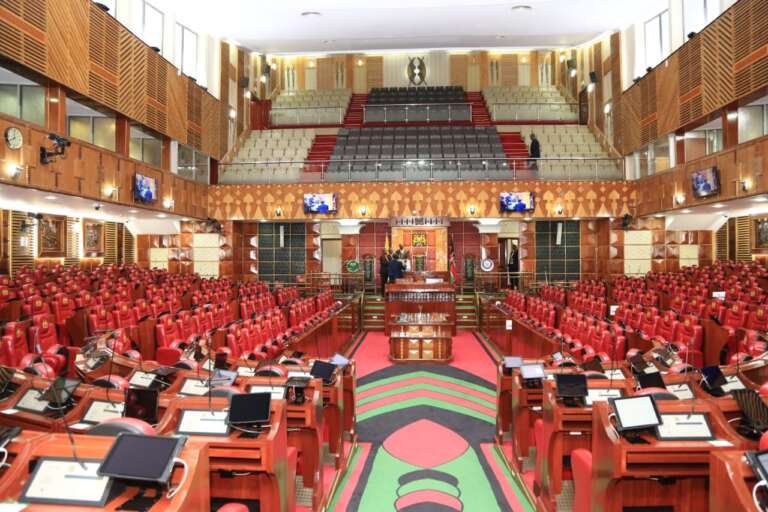
The recent public participation exercise in Kiambu is therefore part of an ongoing process in which Parliament is collecting views from stakeholders before proceeding with consideration of the proposed legislation. That means the Bill can still change.
Some provisions could be amended, removed or rewritten following stakeholder submissions and parliamentary debate. It could also ultimately fail to pass in its current form.
For now, KMPDU wants Parliament to withdraw it altogether, while the Bill’s proposals remain under consideration.
The bigger question is therefore not simply whether Kenya needs another medical law but whether the country can create a healthcare regulatory system that protects patients, holds professionals accountable, gives healthcare facilities workable rules and clearly defines the responsibilities of every cadre involved in providing care.
That is a debate that affects every Kenyan who will, at some point, walk through the doors of a hospital or clinic.
The proposed Medical Practitioners and Dentists (Amendment) Bill is only one part of the wider conversation about healthcare in Kenya. For more on how the country’s healthcare system is changing, access to treatment and the challenges facing patients, read:
- SHA Kenya Guide: Benefits, Coverage and Latest Updates – A comprehensive look at SHA, including its benefits, coverage, contributions, hospital access and ongoing challenges.
- How to Add Dependants to SHA in Kenya: Spouse and Children – A practical guide for Kenyans who need to add spouses or children to their SHA household.
- SHA and Treatment Abroad: A Lifeline for Kenyans or Another Promise That’s Hard to Reach? – What happens when patients need specialised treatment that may not be available in Kenya.
- The Policy Choices Behind Late Cancer Diagnosis in Kenya – An examination of the wider policy and healthcare-system issues affecting cancer diagnosis and treatment.
- Can AI Really Diagnose Diseases Better Than Doctors? Here’s What the Evidence Says – A look at how artificial intelligence is changing the relationship between technology, diagnosis and medical professionals.