There is a girl on TikTok who has been keeping a running list of all the things that can go terribly wrong during pregnancy. I have to admit that initially the list was kinda hilarious, until people started sharing evidence that the points she kept writing were actually happening to some women. What started off as mildly unsettling trivia has now grown into a catalogue of the kind of things you would rather not know but somehow cannot stop listening to. Every day, she adds something new, and every day the comment section grows louder with people who say that this or that actually happened to them or to someone they know, and more women swearing they are never going to give birth.
Teeth falling out during pregnancy…. a stroke that leaves a woman paralyzed immediately after giving birth… bodies that never quite return to themselves and God forbid – noses that swell and stay that way even after one gives birth. The list keeps growing, stretching the boundaries of what we thought we understood about childbirth, until it begins to feel like absolutely anything is possible.
Some of the points on that list are just too strange for us to process. You watch the videos and send them to friends, saying, surely not, and move on with your day. But, the truth is far less entertaining. Childbirth has never been as simple or as safe as we like to pretend.
And yet we rarely sit with that truth for long. We celebrate pregnancy loudly with baby showers and the assumption that everything will go well because it has to….just like it did for your mother and her mother before that. We do not dwell on what could go wrong, and we certainly do not build space to talk about what does go wrong, even when it happens right in front of us.
In most parts of the world we celebrate birth with a kind of certainty that feels almost sacred. There is an unspoken belief that bringing a child into the world is a natural process. After all, women have endured it for generations, and therefore it will somehow always resolve itself. It is wrapped in joy and expectation, plus the soft reassurance that this is what the body was made to do, and so we lean into the beauty of it without lingering too long on the risks that sit lurking beneath the surface.
Silence however, has consequences. When danger is not part of the conversation, it becomes easier to dismiss it when it appears. The stories of difficult labor, dismissive nurses and complications that spiral too quickly, are often shared in hushed tones. They are treated as unfortunate exceptions rather than signals of something structural that demands attention. And so, many women move through pregnancy armed with hope, but not always with information or the full picture of what their bodies might endure.
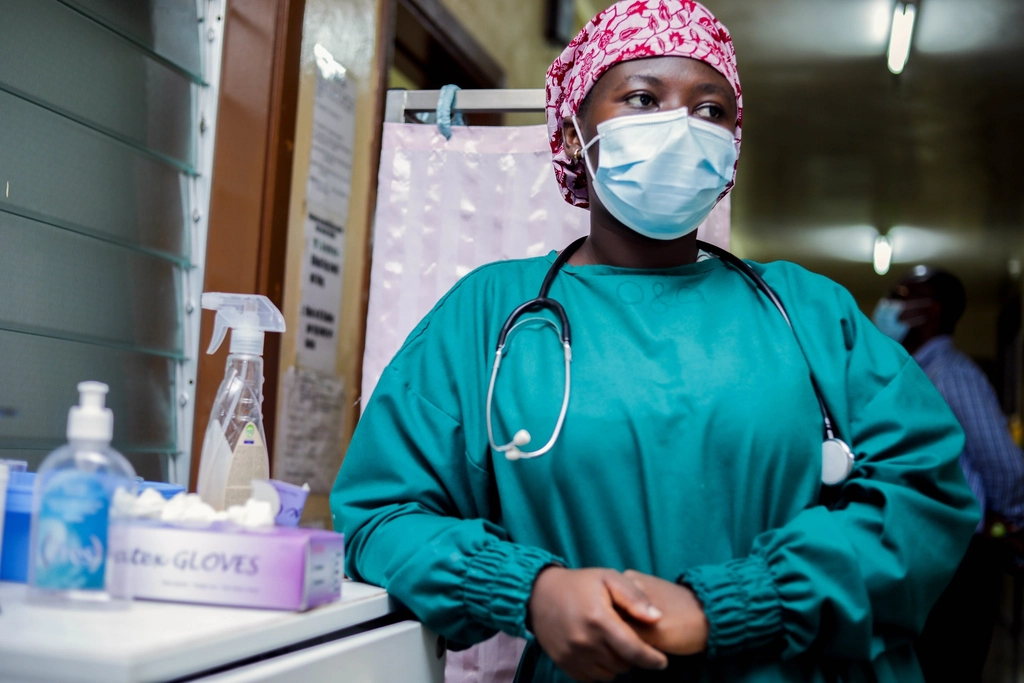
What is rarely acknowledged is that for many, childbirth is a moment of vulnerability shaped by systems that are not always prepared to hold it safely. We have all witnessed overcrowded maternity wards, overworked healthcare providers, delayed interventions and the quiet normalization of “doing the best with what is available” all come together to create an environment where outcomes start to seem uncertain. Many problem has risen during and after childbirth because of the factors mentioned above.
Common Childbirth Negligence Injuries & Complications
- Brain Injuries (HIE/Cerebral Palsy): Often caused by failing to address oxygen deprivation during labor.
- Shoulder Dystocia/Erb’s Palsy: Occurs when excessive or improper force is used to deliver a baby stuck in the birth canal.
- Infections/Sepsis: Failure of professionals to identify and treat maternal infections promptly.
- Broken Bones/Fractures: Generally resulting from mishandling, particularly during difficult deliveries.
- Instrument-Related Trauma: Misuse of forceps or vacuum extractors, causing cephalohematoma, lacerations, or bruising.
- Perinatal Asphyxia: Lack of oxygen due to failure to monitor or intervene, leading to seizures or long-term damage.
- Maternal Hemorrhage: Unmanaged severe bleeding from improper care of tears or placenta delivery.
Common Forms of Medical Negligence
- Failure to perform a timely C-section.
- Failure to monitor fetal heart rates.
- Neglecting to diagnose or treat preeclampsia or gestational diabetes.
- Misuse of medication to induce labor (e.g., Pitocin)
A woman who leaves the hospital alive with her baby in her arms, is seen as having made it through, regardless of what she may have experienced along the way. Nobody talks about the trauma and near misses, the moments where things could have gone terribly wrong but somehow did not. We are just forced to show gratitude. A woman that just gave birth – even if the process went wrong – is expected to be thankful and focus on the life she has brought into the world.
It is perhaps for this reason that conversations like Black Maternal Health Week feel, at first glance, distant from us. Framed largely within the context of racial disparities in countries like the United States, they can seem like reflections of a different reality, shaped by a different history. But stop there would be to miss the thread that connects these experiences across borders. Black maternal health is not only about race, but about how systems value and respond to women during one of the most critical moments of their lives.
The disparities may take different forms in Kenya or Africa at large, shaped by geography, access and economic inequality rather than race alon. However, the outcome is often strikingly familiar. Women handling child birth in under resourced facilities, met with harsh nurses, their concerns sometimes dismissed or delayed and their safety dependent on circumstance. When all is said and done the question across board remains how safe it is really, to give birth.
By the time we begin to ask that question honestly, the distance between “their” conversation and “ours” starts to collapse. We are only left, then, with a shared uncomfortable truth.
If we are to take maternal health seriously, then the first shift would have to be cultural. We have to begin by changing how we talk about childbirth and making room for the full story instead of only the beautiful parts. Celebration and honesty do not cancel each other out. If anything they in fact need each other. When women are able to speak openly about difficult births and their fears, about moments where things almost went wrong, it creates a shared awareness that can no longer be ignored.
From there, the conversation must move into the spaces where care is actually given. It is not enough to encourage women to seek medical help if the systems they walk into are strained to the point of fragility. Investing in maternal health cannot remain a talking point that surfaces only in moments of crisis or during awareness campaigns like Black Maternal Health Week. It has to translate into adequately staffed maternity wards, into properly equipped facilities, into healthcare workers who are supported well enough to offer both clinical and humane care.
There is also something to be said about truly listening to women when they say something feels wrong. Too many stories, both locally and globally, carry the same thread of being dismissed and having concerns minimized until it is too late. Respectful maternity care is not a luxury, and it is not a foreign concept. It is a basic standard that can, and should, exist in every setting regardless of resources.
And then there is the role of community, which is often overlooked but highly influential. Families, partners and even friends shape how women experience pregnancy and childbirth, sometimes more than they realize. Encouraging preparedness, advocating for better care and simply creating an environment where a woman feels supported enough to ask questions or demand attention can make a quiet but significant difference.
None of these changes are abstract. They are possible and in many cases, long overdue. But perhaps the most important shift is moving away from the idea that surviving childbirth is something to be grateful for, and toward the understanding that it is something to be guaranteed.