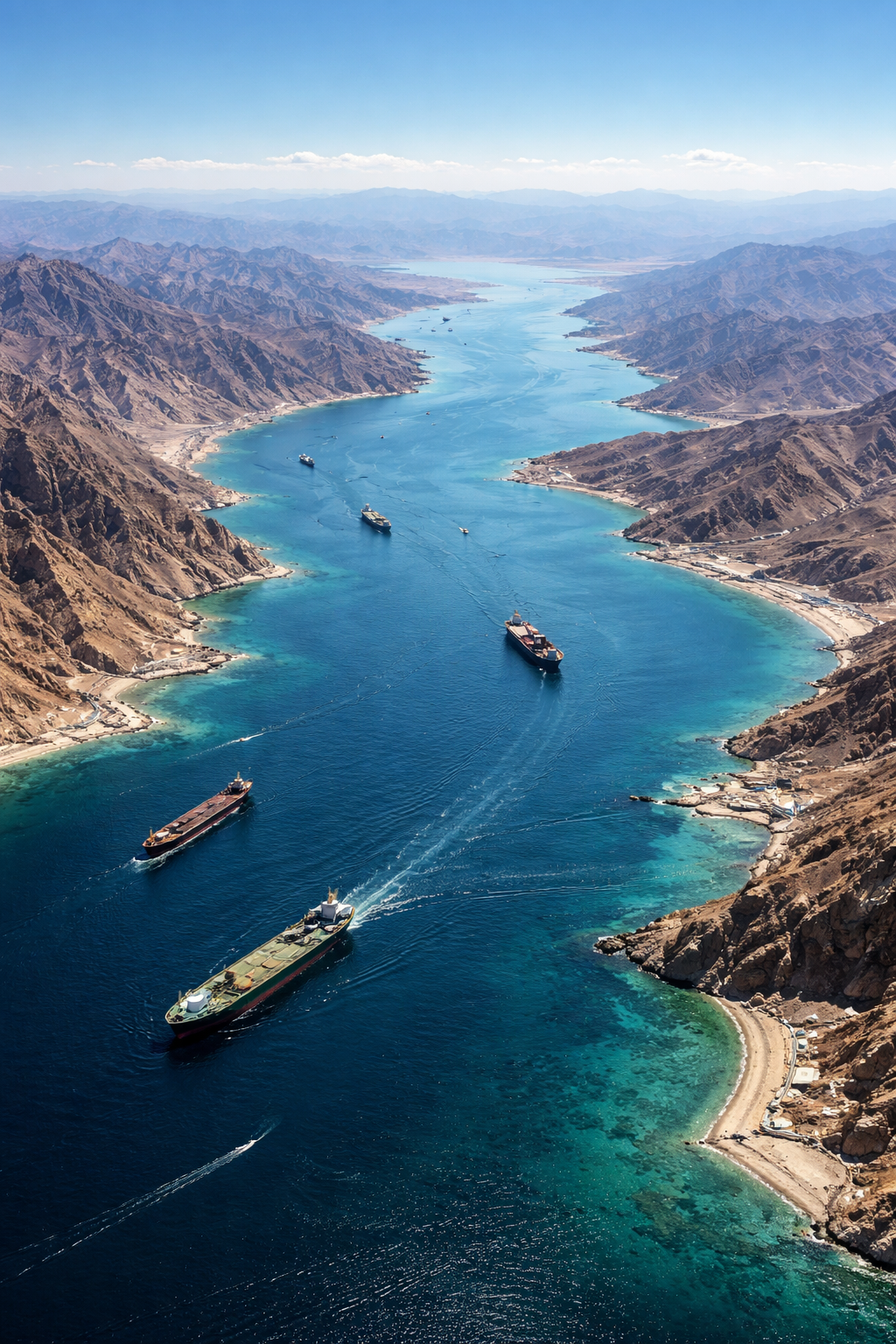
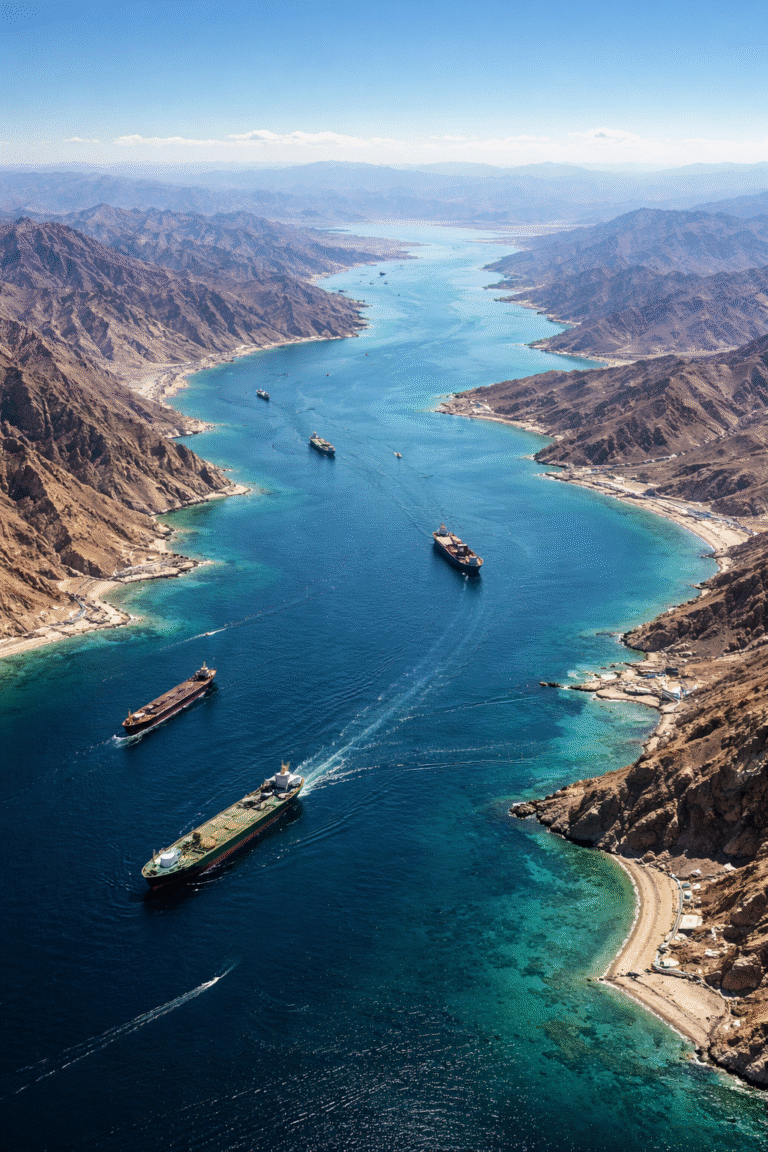
Until recently, most of us had never heard of the Strait of Hormuz. It was not a place that lived in our everyday awareness and if we are being truthful, not something we were taught in school. But here we are now. It has entered public conversation with urgency, spoken of in the same breath as conflict and instability. Suddenly it is bringing new meaning to the term consequence.
A narrow stretch of water that was once obscure to many has become one of the most watched points on the planet.
Today I have decided to be your layman person, to explain in simple terms to those who still have no idea what this is, or how important it is turning out to be in this war. Geographically the Strait of Hormuz is easy to overlook. It lies between Iran and Oman, linking the Persian Gulf to the open ocean through the Gulf of Oman. On a map it appears as a thin channel that is almost insignificant in size. But ooh what power is holds. Every day, vast quantities of oil pass through this corridor from major producers such as Saudi Arabia, United Arab Emirates, Kuwait and Iraq, flowing outward to fuel economies across the world. It is in every sense a lifeline. Quiet and largely invisible until threatened.
And that is what has changed. How in the rising tension, geography has now transformed into strategy. As conflict in the region intensifies, attention has increasingly shifted toward this narrow passage as a critical pressure point. The conversation, once shaped by complex histories and layered political realities, begins to narrow. At the core of it all is the sudden concern of what happens if this passage is disrupted.
It is a subtle but powerful shift. The deeper origins of conflict begin to fade from public focus. Who even remembers what the war was all about in the first place? Now the focus has shifted and all everyone thinks of is a bottleneck through which a significant portion of the world’s energy supply must pass. As it stands, It is no longer primarily about why tensions began, but about what their consequences might be. The Strait becomes the story because it represents its most immediate global risk.
To understand this, it helps to imagine a single narrow bridge carrying an enormous volume of traffic. Under normal circumstances, it functions without much notice. But the moment there is a threat of blockage everything changes. Even the possibility of disruption is enough to trigger concern. The same is true of the Strait of Hormuz. It does not need to be fully closed to have an impact. The mere suggestion of instability (military buildup, political threats, isolated incidents) can send ripples through global markets. Prices respond instantly and supply chains adjust. Uncertainty changes everything.
In this way, the Strait reveals something deeper about how the modern world functions. We are not only connected by ideas or information, but by routes; narrow passages and unseen systems that sustain daily life. These connections are easy to ignore when they are stable. They fade into the background, becoming part of the assumed order of things. But when they are threatened, they move abruptly into focus, demanding attention from people who may have never known they existed.
There is also something else unfolding that might be less visible but equally telling. As attention fixes itself on the Strait of Hormuz, many find it increasingly difficult to recall the full origins of the conflict surrounding it. The broader context begins to blur, replaced by the immediacy of the present moment. Urgency has now taken precedence over history. The need to keep this passage open becomes the dominant narrative because it is the part of the story that feels most consequential right now.
The rise of the Strait of Hormuz in public consciousness is about awareness and how quickly the world can shift from abstract to urgent. It is about how something small and overlooked, something far away can suddenly reveal itself to be central to the way the world moves.