The Quiet Return: A Movement Gaining Momentum
Guys, something is quietly happening outside the headlines. Across TikTok and YouTube, a pattern is emerging of black Americans packing up their lives in the U.S. and heading to Africa for good.
This isn’t a mass migration in the traditional sense, where government charters or frenzied airport scenes were the case. This is more of a personal exodus. A flight here and a suitcase there – one decision at a time. Countries like Ghana, Kenya, Rwanda and South Africa are leading destinations for the growing number of Black Americans relocating to the continent their ancestors were taken from centuries ago.
Numbers do not lie, and these ones speak volumes. What exactly is going on? Should we be worried? While the “returnees” call it a homecoming and while the rest of the world may not yet understand the full implications, the question we can’t help but ask is, What do they know that we don’t?
Is it about the promise of belonging? An escape from racial fatigue? Or something more ominous……a signal that America (at least for some) no longer feels like home?
Whatever the reason, the shift is happening and its ripple effects are just beginning to show. And for that, someone has to ask the important questions.
Why Are They Leaving? The Push Factors in the U.S.
To understand why more Black Americans are relocating to Africa, we first have to ask what they are leaving behind.
For many, it could be as simple an answer as exhaustion. Even for a people that have faced the relentless weight of systemic racism, it is becoming unbearable. Police brutality, healthcare disparities, underfunded schools, cultural erasure and microaggressions aren’t isolated events.
The 2020 murder of George Floyd brought with it a collective realization that all was not well. In the years that followed, pandemic inequalities, rising hate crimes and political volatility (particularly during and after the Trump presidency) deepened the sense of alienation.
So for some, this departure is a quiet form of protest and rejection of the American dream. For others, it’s a survival tactic. Suddenly with the high cost of living, Africa is beginning to look like more than just a symbolic homeland – It becomes a lifeline.
I have never really understood the “American dream.” In a country where people have to work two to three jobs just to be able to afford basic needs and pay bills? A country where even after buying property you still have to pay monthly for it? Please, someone help me understand, what is the dream exactly? Is it to work till you drop dead? Where is the social life?
The truth is, Africans often romanticize the “American dream,” but they rarely see its daily cost. In much of Africa, when you buy something – be it land, a car, or even a phone – it’s yours. In America, people are buying groceries, iPhones and paying for funerals on credit. It’s a country where many live paycheck to paycheck, juggling two or three jobs just to survive. A society built on five hours of sleep, high-functioning anxiety and quiet desperation. Where one missed payment can leave you homeless and thousands are already sleeping in their cars. Shine you will, but at what cost? Because the burnout is real.
What’s Drawing Them Here? The Pull of Africa
The more the U.S. becomes a place of fatigue and survival, the more appealing Africa becomes. For many it represents renewal and freedom.
For starters, there’s the emotional pull of ancestral connection. After generations of being cut off from their heritage, many Black Americans describe an almost magnetic draw to the continent. They talk of this longing they have to walk on soil that once knew their people and to reclaim cultural knowledge. They dream of a place they can belong without having to explain their existence.
At an event preceding the Black Star Line Festival, Dave Chappelle expressed his joy in being in Ghana. He referred to the gathering as a “family reunion”, expressing deep gratitude toward Ghanaians for embracing African Americans who were connecting with their roots. Dave also expressed his interest in not only visiting Ghana but buying some property and opening a comedy club in the country, claiming his decision was inspired by Stevie Wonder who had said he wanted to relocate to Ghana permanently. “Welcome to our family reunion … we’re all together, peaceful, happy and respected.” he said.
Then there’s the economic reality. Cities like Nairobi, Accra, Kigali, and Cape Town offer fast-growing tech and creative industries, bustling entrepreneurial scenes and, for many, a lower cost of living. Whether it’s buying land, starting a wellness brand, or working remotely from a lush Airbnb in Karen or Lekki, the financial leap makes sense for those priced out of U.S. markets.
This post would not be complete minus a mention at the role Pan-Africanism seems to be playing. The global rise of Afrobeat, Black pride movements, Amapiano and shared diasporic storytelling has reignited a belief in unity beyond borders. Let us not forget how more and more people are just discovering African fashion (to be more specific, Nigerian fashion). From music to fashion to politics (read, Ibrahim Traore and the role he is playing in uniting Africans), Africa is leading the cultural charge.
Lastly, there’s that deep sense of belonging that many Black Americans talk about the first time they set foot in Africa. It is almost like they are shocked that there are places on earth where everyone is Black; from the president to the Uber driver to the news anchor. Almost every single one of them talks about how amazing this is.
Africa, for them, is a place where being Black isn’t a liability.
A Trump-Era Legacy? How U.S. Politics Influenced the Shift
While the wave of Black Americans moving to Africa didn’t begin with Donald Trump, his presidency sure accelerated it.
For many, Trump simply made racism comfortable again. His blunt rhetoric, attacks on immigrants and “shithole countries” comment in 2018 made it painfully clear how little respect African nations and Black people held in the eyes of America’s highest office. His message was clear; you will never be fully welcome here.
It is for this reason that to some people, relocating to Africa isn’t just a lifestyle change but a political statement and a declaration that they no longer have to ask permission to feel safe or seen.
What Is In It for Africa? The Promise and the Price
On the surface, the return of Black Americans to African soil feels powerful, right? Right. It’s a reversal of history’s cruelty and a reconnection long overdue.
In many ways, it is beautiful. Their presence brings economic activity, cultural exchange and global visibility. After all, they will open businesses, invest in land and amplify the brilliance of African cities to global audiences.
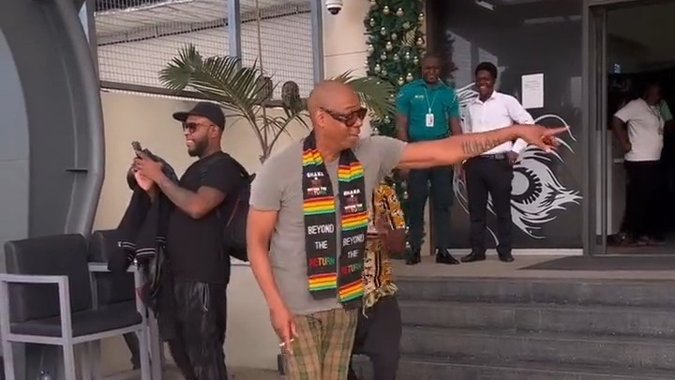
Dave Chappelle in Ghana, where he has bought property.
When comedian Dave Chappelle landed in Ghana, he said simply:
“It dey great to dey here.” At a festival full of music, art and heritage, he called it a “family reunion.”
And for many, that’s exactly how it feels.
But reunions aren’t without their fair share of drama. For every joyful reconnection, there are unspoken tensions. There are those locals who will have their mouth in a frown and hesitate to open their arms in welcome. And then of course, not every returning diasporan arrives with cultural humility. Misunderstandings about privilege, class and belonging can and will create quiet divides.
The question in most local minds is, Are these “returnees” coming to live with Africa, or to live on it?
From Visitors to Citizens: Who’s Actually Making the Move?
Like I mentioned up there, this shift isn’t just about tourism or temporary retreats. Some have gone as far as applying for citizenship, while others have quietly relocated, bought land, enrolled their kids in local schools or launched businesses in bustling cities and serene countryside.
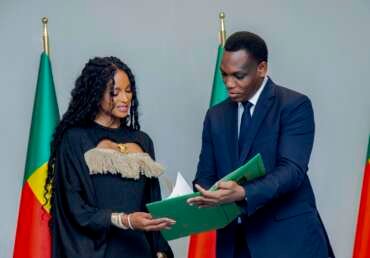
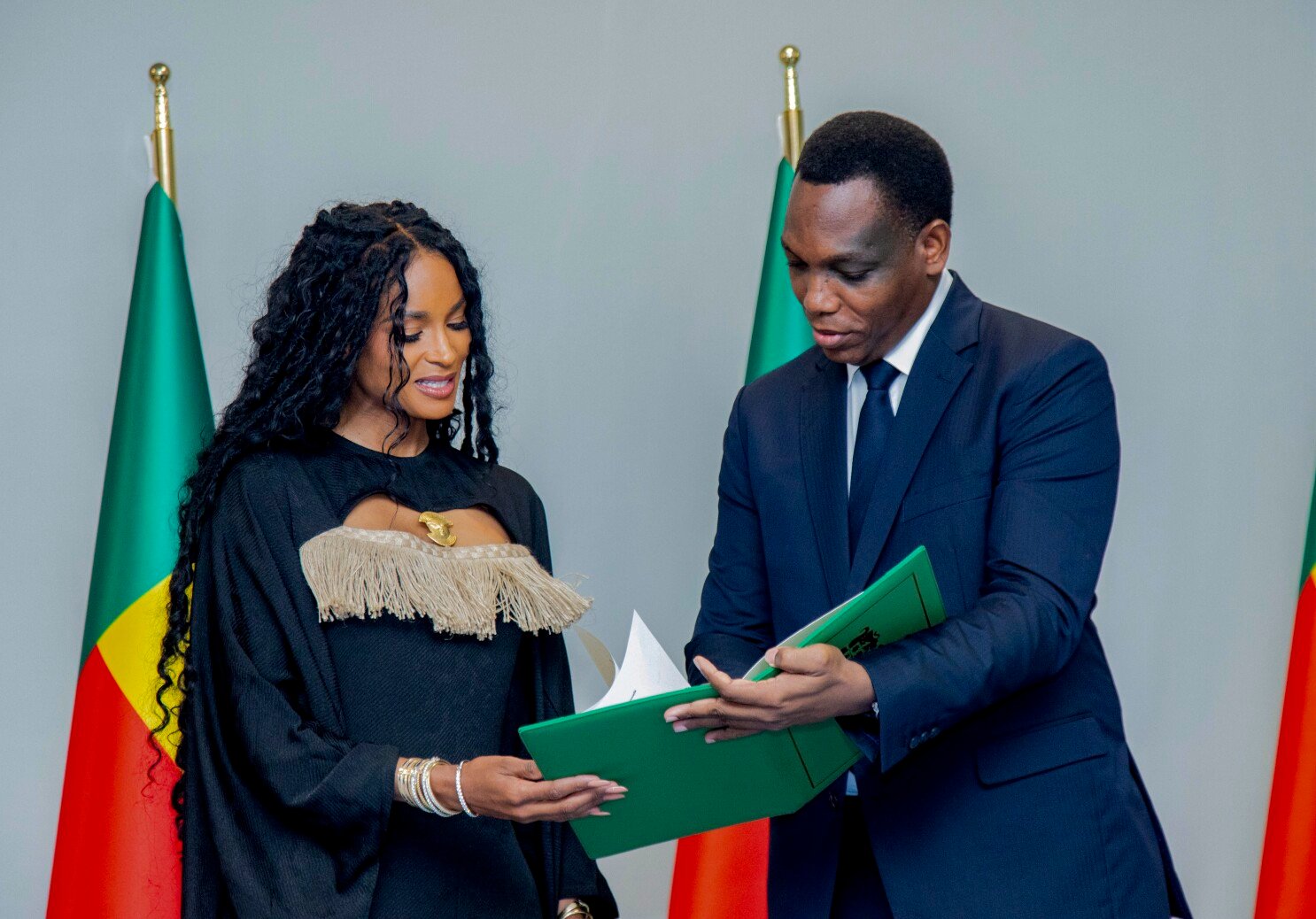
Just last month (June, 2025) Grammy-winning singer Ciara made headlines when she was granted citizenship in Benin, as part of a new law welcoming descendants of enslaved Africans. This is unprecedented and just like that, history is being made. This symbolic act signifies a door that was once closed by slavery being reopened – legally and spiritually.

Singer Ciara smiling and holding her Benin passport after being granted citizenship, surrounded by a Beninese official during an official ceremony.
Others, like rapper and actor Ludacris, accepted Gabonese citizenship through family ties and cultural exchange programs. He later relocated some of his family members to Gabon and has openly said he plans to do so himself. Comedian Dave Chappelle has purchased land in Ghana and continues to speak of West Africa as a spiritual homeland.

Rapper Ludacris in Gabon.
But perhaps the most vivid example is singer and entrepreneur Kelis, who has fully relocated to Kenya. Honestly, I have a feeling that the sudden rise in people relocating to Kenya has something to do with Kelis. She has been relentless in how she markets the country. Every single post she does, you can tell the pride and joy in her voice. Plus she has never looked calmer or at peace as she does since she started living near Lake Naivasha. It is here that she’s building a sustainable farm, a wellness retreat and raising her children in a country she now calls home. “I feel safe here,” she told one publication. “Respected, in a way I never felt in the U.S.”

Adorable singer Kelis in a Kenyan Jersey.
Beneath these high-profile stories are thousands of teachers, coders, nurses, retirees – just everyday people – leaving the U.S. for Accra, Nairobi, Kigali, and beyond. Make no mistake, their reasons might vary, but their message is clear: they are creating a new home.
Ripple Effects: Gentrification, Culture Clashes and Local Realities
When wealthy or middle-class Black Americans settle in African cities, the hope is often to reconnect without disrupting. However, while it might not be intentional, their presence is shaping local economies and social fabrics in ways that can’t be ignored.
In places like Accra, Kigali and Nairobi, stories are emerging of neighborhoods once affordable to locals now pricing out native residents. Chest pains as the rents rise and Cafés begin to change. Suddenly, land that was once affordable becomes a luxury. Developers catch wind of the diaspora demand and reshape city skylines; for foreign tastes … .but, most importantly, for foreign wallets.
This is now commonly referred to as gentrification. But, this is gentrification with a twist. Unlike in Western cities, where white investors displace communities of color, here the lines are more blurred since it’s Black people displacing Black people.
Alas, the tensions end up being hard to name, but easy to feel.
As if that is not hard enough already, in comes the culture clashes where locals feel looked down upon by returnees who arrive with Western standards, while some Black Americans feel unwelcome – seen as outsiders as opposed to kin. Talk about language barriers, religious misunderstandings, differences in queerness, gender roles or class expectations.
But, it isn’t all gloom. For every strained interaction, there are countless moments of learning, collaboration and belonging. Diasporans are building schools, training local youth and funding community projects. In return, locals are teaching them history beyond the textbooks. What a time to be alive….
What does “coming home” mean, when home has changed – as have you?
A Different Kind of Exodus: Is the American Dream Dead?
I remember talking about the African dream years ago.
For decades, the American Dream promised freedom, safety and success to anyone willing to work for it. But I ask again – what happens when the dream starts to look more like a trap?
For many Black Americans, the cracks have been there for years. Broken healthcare, racialized violence, housing insecurity, burnout masked as hustle. It’s not uncommon to juggle two or three jobs just to survive. People are buying phones and cars on credit they’ll never truly pay off. Let us not even talk about homes because they are simply out of reach. (remember, your average african young guy had their first house as a teenager, built in their rural home. Think, simbas for Luos and saigas for kisii’s, etc) having your own space as a teenager is not new to Africans. Maturing is realising that most of us could have died just for a piece of the American dream, while in reality Africans are so blessed. What we considered poverty back then is what we idolise as we grow older (having a farm, planting your own crops for consumption, drinking clean water and – i might be weird for this – living in a big beautiful hut.) And we had all these while surrounded by unpretentious love from family and neighbours. Now everyone has become so westernised we view everyone from a suspicious angle.
For westerners, a sick day is a gamble you cannot afford and a misstep means you could end up on the streets, sleeping in your car. America, for all its wealth and glory, is a country where millions are just one crisis away from homelessness.
This movement to Africa may be about finding identity, but it could also be about survival. The rejection of a dream that never truly included everyone.
Critics may call it romanticism or escapism but for those making the leap, it feels more like clarity.
For all those people who kept shouting “go back to Africa!” for all these years, well, now that they are, i hope you can finally be happy.