Spend a few minutes on TikTok – or any social media platform for that matter – and you will see them.
Young Africans are interrogating the religions that have shaped the continent for over decades. They speak with a kind of boldness previous generations would have cut their tongues out before displaying in public. Christianity and Islam are being described as colonial religions, while comment sections fill with debates about missionaries and cultural erasure.
And truly they are fearless, not scared in the least of terms like Abomination or curses from God knows where. They managed to make hell sound less threatening…fire and brimstones? Well, various governments already succeeded in dishing out that, how worse could it get?
And they say heaven is what you make of your stay on earth.
The quote often attributed to Jomo Kenyatta resurfaces again and again: “When the missionaries came, the Africans had the land and the missionaries had the Bible. They taught us how to pray with our eyes closed. When we opened them, they had the land and we had the Bible.” Others summarise it more bluntly: the white man arrived with a Bible in one hand and a gun in the other (I always get chills thinking about this quote.)
Can we call this rebellion, or it is just young Africans experiencing historical curiosity? They are researching indigenous spiritual systems their forefathers practiced before conversion, reading about ancestral reverence, sacred groves, divination systems, cosmologies that were dismissed as primitive. They are asking (and rightly so) why African names were replaced at baptism and why drums were once considered sinful. If these religions were so holy and good, why did colonial administration and Christian mission schools expand side by side?
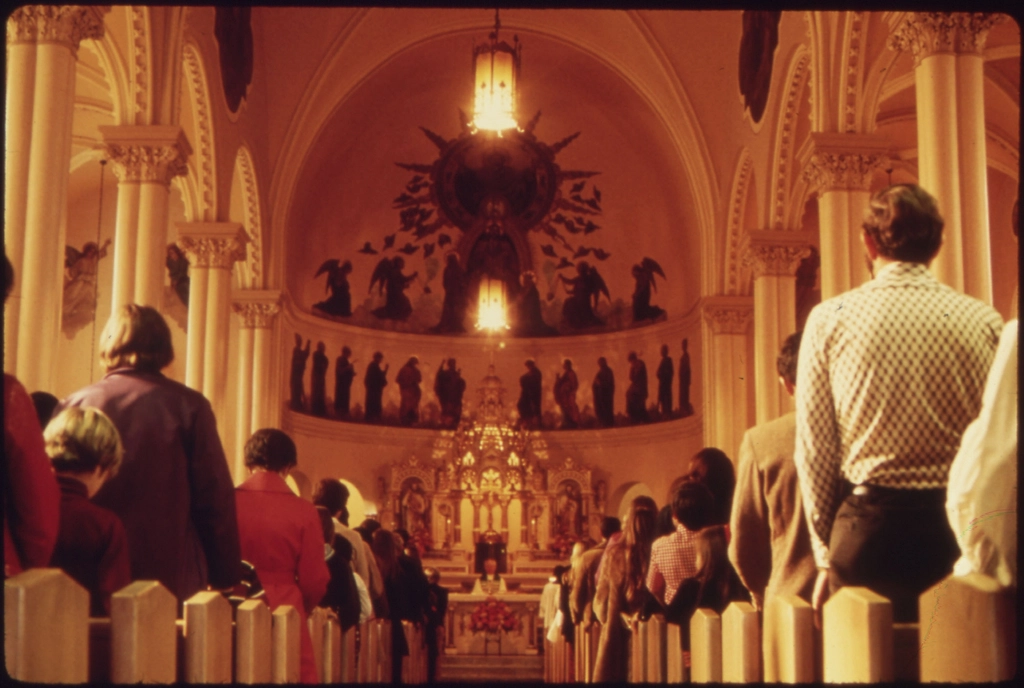
The questions are loud. Meanwhile in some places, the pews are getting quieter.
Africa remains religious, of that there is no doubt. Mega churches still fill auditoriums as night vigils stretch until dawn. But across urban centres something more subtle is happening. Let’s talk about Millennials, the generation that refuses to go church, refuses to marry and be married…and even though they are not necessarily renouncing God, they have completed refused to attend church with automatic loyalty.
The shift is rarely dramatic. There are no public press conferences announcing departure. They do not even make posta on social media about it. Instead, there is gradual absence. One Sunday missed and before long, another. Livestreams watched from bed. Eventually, disengagement becomes habit.
But why exactly?
Part of it is disillusionment. The digital age has dismantled the insulation religious institutions once enjoyed. Financial scandals, political endorsements, prosperity excesses all circulate instantly. Authority now competes with Google. A sermon can -andwill be – fact checked in real time. Millennials, raised in an era of transparency, expect accountability.
There is also the glaring economic reality. This generation is navigating high unemployment, rising rent, gig work, burnout. Sunday now becomes strategic, the perfect time to focus on side hustles. Rest is scarce and therefore, church attendance becomes negotiable when survival feels urgent.
But another layer complicates the story: the rise of what many colloquially call “panda mbegu” churches.
Yes, those ones, like Me you know who.
Drive through almost any estate and you will find them in converted storefronts seated in plastic chairs, brandishing bold banners promising breakthrough. There is no second guessing here as the theology is intense and immediate: sow a seed and expect a harvest. Give and it shall be given unto you. Tithe to unlock favour. Poverty is framed as spiritual blockage and breakthrough as financial obedience.
The gospel of prosperity, or so they call it.
Wonder why the churches are more In environments where economic hardship is acute? Because that is where prosperity preaching resonates. When institutions fail you, divine multiplication feels empowering. Since there are no opportunities, the idea that sacrificial giving activates supernatural doors offers hope.
When did faith begin to resemble a financial formula?
When sermons repeatedly centre on giving, especially in communities already stretched thin, suspicion grows. Why should we keep giving to someone that already has a mansion and drive a ranverover, why my single room shanty awaits me?
At the same time, fear based preaching no longer cits it. Telling a generation exposed to psychology, science discourse and global theology that there are demons in their setback and curses behind every delay will leave you with egg on your face. Millennials and gen z are less inclined to attribute every hardship to witchcraft. Less inclined to equate questioning with rebellion and most importantly, less willing to surrender intellectual inquiry for spiritual compliance.
And so, some drift away. Yet the story is not one of simple decline, but fragmentation.
Historically, church was never just theology. It was infrastructure that provided community, mentorship, marriage prospects, welfare support, moral rhythm. It anchored Sundays and structured weeks. It created intergenerational conversation.
As attendance patterns shift, the question then becomes, what replaces that infrastructure?
Social media offers connection but not always depth. Podcasts might offer insight, but what about accountability? Therapy reframes morality in psychological terms but cannot fully replicate communal ritual.
So when the pews go quiet, social architecture adjusts.
It would be simplistic to blame panda mbegu churches for dwindling numbers. Many provide genuine support like food aid, emotional counsel and addiction recovery. It is in some of these very churches where connections are created that offer job opportunities. To alot of people, they are lifelines. For others, they symbolise excess.
Faith in Africa has always evolved from mission stations to mega churches. They have evolved from ancestral shrines to cathedrals, from oral tradition to livestream.
Now it is evolving again. Only that this time, the conversation is public.
The pews may be thinner in some places. But the questions are fuller than ever.