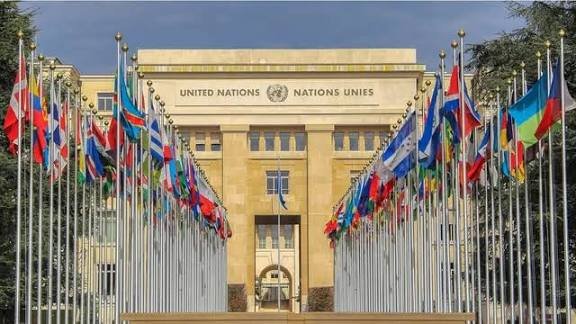
New York City has always been, for a while now, the heart of global diplomacy. But if recent developments are anything to go by, a shift may be happening quietly.
You have probably already heard that a growing number of United Nations agencies are relocating parts of their operations to Nairobi, Kenya. This move, while framed as a cost-saving measure, carries a number of geopolitical and economic implications. We have been told that the change is administrative, and at first glance it looks to be that way. Budget rationalisation, decentralisation and operational efficiency.
But can we ignore the undertones about geography, power and perception? By positioning Nairobi as a second hub for international governance, is the UN acknowledging that the future of global development will be decided closer to the realities it seeks to address?
The question on most Kenyans minds and maybe East Africans is does this represent a diplomatic victory or is something more sinister going on? The United Nations’ decision to move hundreds of posts and several departmental functions from New York to Nairobi may appear as a coincidence, but we all know that in politics nothing is ever a coincidence. And yes, make no mistake, even with a body such as the UN that is portrayed as a peace keeping body, there is still a lot of politics that goes on within. The move is all about strategy. The argument being tabled is that this is an economic move. Apparently, running a large multilateral agency in Manhattan has become increasingly expensive. Office space, staffing costs and operational expenses have ballooned over the years. Nairobi, on the other hand, offers the same time-tested administrative stability at a fraction of the cost. According to estimates cited by The EastAfrican, the UN Population Fund (UNFPA) alone could save over US$90 million by shifting select functions to Kenya. If you look at this that way, then, fair enough, right?
But beyond money, there is geography. Nairobi already hosts the United Nations Office at Nairobi (UNON). This happens to be one of only four UN headquarters in the world, and the only one in the Global South. And this is the thing that most influencers arguing online conveniently forget about. That hosting the UN is not new to Nairobi, they have been doing that for decades. With UNEP (the UN Environment Programme) and UN-Habitat based here, the city has built a strong reputation as a regional diplomatic hub. Which is why adding more agencies to that ecosystem is a logical extension and not a gamble.I do not think there is any serious world conspiracy going on with this move.
All this talk about Nairobi and by extension Kenya being a sellout is – for lack a better term – nauseating. Most African nations were actually bidding to have those offices relocated to their capitals. There is no hidden agenda going on.
With all the uncertainties and protests that usually happen in Nairobi, it still was the most logical place for this to happen.
But there is also symbolism in this move. It reflects a rebalancing of international focus away from the corridors of Western power and closer to the frontlines of global development challenges. Why not move right in the heart of it, where it’s all happening? Why make decisions thousands of miles away in the posh offices of New York while Africa is where the UN’s work is most visible? climate adaptation, population growth, peacekeeping, humanitarian aid – you name it.
By situating key offices within the continent, the organisation happens to beat two birds with one stone. It is cutting costs while bringing decision-making closer to the people most affected by its policies.
So what does this mean for us as a country?We cannot help but hope that the relocation is a diplomatic and economic victory. That the presence of additional UN offices will solidify Nairobi’s standing as a continental nerve centre for multilateral affairs, placing it in the same sentence as Geneva, Vienna and New York. (Like I said, we can only hope). We are after all, the self proclaimed capital of Africa. Such recognition deepens the country’s influence in shaping global policy, especially on issues like climate finance to migration.
The economic impact could also be significant. I am talking about more high-paying jobs, increased demand for housing and services and greater investment in local infrastructure. The hospitality and real estate sectors stand to gain the most. Hopefully diplomats, expatriates and consultants will seek residences and meeting spaces within and around the city. There’s also the inevitable trickle-down effect: drivers, caterers, translators and IT professionals will all find new opportunities in the expanded international ecosystem.
But in the same vein, we hope that this will not lead to an increase in rent and other amenities within the city. That this will not come back to bite us in the ass. And being the good neighbors that we are, we are praying that those close to us will benefit from this relocation too. That Nairobi’s position as a diplomatic hub could spill over into regional integration and East African capitals like Addis Ababa, Kampala and Kigali could benefit from satellite partnerships and regional collaborations.
The truth is, Nairobi has nothing to prove. For years, it has stood as the only African capital to host a full United Nations headquarters through UNEP and UN-Habitat. Nairobi has – rightfully so – earned global credibility as a hub for diplomacy and sustainable urban development. It has hosted high-level summits to managing multinational operations. And through such, Nairobi has demonstrated that it has the infrastructure and resilience required of a global capital.