“Sometimes, to catch a killer in the crowd, all it takes is one click.”
— Opening line, BBC Africa Eye: Blood Parliament
That opening line sets the tone for what becomes one of the most harrowing pieces of investigative journalism in recent Kenyan memory. One click. One protest. One life taken. Then another. And another.
When Blood Parliament begins with those chilling words, it’s not just setting up a forensic deep-dive. It’s pressing its thumb into a still-bleeding national wound. As someone who marched on that day towards parliament, together with millions others that tweeted, cried, or just sat in anxious silence during the June 2024 anti-Finance Bill protests, the memories come flooding back. The loud chants in the streets, the adrenaline-fueled rage, the tear gas fogging the skyline (and for most like me, struggling to breath through it, experiencing the sting for the first time) and the unmistakable sound of gunfire meant not for criminals, but for children of the republic.
In just under 30 minutes, the documentary unpacks how hope turned into horror and ordinary young Kenyans – coders, students, hustlers, you name it – were shot dead by the very system they were trying to hold accountable. And how even in death, the story doesn’t end. That click wasn’t just about tracking a bullet. It was about confronting the truth we’re still scared to name: the youth of Kenya were slaughtered. By the same people who are paid to serve and protect them, in broad daylight.
This isn’t just a documentary, It’s a digital requiem, and for many of us, a reminder that the cost of speaking up in Kenya can be life itself.
The Finance Bill That Broke the Camel’s Back
This is where it all started.
In Kenya and the world at large, finance bills are rarely popular. But the 2024 Finance Bill felt different. It wasn’t just another set of tax adjustments. It was a declaration of economic war on a generation already drowning in joblessness, inflation and broken promises. Of young people that felt abandoned by their own government, wallowing in joblessness after years of studying in universities. When the political class stash away billions, build mansions worth hundreds of millions, what are the ordinary mwananchi expected to do? It would be interesting to note that most of the young people that took to the streets – unlike in previous demonstrations – were learned, literate people. Graduates.
On paper, the bill proposed sweeping increases on essentials: fuel, bread, mobile money transfers and even sanitary products. For many Kenyans, it felt like being taxed for simply existing. And For the youth especially, it was personal. This was the same government that had promised them jobs, funding for startups and a digital revolution. Instead, they were served tax hikes that threatened even the little they had managed to build. “Let them eat cake,” was the message they kept hearing over and over again.
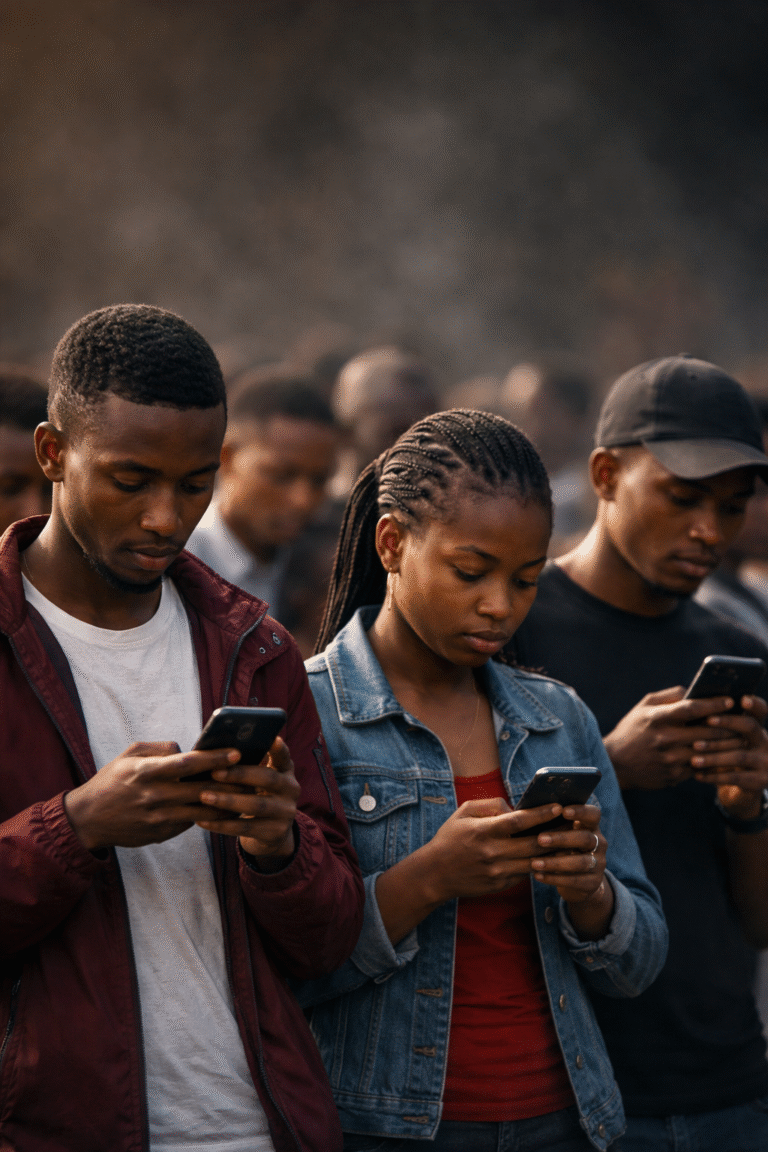
The digital age has birthed a sharper, very much awake Kenyan youth. This generation reads budgets like battle plans and doesn’t need politicians to interpret bills for them. Social media apps like tik tok have also shaped a more connected demographic, one that decodes legal jargon and mobilizes protests via its stories. So when the Finance Bill dropped, they didn’t wait for political leaders to guide them.

Hashtags like #RejectFinanceBill2024 and #OccupyParliament trended globally. Protest art flooded timelines while Activists created infographics breaking down exactly how the bill would destroy everyday Kenyans. And when they finally took to the streets, the young people and “future leaders of tomorrow” knew exactly what they were up against.
For the first time in years, Kenya’s youth weren’t being passive observers of corruption and excess. They rose fearlessly to demand for answers and accountability – and were met with guns.
Meet the Fallen: The Price of Saying No
Meet David Chege, Erickson Mutisya and Eric Shieni. Names now etched into a painful chapter of Kenya’s history.
Young men who didn’t die robbing banks. Young men felled by bullets only because they dared to demand for justice. Daring to believe that protest, not violence, could fix a broken system. Amongst a sea of other young people who shared the same beliefs and hopes as them, they marched holding placards and not weapons. And yet…. They were shot with live military-grade bullets aimed with the precision of state-funded optics. In Blood Parliament, we see their stories through tears – mothers mourning sons whose promising lives were cut short with just one swift bullet. In the documentary, we see a nation grappling with a loss that never should have happened.
The brutal truth that most people would never acknowledge is that if it weren’t for these youth – and for those still marching, still tweeting and refusing to bow – the 2024 Finance Bill would already be law, breaking our backs in proportions never witnessed before. Not to forget that The Jomo Kenyatta International Airport would now be a private property of the controversial Adani group, a firm facing multiple charges of corruption in different continents. Give them their flowers as the generation that paused history and forced the government to blink. And in doing so, they turned what was meant to be another rushed bill into a national reckoning that’s still unfolding.
From Protest to Tragedy: The Day the Constitution Wept
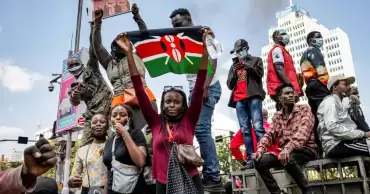
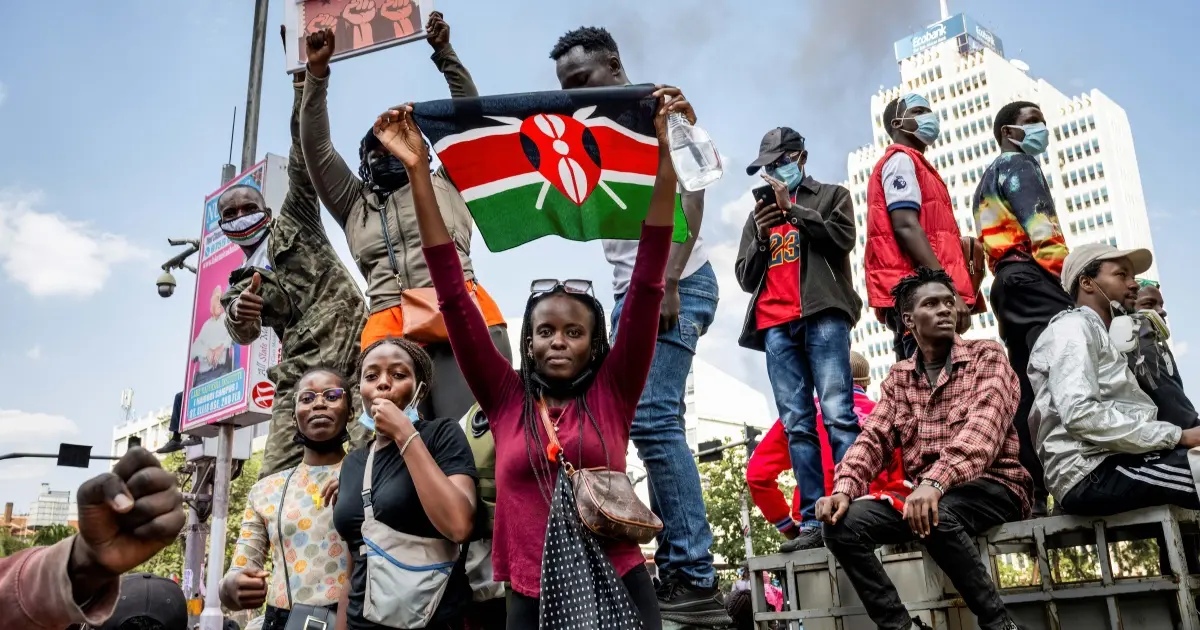
What began as a peaceful civic uprising soon morphed into a scene that had no business being in a democratic republic. On the morning of June 25, 2024, thousands of young Kenyans (myself included) poured into the streets with chants, flags, whistles and placards. Many had Kenyan flags tied around their heads only to be met with a cruel state hell bent on breaking their courage.
Police tear gassed, sprayed them with water cannons and finally sprayed them with bullets. What started as a historic moment quickly turned into a blood bath when the military showed up with snipers positioned on rooftops overlooking Nairobi’s Central Business District. That was the moment the protest turned into tragedy.
And yet amid the chaos, it was not silence that followed but documentation.
Photojournalists from all walks of life; seasoned, some barely in their twenties, international and local ones captured the carnage as it unfolded. Images of blood-soaked flags and lifeless bodies being carried by fellow protesters and women screaming beside fallen brothers travelled faster than the government could spin theories.

A photo of a young fallen kenyan protester

one of the most famous images to come out of the june 2024 finance bill protests.
It was photojournalism that shaped the global perception of what really happened. Not state press conferences or political statements. If anything, the protests have now become famous for not having a single political leader, a first of its kind in the region. Just raw, painful truth frozen in time: a youth shot in the chest, another lying motionless outside parliament and another protester hoisting the Constitution high, moments before he was dragged into a van.
Photos and videos became proof of a massacre. Citizen photojournalists uploaded from rooftops, hospital corridors and burner phones. In the midst of what was quickly turning into a battlefield, their work became more than storytelling – it became survival.
It’s through those photos that the BBC documentary Blood Parliament could trace bullet trajectories and ultimately ask the question: Who ordered the killing of Kenya’s children?
BBC’s Blood Parliament – A Painful Mirror
There are documentaries that entertain, and then there are those that haunt. Blood Parliament belongs firmly in the second category. Watching it, I couldn’t help but feel the shivers and see the flashbacks of that historic day. BBC’s Africa Eye investigation asked the hard questions and showed us the uncomfortable answers (a first in the world of documentaries.) It used satellite footage, ballistic analysis, autopsy records and eyewitness testimonies to tell a story we already knew in our hearts. A story we would all have loved to bury our heads in the sand about.
It opened with one chilling line:
“Sometimes, to catch a killer in the crowd, all it takes is one click.”
And just like that, the screen became a graveyard of evidence. Not just because of the bodies lying in the streets, but because of the lies that followed. The official denials and sanitized press releases claiming that protesters were violent, or that the killings were “unverified.”
But now, thanks to Blood Parliament, there’s verification. Evidence of Bullet casings matched to military-grade rifles and a youth shot from above in what appears to be a state-sanctioned sniper position. A mother holding her dead son’s bloodied shirt, asking, “Why was he shot in the heart?”
The documentary didn’t sensationalize or exaggerate on facts. It simply….documented. Which is why it hurts so much. Because it left no space for pretending we didn’t see what we saw.
The BBC handed us a mirror, and in it, we saw both the killers and the courage and got the message loud and clear of how this was not just police brutality but a constitutional crisis. A betrayal of democracy dressed in state uniform.
Reactions: When the World Took Notice
It wasn’t long after the BBC documentary aired that the global response started pouring in. The footage and testimonies were too raw and irrefutable to ignore. Within hours, international human rights organizations like Amnesty International, Human Rights Watch, and CIVICUS issued statements condemning the brutality. Hashtags like #KenyaProtests, #JusticeForChege, and #BloodParliament have been trending globally.
Even journalists at Al Jazeera, CNN, and The Guardian highlighted Blood Parliament in news panels and editorials, calling for independent international investigations. The African Union, often quiet on matters of internal repression, was forced to acknowledge the situation.
What Now, Kenya?
The dust has settled, but the blood has not dried. Streets once filled with chants now echo with silence. Yet beneath that silence a reckoning stirs. This will be remembered as the generation that lost its fear.
The youth that did more than just protest a bill ; they exposed the rot and revealed a system willing to sacrifice its future for short-term control as the world watched.
If we are being honest, none of this is over. The Finance Bill may be withdrawn, amended or even repackaged under a different name, but Kenya will never unsee the images or unhear the weeping. And the country will never forget the snipers who once pointed rifles at unarmed children singing the national anthem.
So, what now, Kenya?
It is time to pull up those images again and remember. Time to ask the hard questions like Who gave the orders? Why were soldiers deployed? Why was justice silenced with bullets?
It is time to demand for accountability and reform. And as so clearly stated in the constitution, the protection of the right to protest. Last but not least, it is time to demand for justice for the dead and dignity for the living.
It is time to rebuild not just parliament buildings and broken families, but trust between the governed and those who govern. And until then we can only dare to hope that when the next generation takes to the streets, they will carry placards and not body bags and coffins.
Until then, we say their names.