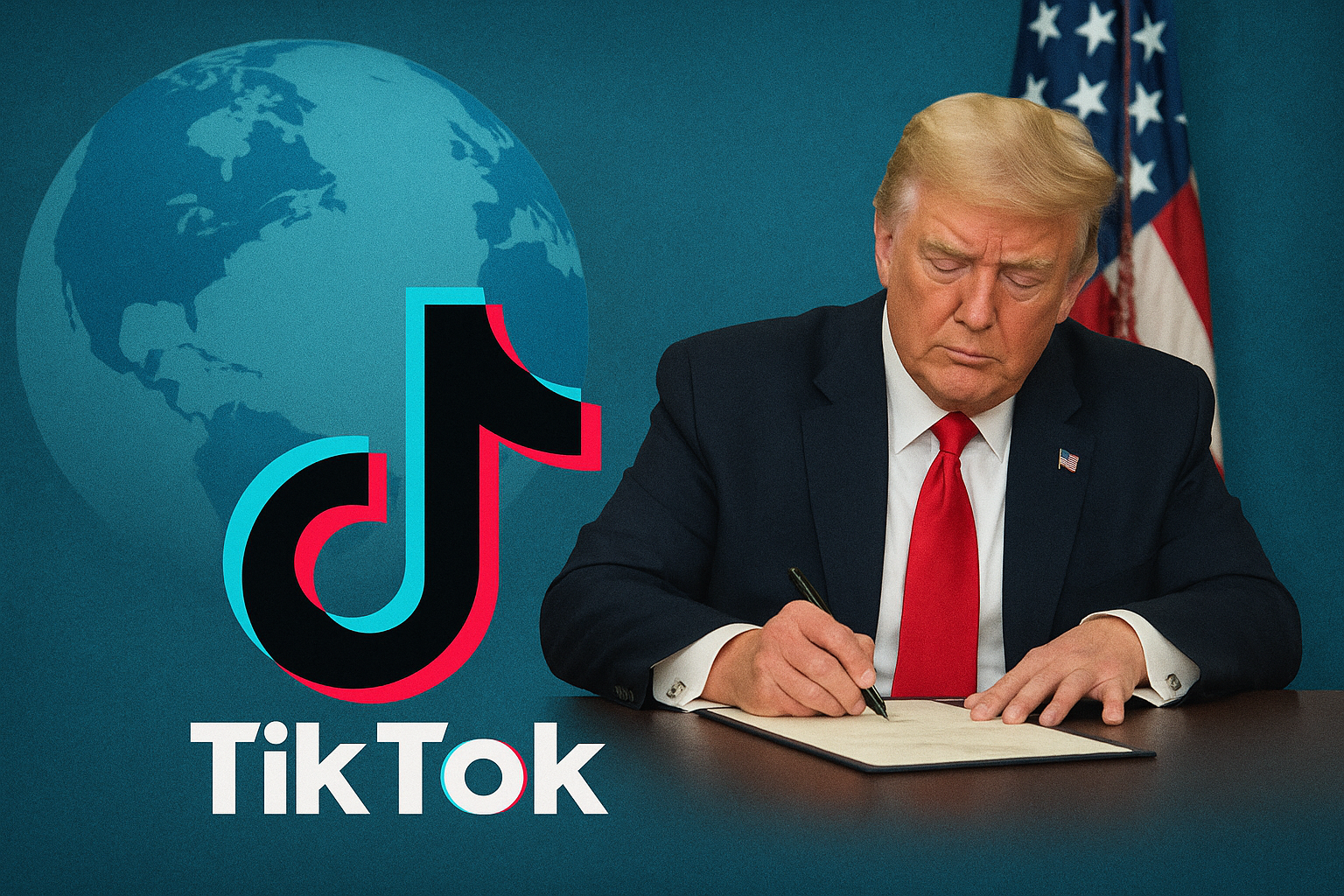
The U.S. government has really been pushing for a sale of TikTok that is meant to restructure who controls the platform.
Apparently, the new ownership plan is designed to let TikTok continue operating legally and that means your account should remain intact (for now…) The catch however, is that if negotiations between U.S. investors and the Chinese government break down (and the biggest culprit for this would be over licensing the algorithm), TikTok could face a full shutdown.
That possibility, however unlikely it may sound, is very real for U.S users.
And even though global users may not immediately feel the aftermath of the disruption, the psychological ripple effect would definitely be felt. Governments across the world are watching closely and if the U.S. succeeds in carving out a separate TikTok, who is to say other countries won’t demand their own localized versions too.
When you look at it from that angle, then global users may not face direct disruptions today but a precedent would have been set.
Social media shapes public opinion, especially among younger demographics. Once you understand that, then you will understand why the U.S government has been fighting hard for the purchase of this app. influence over platforms like TikTok or X means more control over what kinds of stories spread. It means a control over which voices are amplified and which ones are suppressed. That in itself, is a very powerful tool to any political actor in an era where the internet is the grand theatre.
Take a look for instance, at Israel’s prime minister Benjamin Netanyahu’s excitedly claiming that this Tiktok deal is currently the most consequential deal going on. Why, you can’t help but wonder. Because they know. Politicians know that times are changing, and they understand that Tiktok has become one mean machine that can be used to push propaganda, agendas and what have you.
One word comes to mind, and it is actually the most important one in this whole situation.
Algorithms.
This the engine behind the addictive For You feed. With the U.S. restructuring, it sits at the heart of the deal and its fate will shape what users see next.
In the U.S., this could mean tighter rules on what content is promoted or suppressed. Users are already worried about political influence – rightfully so. It is inevitable that the U.S. TikTok may gradually start taking a different route depending on how American regulators and investors decide to handle political content and viral trends.
Because for the rest of the world the algorithm remains in ByteDance’s hands for now, there would most likely be the possibility of a split with one version of TikTok tailored to U.S. oversight, and another running under the global rules. Basically, a video that goes viral in Europe might not trend the same way in the U.S. if the recommendation logic diverges.
The bigger picture is fragmentation. What was once a single unifying platform could start to resemble separate TikToks that are shaped by local politics and investor interests. What does this mean for us, the users? That the feed you scroll tomorrow will be about what your local investors prioritize, or worse, what your government allows.
For years, TikTok has faced accusations that U.S. user data could be accessed by Chinese authorities through its parent company, ByteDance. These accusations have mostly come to the rest of the world as jealousy to be honest, that a chinese company could achieve such a huge level of success globally. Just plain old rivalry amongst competing foes. While the sale is meant to address that concern, what it means for everyday users is more complicated.
The new entity will be required to store American user data on U.S.-based servers, under the watch of American investors and regulators. This should give users more confidence that their information isn’t crossing borders unchecked, right? On paper, yes. But the truth is that it could also lead to stricter audits and compliance rules. And of course, the government will be watching.
Creators, Businesses & Monetization
TikTok stopped being just an entertainment app a long time ago. It’s now an economic powerhouse. It has “employed” millions of creators who now earn from views and sponsorships, and also the Creator Fund. Small and big businesses now use it for advertising and also selling. Take in Africa for example, where anyone can go live and sell their dresses, shoes, handbags, basically anything. It is an entire ecosystem, and this restructuring will create shockwaves.
Will this purchase create a rift, with one set of monetization rules for the U.S. and another one for the rest of the world? What will happen to the creators who thrive on cross-border virality?
The truth is, this is nothing but a political move. In the U.S., the sale is framed as a win for national security and digital sovereignty, with Lawmakers arguing that TikTok’s ties to China made it vulnerable to state influence.
Globally, governments are watching closely. Other governments like India banned Tiktok outright in 2020. Censorship concerns loom large, with the question being whether content rules will change. Will this also affect what creators can post, view and ultimately, monetize?
Beyond TikTok itself, the sale signals a shift in how nations treat foreign tech. We can’t help but wonder if other platforms with large international footprints may face similar scrutiny and be forced to localize or split operations. For now, users will keep scrolling and creators will continue posting. In the same vein, businesses will keep advertising.
What this sale brought to the fore though, is that social media isn’t just about fun and memes. That in 2025, social media is also about geopolitics and power.