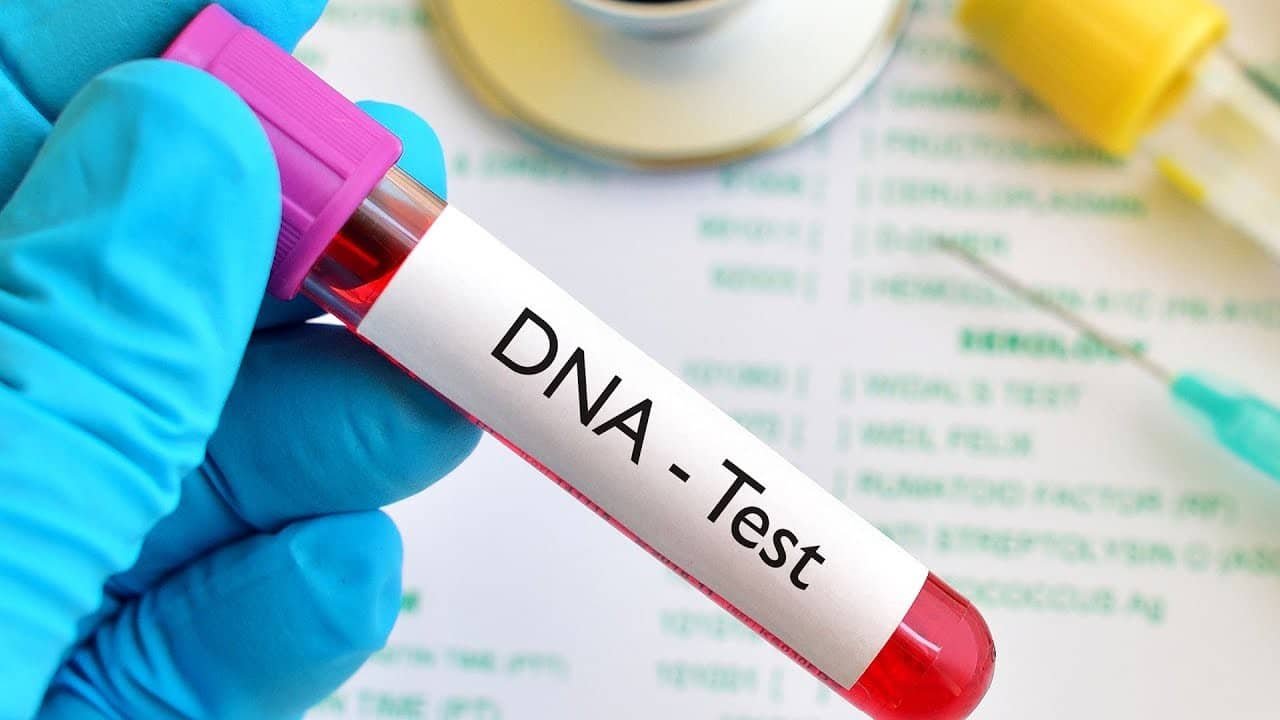
In the past few months, Kenya has found itself in the middle of a quiet revolution happening in laboratories. The rise of DNA testing, something that was once a rare affair, has now become a public spectacle.
It is all fun and games until the issue lands in your bedroom and you start looking at the child you have called your own for years suspiciously while suddenly wondering why the shape of his head does not look similar to yours.
Behind the jokes and trending hashtags lie real lives and a growing legal and moral storm. This whole DNA craze started lukewarmly but has caught on like wildfire. It is even more bewildering that the whole nation is obsessed, leading to questions some quarters would have preferred to bury their heads in the sand over. For instance, who owns the right to know? Does trust still exist in our families? And most importantly, what happens when science and the law collide with emotion and tradition?
At the heart of this frenzy lies a tricky situation. How does society balance the right to know the truth and the right to privacy and family stability? What about the right to dignity? Not too long ago DNA testing was seen as a purely scientific tool. It only came up in conversations about murder and robbery and forceful intercourse. But as we speak, the voices about it becoming mandatory once a child is born are getting louder. It has now become a mirror reflecting our deepest insecurities about loyalty and legality.
Consent and the Law
In Kenya, DNA testing sits at the heart of a thorny issue: consent. Can a man secretly take his child’s hair or saliva sample for testing? Can a mother refuse a court-ordered test? At the end of the day, who, ultimately, owns the right to know?
You would be surprised to know that even legally the answer isn’t always clear-cut. The Children Act (2022) and Article 31 of the Constitution of Kenya both guarantee the right to privacy and dignity. Therefore, collecting someone’s DNA without their knowledge or consent amounts to a violation of privacy. More so when it involves minors.
Yet, the same courts that should uphold the law would override all this if there is a paternity dispute, especially in cases involving maintenance or inheritance.
To put it simply, this means a father cannot legally perform a DNA test on a child without the mother’s or guardian’s consent, unless there is a court order. If you however decide to do a secret test through maybe a private lab, have in mind that it may not hold up in court and can expose individuals to defamation or data protection lawsuits.
It is generally murky waters though because when the child’s welfare or rights are at stake, courts can compel a DNA test. For instance, in S.W.M v. G.M.K (2012), the High Court ruled that the best interests of the child justify a court-ordered DNA test if it serves justice and protects the child’s rights.
A cotton swab and a strand of hair. Something so small but which carries the power to upend entire lives. In Kenya, the climate is hot. A country that leads the entire Africa in the number of single parents (especially single mothers). Under such hostile circumstances, paternity tests have become both courtroom tools and social media fodder with the line between seeking truth and invading privacy growing dangerously thin.
At first glance, DNA testing looks like something so straightforward. Why all the hullabaloo? Doesn’t everyone have a right to know the truth about their origins? If only it were that simple, right? But…..ethics. What does the truth matter if it overrides a child’s right to emotional stability? Should a mother be forced into a test that could destroy her family? What about when private results are circulated online and in the process cause harm to those involved?
Experts warn that Kenya’s growing DNA culture might cause more harm than good in the long run. A nation that already has absent fathers is reducing fatherhood – once seen as a moral and social commitment – into a biological formula. It is all but a slippery slope where relationships built on trust now hinge on proof rather than presence.
Privacy, too, is under sieke. It looks like we no longer care about the Data Protection Act (2019) that classifies genetic data as sensitive personal information that can’t be shared without consent. As we speak, cases of leaked DNA results and viral screenshots are on the rise like never before.
When DNA Disputes Reach the Courtroom
At this point, it is evident that all these DNA tests are entertainment fodder on social media. Unfortunately for the courts, they have been forced to confront the much heavier reality behind them.
A recent example is the case of Governor Mutula Kilonzo Jr. vs. Victoria Ndunge Musyoki, which has been the talk of town since 2024. Since 2016 Ndunge has claimed that Mutula was the father of her child and sought child support through the Milimani Children’s Court. The governor in good faith paid maintenance while maintaining that he was not the biological father.
The court came around to ordering a DNA test which the claimant initially resisted. The results were out, and the governor was not the father. This news, as expected, triggered public bickering, uproar and everything in between. Men were up in arms, talking about forceful DNA testing immediately a child was born. Mutula counter-sued, demanding KSh 15 million in damages and reimbursement for financial and emotional strain. The court sided with him (a first, if we are being honest), ordering the claimant to repay the amount. The court even went as far as authorizing the sale of her property if necessary.
If a man supports a child for years in good faith, should he be allowed to demand reimbursement when DNA shows he is not the father? That is the biggest question that rises out of this case so far.
And what about the child who has grown to see him as a father figure?
As interested citizens, we can only sit back and watch how all this unfolds plus the precedent the case sets.
For many Kenyans all this DNA shenanigans has become a double-edged sword. A test meant to reveal biological facts is now dismantling emotional bonds that took years to build. Perhaps the bigger lesson is not even about who shares our blood but who stays even when the results say otherwise.
If you are curious about where to carry out a DNA test and how much they cost, below is a quick overview of some of the main facilities and roughly how much they charge.
Where to Get DNA Tests in Kenya (and How Much They Cost)
| Facility / Lab | Type of DNA Test Offered | Approximate Cost (KES) |
| KEMRI (Kenya Medical Research Institute) | Paternity and relationship tests | 10,000 – 20,000 |
| Lancet Kenya | Legal and personal DNA tests | 15,000 – 30,000 |
| PathCare Kenya | Paternity, maternity and sibling tests | 15,000 – 25,000 |
| Bioinformatics Institute of Kenya (BIK) | Advanced DNA profiling and ancestry testing | 20,000 – 35,000 |
| Medanta Africare | Relationship verification, ancestry and legal tests | 18,000 – 40,000 |
| Aga Khan University Hospital | Legal paternity tests (court-admissible) | 25,000 – 50,000 |
| AlphaBio Lab (Kenya branch) | Immigration and legal DNA tests | 20,000 – 45,000 |
| Nairobi Hospital Laboratory | Paternity and family relationship tests | 25,000 – 40,000 |
If you’ve ever faced a DNA dilemma or have thoughts about how Kenya should handle the ethics around these tests, we’d love to hear from you. Join the conversation in the comments or write to us at Sunset in Africa. Your voice might just shape how we as a society redefine family during these shaky times.