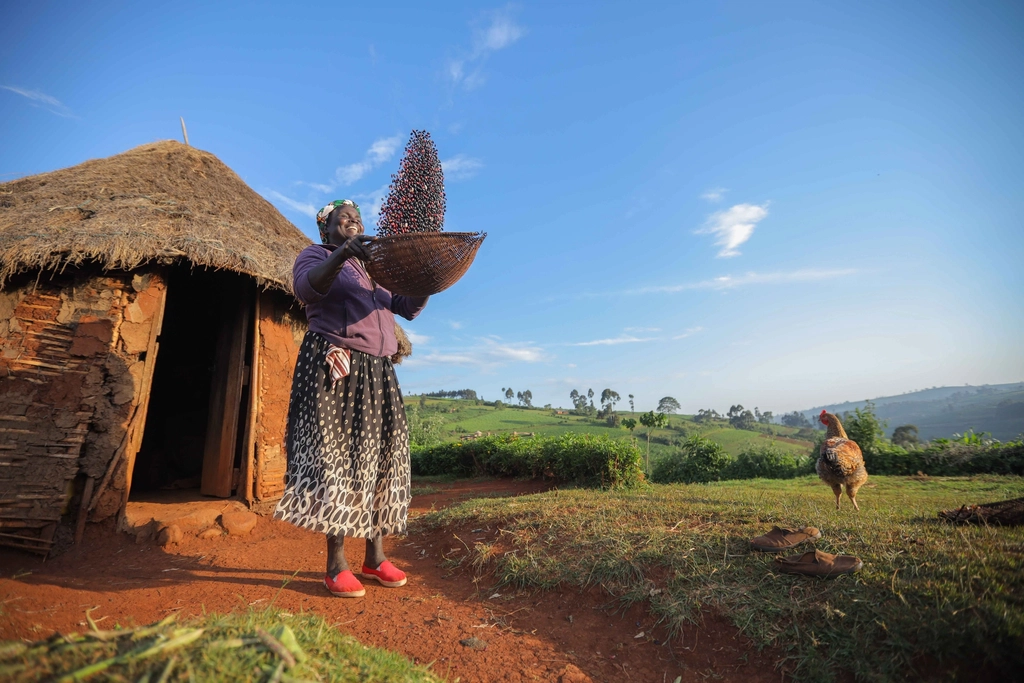
Going to visit my mom back in the village always brings these thoughts in my head. The more I talk to the old folks, the more I realise how big of fools we have been, trading wisdom for convenience.
At what point were we brainwashed enough to see our forefathers’ ways as backward and primitive? When did we start to see their ways as outdated? Most importantly, why were we so quick to abandon that which had been tested and proven to work, without ever asking why they did what they did. Yet, unsurprisingly, much of what we call modern innovation today is simply a rediscovery of their ancient logic.
Before all the western shenanigans that were hailed as revolutionary engineering, African communities had calabashes that absorbed cholesterol from milk, huts that cooled themselves naturally and homemade filtration systems that purified water without electricity. We might not have realized it then, but nothing was a coincidence. Every practice had a purpose and every method was tested by time. The beauty of it all however, is how nothing was ever allowed to go to waste.
Our ancestors did not have to use scientific jargon. They understood science through experience. They might not have had the word for science, but their everyday life was science itself. They lived in rhythm with nature, evident in the buildings, how they ate and healing in ways that modern researchers are only now beginning to understand.
Funny how almost all the shrubs that grow in African villages are medicines used for one thing or the other. Today we take a look back at seven things our African forefathers did perfectly. And if this is not proof that perhaps, in our rush toward modernity, we left behind more wisdom than we realized, then I do not know what is.
1. Calabashes and Gourds: Nature’s Perfect Containers
Forget stainless steel bottles and plastic containers. Before all these, African families relied on something that was far simpler and far much smarter. Think of the calabash and the gourd. Hollowed out plant vessels that were used for centuries to store milk, water, local brews and herbal mixtures. Looks simple enough, right? I remember my grandmother had numerous of them that she used to store sour milk. A simple object really, got direct from the farm. A plant, actually. Now, imagine when years later, I came to realise that what seemed like a humble tradition was, in fact, an ingenious form of natural chemistry.
Let me break it down for you. When milk was stored in a gourd, a slow fermentation process began. The porous walls allowed tiny amounts of air to interact with the milk, thickening it into sour milk that is rich in probiotics. This process made the milk easy to digest and long-lasting. But the best part (one that always crosses my mind from time to time) is how over time the inner lining of the gourd would also absorb some of the fats and cholesterol, making the milk healthier without anyone needing to mention low-fat diets or cholesterol control.
They knew about cholesterol before we ever gave it a name.
And Calabashes – biodegradable, lightweight and antibacterial by nature. The perfect eco-containers before the word eco-friendly even existed. Just think of how hard the world is trying so hard to get rid of plastics. Think of how much damage they have caused to our eco system….to our ocean lives. And yet, Africans lived quietly for centuries, using calabashes and gourds, objects that didn’t leach chemicals, didn’t pile up in landfills, and could return to the soil once their use was done.
It’s ironic, isn’t it? How we spend money on detox plans and sustainability campaigns, when our ancestors were living that truth every single day through a simple, hollowed gourd.
2. The Science of African Huts: Naturally Cool, Naturally Smart
To the untrained eye, a traditional African hut might look simple. Is it not after all, just mud, grass and sticks? The perfect symbol of poverty, right? But beneath that simplicity was an architectural brilliance. One that was rooted in centuries of observation and adaptation. If there was one thing our forefathers were good at, was the understanding of how nature behaves.
The circular shape of most huts wasn’t accidental. It distributed wind pressure evenly, making the structures stable against storms and harsh weather. Which explains how the simple structures withstood the test of African rainstorms and time. And the thatched roofs – yes, those which we came to despise so much – acted as natural air conditioners that allowed hot air to rise and escape while cool air circulated near the floor. The walls, made of mud or clay mixed with cow dung, provided thermal insulation. Warm during cold nights and pleasantly cool during the extremely hot afternoons. And we all know how legendary hot the African sun can get.
Do not for a second think that the materials used were random. On the contrary, they were chosen with a lot of wisdom. Clay and grass were abundant and entirely biodegradable. Not only that, they were also renewable. The floors, often polished with cow dung, resisted dust and insects. The compact layout fostered community living, with both literal and emotional warmth radiating from the hearth at the center.
Look at how desperate the world has gotten, holding conferences and spending millions of dollars on research… speaking about green architecture or climate-smart design, when our ancestors had already perfected it thousands of years ago.
And yet we were the uncivilized ones?
3. Traditional Fermentation: Probiotics Before Science Named Them
I sigh every time I see probiotic drinks on supermarket shelves sold as “gut-friendly” yogurts. Before laboratories came up with these titles, African kitchens had already mastered the art of fermentation. It doesn’t really matter what part of the continent you are in – you will find people fermenting grains, milk, and even fruits. And they did not do it because it was fashionable. They did it for survival and for health purposes. They did it because they enjoyed the taste.
In Kenya, there was mursik and amaruranu, fermented milk stored in smoked gourds. In almost the entire Africa, families made ogi or pap, a fermented porridge from maize or millet. Tanzanians and Ugandans brewed togwa, a mildly sour, nutritious drink. These foods and drinks were alive and full of beneficial bacteria that supported digestion, boosted immunity and preserved nutrients long before refrigeration existed.
Fermentation was used to transform basic ingredients into complex flavors. It softened grains and made them more digestible. It also preserved food naturally without chemicals. Every household had its own technique, a living science passed down through generations of hands and memory.
We are now witnessing researchers celebrate fermented foods as key to a healthy gut and stronger immunity. But who told our ancestors that? They never needed any study to tell them that. All they had was a genuine respect for what time and nature could do together.
4. Earthenware and Clay Pots: The First Eco-Fridges
Think for a moment, of a world without electricity or stainless steel kitchens. Do you feel the panic rising? Well, African homes survived for centuries without them, relying on earthenware like clay pots that were shaped by hand, baked by the sun and cooled by nature. These vessels preserved life in hot climates without using a single watt of energy.
The science was beautifully simple. The porous surface of clay allowed tiny amounts of water to evaporate, drawing heat away and naturally cooling the contents inside. Water stored in a clay pot stayed refreshingly cool, even on the hottest afternoons. I remember my grandma’s, and the water in it is like nothing I ever tasted. And I doubt I will ever taste any water as sweet and fresh as that.
Milk and porridge lasted longer. The flavors deepened. You will also be surprised to learn that unlike plastic or metal, clay interacts gently with what it holds thus balancing acidity and even enriching it with trace minerals like calcium and magnesium.
Also think about the art that went into these pots. Each carried the maker’s fingerprints. The curves told a story of patience and precision. We all think of china ware with awe, but forget the treasures at our backyard that were passed down through families and embodied both craftsmanship and chemistry. Today we cannot survive minus fridges – those huge ugly things that hum day and night, consuming power and leaving a carbon footprint.
5. Natural Water Filtration: The Hidden Genius of Clean Water
Before the age of water treatment plants, filters and bottled brands, African communities had their own methods for purifying water. These quietly effective systems were built entirely from nature: with a reason for every layer and a purpose for every material.
You see those fresh drinking points that are in almost every village in Kenya, found in the midst of mini forests. Maybe you might never have thought much into it, but that water is as clean as they come, purified to a fault. From a combination of sand, charcoal, stones and plant roots – all used to cleanse water drawn from rivers or wells. The science behind it was not even complicated. A simple yet sophisticated process. Sand and gravel trapped debris and sediments, while charcoal absorbed odors, color and harmful microorganisms. In some regions, crushed moringa seeds were added as a natural purifier that binds impurities and causes them to settle at the bottom.
Water left to pass through these layers came out clear and safe to drink. All without the use of a single machine or chlorine. And, yep – no electricity. What modern science now replicates in carbon filters and purification cartridges was common sense and community wisdom back then, carried out without much fuss.
Yet…..we were the uncultured ones….
Some communities even stored drinking water in clay pots afterward, which cooled it naturally and kept it fresh for days. These clay pots also purified the water by absorbing the dirt from the water. To understand the thought process of our ancestors, you have to understand that they understood the fact that the earth cleanses itself.
I cringe when I think of how In the rush for convenience, we abandoned those practices for plastic bottles and chemical purifiers. Modern technology, with all its hype, is just now catching up to what our forefathers already knew. That clean water begins with listening to nature.
6. Communal Living: The Original Mental Health System
In traditional African societies, nobody truly lived alone. And that right there was and will always be our superpower. Life was communal. In those societies people were brought together through kinship and collective responsibility. My great great grandfather brought two of his friends, who he lovingly referred to his brothers, and gave them land. For free. Their descendants now live there. And it was not small land he was dishing out. Acres and acres of land. And that is how our forefathers lived. They were selfless and generous. They did not have a single mean bone in them. Grief, joy, hunger and harvest were not private matters but community experiences. Everyone belonged somewhere, and belonging itself was a form of medicine.
Elders guided and neighbors checked in all the time. Before the world coined the term “it takes a village,” children in Africa were already living it, surrounded by multiple mother and father figures.
It is for these reasons that for the longest time, mental illnesses were a foreign concept to Africans. This interconnectedness protected mental health long before we even had words for depression, anxiety or loneliness. A struggling person was never left to face it alone. Rather, they were surrounded by conversation and presence. They were surrounded by song because healing was a social act.
All you have to do is understand why huts were designed the way they were in clusters, facing inward toward a shared courtyard or fire. This was so people could gather there to tell stories and resolve conflicts. These same spots celebrated milestones throughout the years. From births to circumcisions to marriages and finally deaths. Even harvests were celebrated here. The circle was a symbol of unity and continuity. Now you know why huts were circular….and why the huts were put together in a circular shape. It wasn’t just architectural; it was emotional infrastructure.
It’s no wonder that laughter traveled freely across homesteads and music echoed deep into the night. Togetherness was survival. It was therapy and spirituality combined. Compare that to how we live today in isolation. Yes, we are connected digitally….but emotionally distant. With all the talks of a global village, loneliness levels are hitting an all time high. Our ancestors might have been seen as poor without therapists or wellness apps but they built societies where no one suffered in silence. They never needed depression drugs because community itself was the cure.
7. Respect for the Land: A Cycle of Sustainability
To our forefathers, the land was a living partner. Africans respect land so much. They are connected to it. That is why we pour drinks to the ground before taking the first sip. That is why before swearing we touch the soil with our finger and put it to the mouth, to show how grave the issue is. By the way, some things we do without even understanding what they mean. Our forefathers took from the land, but they also gave back. Every practice – from farming to cooking – was guided by balance and respect.
Nothing, absolutely nothing went to waste.
Ashes from the hearth were used as soap or fertilizer. Banana leaves wrapped food instead of plastic. They used animal hides for clothing and drums. (Drums, a huge part of our culture). Water that had been used for washing was poured onto gardens and not down the drains.They teach about crop rotation in schools now as if it is a foreign concept, but back then it was instinctively practiced to keep the soil fertile.
Seasons were followed religiously and people planted with the rains, harvested with the sun and allowed the earth to rest in between. And let us not forget about the rituals that were carried our before cutting trees or hunting animals.
Now, we could compare that to today’s reality of overflowing dumpsites, chemical-laden farms and a planet choking on our convenience.
Our ancestors knew nothing about sustainability and yet ironically, they lived it every day. They knew -without making a fuss about it- that the earth provides endlessly but only if you love it back.
They Were Scientists in Disguise.
The more you look at it, the more you begin to piece it all together; the calabashes that purified milk, the huts that cooled themselves, the water filtered by sand and charcoal. And then you realise, this wasn’t a case of trial and error. Our ancestors were not guessing. They were scientists, architects, healers and environmentalists. And they were all these and more long before those words existed.They studied nature by paying attention to how wind moved, how fire burned and how soil breathed. (Even how they built their fires was unique). Even without books, their knowledge was remembered, passed from mouth to mouth until modernity taught us to call it superstition (😔😭).
Perhaps it’s time to look back so that we can learn from it. I am not here to romanticize the past – truly, I am not. But maybe, the future Africa we dream of will only be built when we remember the Africa that we already knew.