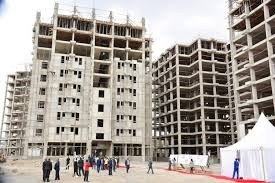

Why a Kenyan court halted the Lang’ata affordable housing project and what the ruling means for future housing developments across the country.
For years, Kenya’s affordable housing programme has been framed as one of the most ambitious social interventions of our time. It promises stability and a path to home ownership for millions locked out of the formal housing market. That is why the recent court decision halting the Southlands affordable housing project in Lang’ata has raised a lot of eyebrows.
At first glance, the ruling appears to slow down progress. But the more you look, the more you begin to question the fragile balance between legality and public trust.
In December 2025, the Environment and Land Court ordered an immediate stop to construction at the Lang’ata site, issuing conservatory orders that freeze the project until a petition challenging its legality is fully heard. At the heart of the case was the question of how public projects should be executed in Kenya. The petition, brought to court by Busia Senator Okiya Omtatah, raised a number of important points, including lack of public participation, lack of environmental impact assessments which are mandatory for developments of this scale and that Parts of the land may have been converted improperly from public use. Senator Okiya argues that the sheer size and density of the development could overwhelm local infrastructure, including water and sewer systems.
Cleary, the court’s major concern is public participation. As Kenyans love to say, the law is very clear, that communities must be meaningfully consulted before large scale developments are approved. Petitioners argue that residents were either inadequately engaged or excluded entirely from decisions that would significantly reshape their neighborhood. For the court, this is not a procedural technicality but a constitutional requirement.
Environmental compliance is another key issue. Large housing developments require proper environmental impact assessments to ensure they do not overwhelm existing infrastructure or degrade surrounding ecosystems. In Lang’ata, concerns were raised about density, strain on water and sewer systems and the broader environmental footprint of the project. Until these concerns are addressed, the court has signaled that construction cannot proceed.
There is also the issue of Land use and ownership. Allegedly, some of the land earmarked for the project include road reserves and public buffer zones, raising serious legal red flags. Courts have historically taken a firm stance when public land is repurposed without clear legal authority.
All these issues paint a picture of a project that may have moved faster than the law allows, and without public goodwill or participation. Just to be clear, court’s intervention is not a rejection of affordable housing itself. What the court is simply doing is to remind the powers at hand that even flagship programmes must operate within constitutional boundaries.
The implications extend far beyond Lang’ata.
Across the country, similar affordable housing projects are underway or in planning stages. Many rely on public land, rapid approvals and compressed timelines. The Lang’ata ruling sends a clear message that shortcuts simply won’t cut it. It is a wake up call, especially since we are already hearing dissenting voices from other locations, as witnessed in Kilifi already.
For developers and investors, this introduces uncertainty. Legal delays often translate into rising costs and stalled financing. For government agencies, it signals the need for stronger coordination, clearer land audits and deeper community engagement before ground is broken.
For citizens, however, the ruling may feel empowering because of the affirmation that development cannot come at the expense of transparency or community rights. I recently wrote about how the Kenyan judiciary seems to be growing a spine, and maybe I was wrong. Or not. Only time will tell, but this is yet another step in the right direction.
Affordable housing is meant to uplift, not divide, and courts appear increasingly willing to step in when that balance is threatened.
Ultimately, the Lang’ata case may shape the future of affordable housing in Kenya more than any completed project could. If handled well, it could force a reset that strengthens trust and improves planning. It could also ensure that housing solutions are not just fast but fair and lawful.