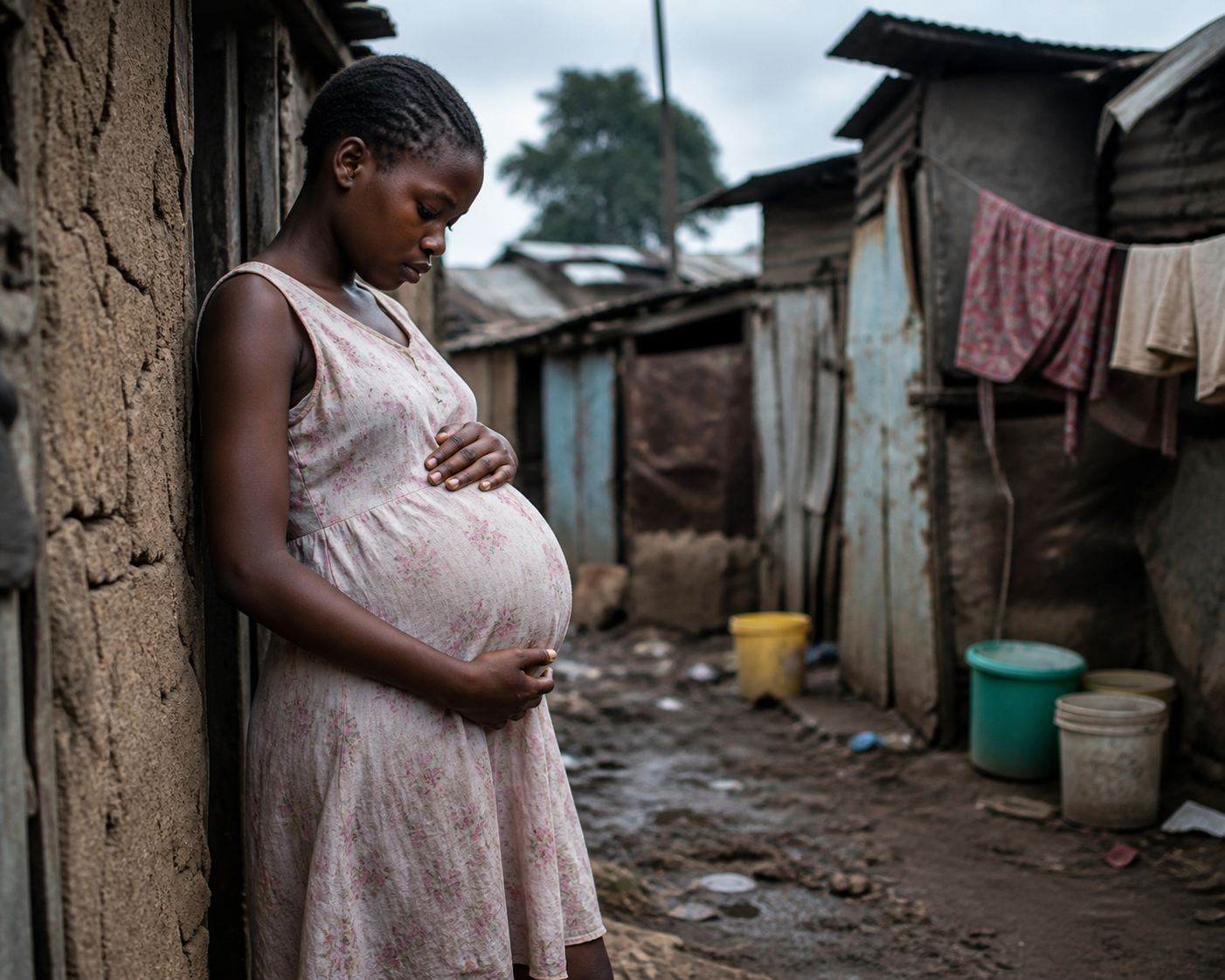
We all know how mother’s day is celebrated. Idealised; we speak of love and sacrifice, of the quiet strength of women who raise families and shape futures. And it is true, most women have raised children single handedly, sometimes with barely nothing, they themselves barely hanging on a thread. On that day, we do not talk about the mothers who were never there, who were emotionally abusive or even the deadbeat mothers (and contrary to what most believe, they are in plenty.)
Mother’s day is a moment wrapped in gratitude and admiration. But it’s not all roses. Beneath that celebration is an uncomfortable of thousands of those we call “mothers” still being children themselves. That is what we shall focus on today, just ten days away from the “special” day.
The numbers tell a story we cannot afford to ignore. About 15 percent of girls between the ages of 15 and 19 have been pregnant at least once. That figure has barely shifted in recent years, despite policy commitments and public awareness campaigns. In 2024 alone, more than 125,000 babies were born to teenage mothers, meaning that over one in every ten births in the country involved an adolescent girl. In just a 15 month period between late 2024 and early 2025, over 48,000 teenage pregnancies were recorded across 44 counties. The adolescent birth rate remains high at around 73 births per 1,000 girls, and in some counties such as Samburu, the situation is far more severe, with nearly half of teenage girls having experienced pregnancy.
These are not just statistics because after all is said and done, they represent interrupted childhoods, derailed education and futures that are reshaped before they have had a chance to fully form.
Kenya had set a clear target to reduce teenage pregnancy to 10 percent by 2025. It was an ambitious goal yes, but a very necessary one. Today, that target feels increasingly out of reach. The rate has stagnated at around 15 percent for years, refusing to decline in any meaningful way. The truth is uncomfortable but clear. The country is not making the kind of progress needed to reverse this trend. If anything, the persistence of these numbers suggests a structural failure that goes beyond policy documents and public messaging.
At the centre of this crisis is poverty, which continues to shape the choices available to young girls. In many communities, relationships are often transactional. A teenage girl may enter a relationship with an older man not out of desire, but out of necessity. Basic needs such as sanitary products, school fees, food, or even transport money become bargaining tools. It is a sad state of affairs, because under these circumstances, consent becomes blurred and vulnerability is easily exploited. How can these even be considered as relationships when often they are a reflection of economic desperation?
Alongside this is the persistent and deeply troubling issue of sexual defilement, particularly in rural areas. In many cases, the perpetrators are not strangers. They are known within the community. They are neighbours, relatives, boda boda riders, teachers or local figures of authority. The silence that surrounds these cases is not accidental. It is enforced through fear, stigma and sometimes complicity. Families may choose to settle matters informally. Community leaders may intervene to “resolve” cases quietly. In the end, justice is often reduced to a token punishment, if any at all. What this ends up doing is it sends a dangerous message to the young girls that their bodies can be violated without consequence, and it tells perpetrators that they can act with relative impunity(!).
There is also a growing concern that early marriages, once thought to be in decline, are quietly making a return in some parts of the country. Economic hardship has pushed some families to view marriage as a solution rather than a problem. A pregnant teenager may be married off quickly to avoid shame or to shift responsibility. In other cases, girls are married early as a form of financial relief for struggling households. What is presented as tradition often masks a cycle of deprivation and limited opportunity.
When we bring all these factors together, a pattern begins to emerge. Teenage pregnancy in Kenya is not simply a matter of individual choices or moral failure, but a result of intersecting pressures that include poverty, weak enforcement of laws, cultural norms and systemic gaps in protection and education. It is a national issue that reflects how society treats its most vulnerable members.
As we celebrate Mother’s Day, perhaps the question we should be asking is not just how we honour mothers, but how we protect girls from becoming mothers before they are ready. Remember, behind every statistic is a girl whose life has changed in ways she did not choose. And yet, if we do not confront the reasons why this continues to happen, the numbers will not fall. They will remain, year after year, a quiet indictment of a system that has yet to fully protect its children.