There was a time when the television did one thing, and did it predictably. You turned it on, flipped through a handful of channels and watched whatever was scheduled. That was it. No choice or control, and definitely no conversation about design.
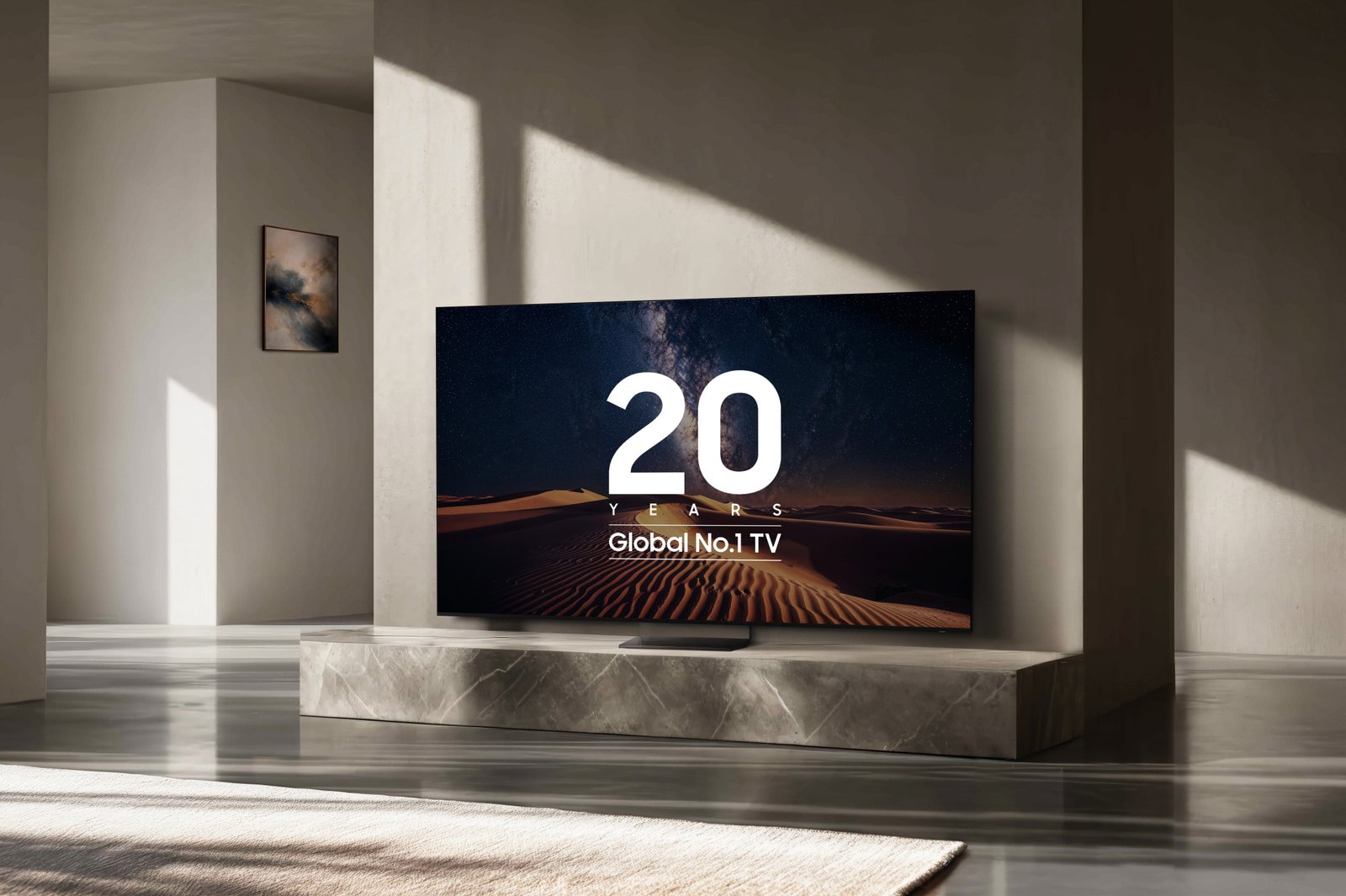
Fast forward twenty years and the television has quietly taken over the living room not just as a screen, but as an experience.
Back in 2006, when Samsung introduced the Bordeaux LCD TV, it felt like a small rebellion against the idea that electronics had to be purely functional. With its glossy finish and soft, curved edges inspired by a wine glass, it looked like something you could place in a room with intention, not just tolerate in a corner.
Two years later, the Crystal Rose pushed that idea further. Subtle colour shifts along the bezel meant the television responded to light and movement in the room. It was no longer just something you watched, but something you noticed.
Then came the real disruption.
By 2009, LED-backlit displays had begun stripping televisions of their bulk. They became thinner, brighter and far more efficient. For the first time, mounting a TV on the wall felt natural, not like a compromise. The television stopped being furniture and started becoming part of the architecture of the home.
Around the same time, the industry flirted with immersion in new ways. Samsung’s 3D LED TV in 2010 promised depth, spectacle and a different kind of viewing experience. Not all of it lasted, but it signaled something important: the TV was no longer static. It was experimental.
But the real shift came when the television connected to the internet. Once Samsung introduced its Smart TV ecosystem and interface in the early 2010s, the entire logic of watching changed. The TV was no longer tied to broadcast schedules. It became a gateway to streaming platforms, apps, games, and eventually, the wider digital world. Control shifted firmly into the hands of the viewer. And then, almost quietly, design came back into focus.
With The Serif in 2015, the television leaned into the idea of being furniture again—deliberately so. It didn’t try to disappear. It asked to be seen. Two years later, The Frame took a different route: if a TV must sit on your wall, why not let it become art when you’re not using it? A blank screen became a gallery, and suddenly, the “off” state mattered just as much as the “on.”
Behind all of this, the technology kept moving. From early OLED experiments to curved and bendable displays, to the rise of quantum dot technology and the eventual dominance of QLED, the goal remained consistent: better colour, deeper contrast, and a more lifelike picture. By the late 2010s, achieving 100% colour volume wasn’t just a technical milestone. It was a statement about how seriously image quality was being taken.
Today, the modern Samsung TV barely resembles its ancestors.
Neo QLED and MICRO LED technologies push brightness and contrast to levels that would have felt excessive a decade ago. Features like Ambient Mode allow screens to blend into their surroundings instead of interrupting them. Cables disappear. Interfaces learn. Artificial intelligence quietly adjusts sound and picture in real time, responding to what you’re watching without asking you to intervene.
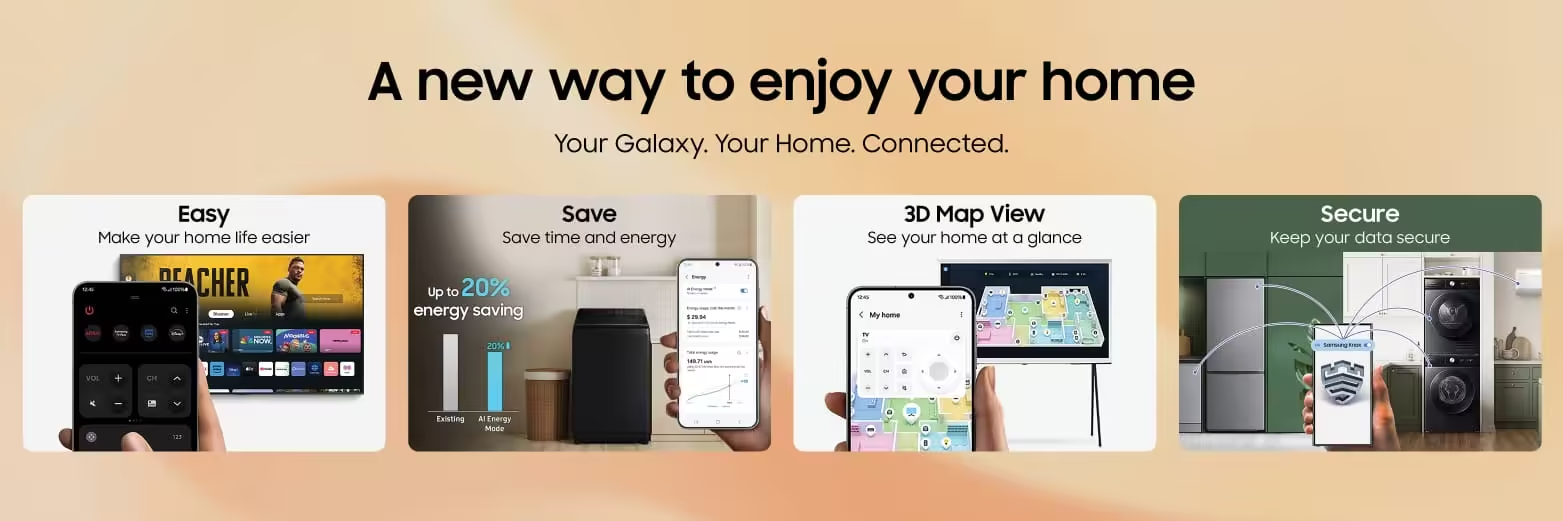
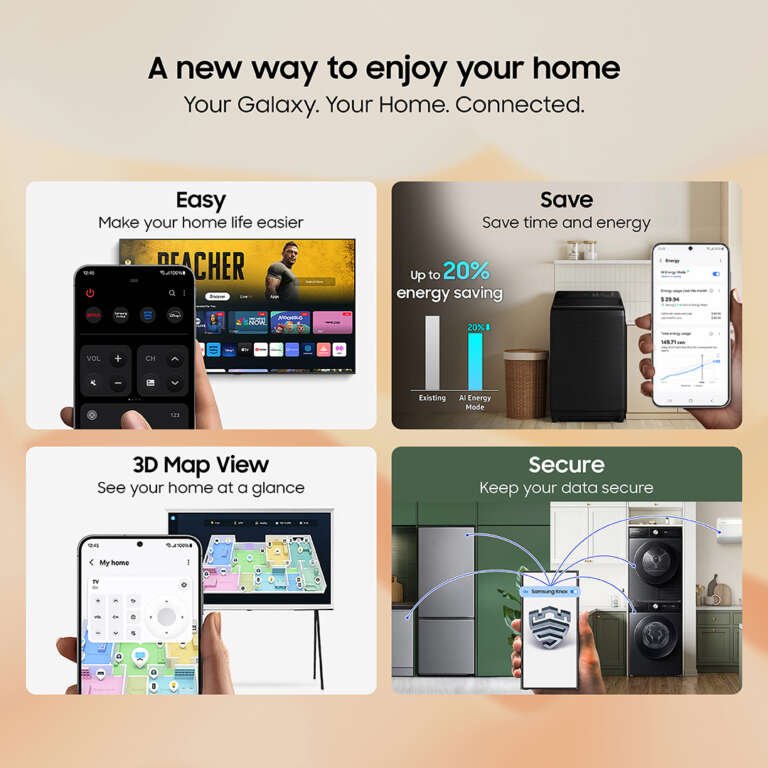
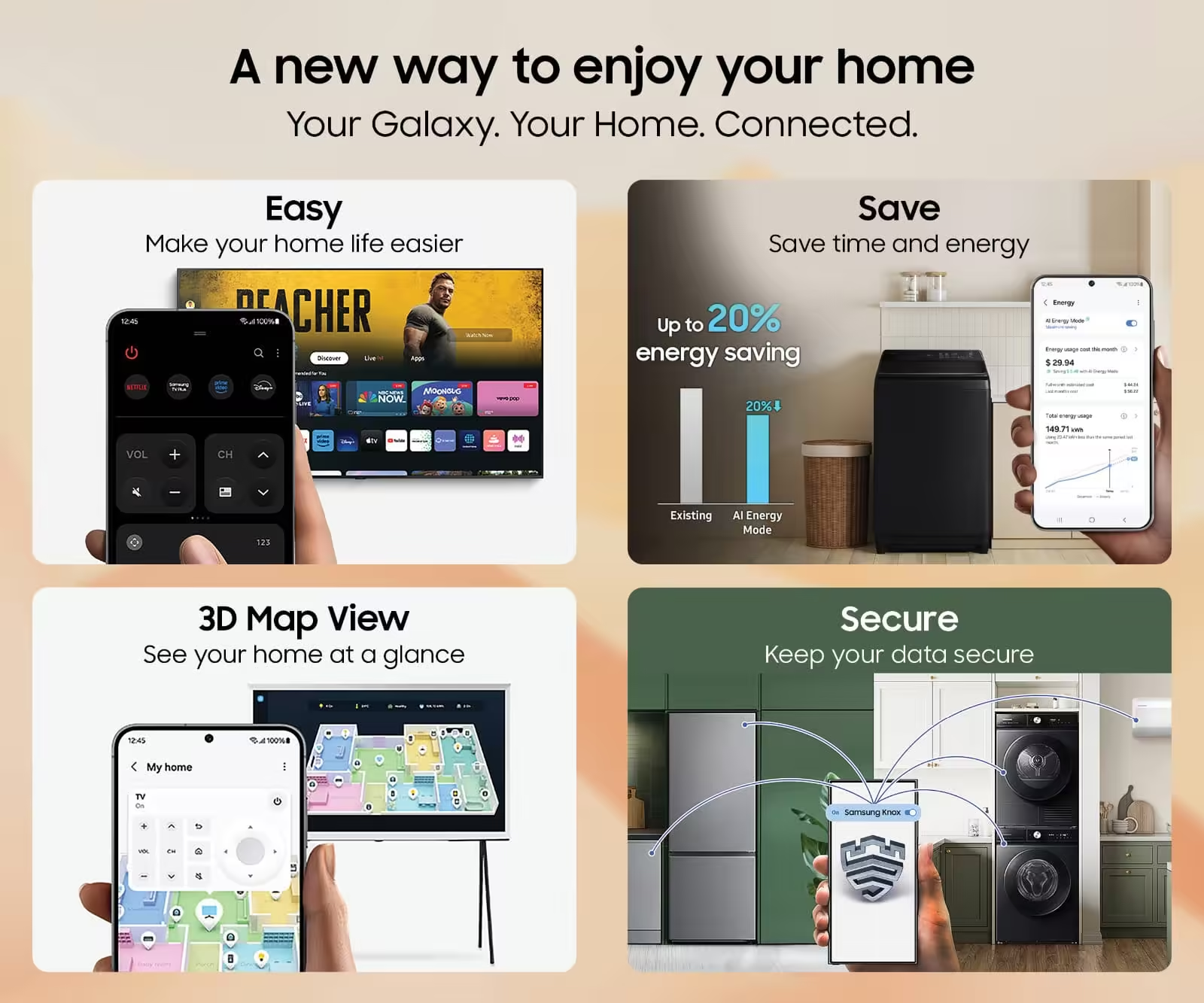
And somewhere along the way, the television stopped being just a device.It became a hub – for entertainment, yes, but also for design, for connection and increasingly, for the smart home itself. What sits in the living room today is not just the evolution of a screen, but also the evolution of how we live around it.
Samsung’s connected experience isn’t limited to the home. From smartphones and televisions to wearables, devices such as the Galaxy Watch9 are designed to fit into the everyday routines of users, including work, fitness and productivity.