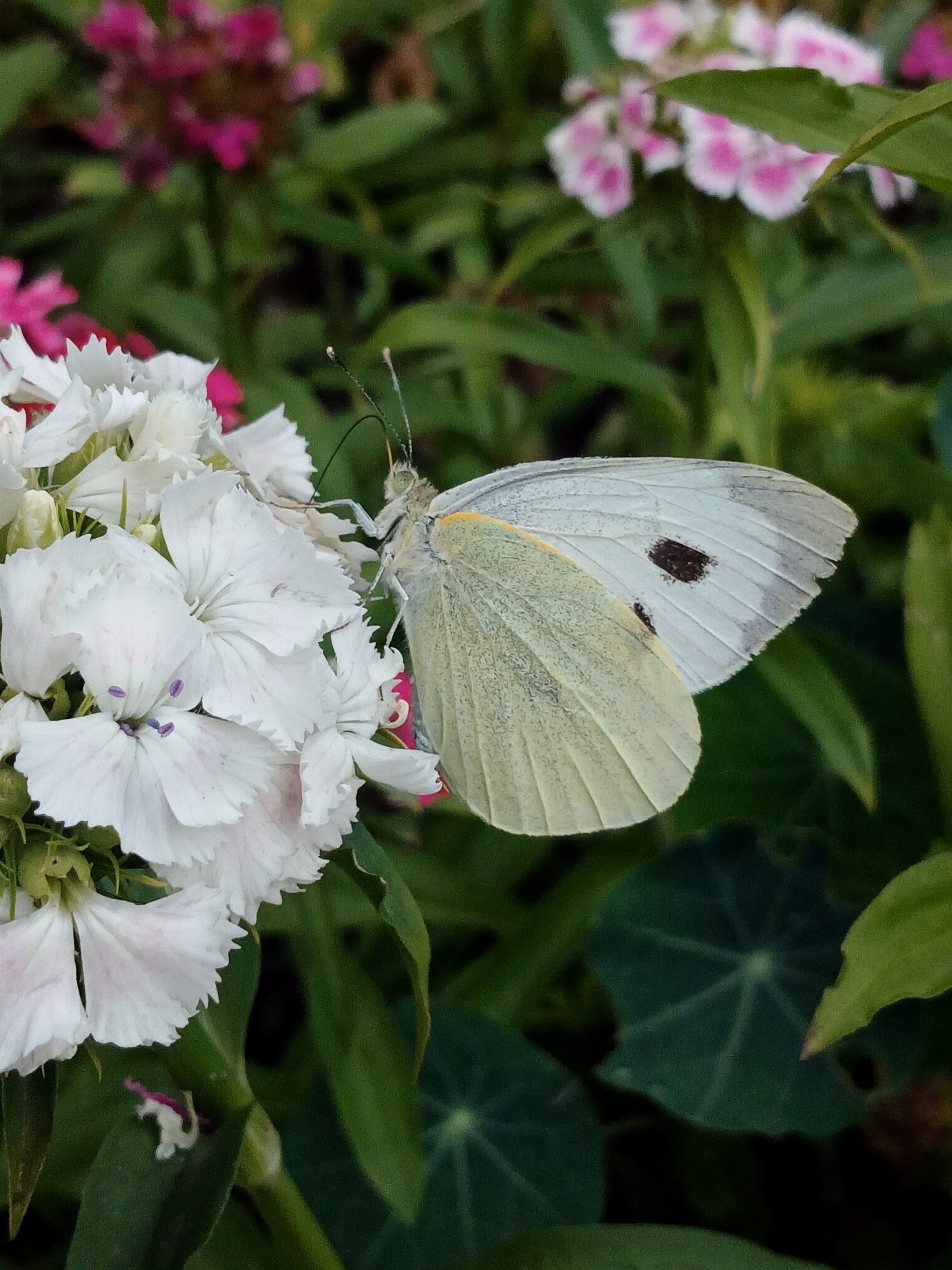
The other day, while taking an evening stroll with my daughter, something unusual caught my eye. White butterflies everywhere.
They floated above the grass and danced across roadsides – and they seemed to appear in every open field we passed. I pointed them out to her, expecting little more than a passing observation.
She went quiet for a moment. Then she turned to me and asked, “Did you know white butterflies are the ones that turn into caterpillars?”
That caught me by surprise. Not because she was wrong, but because in my thirty something years on this planet, I had somehow never stopped to think about it. Ofcourse i knew that butterflies become caterpillars and caterpillars become butterflies. It’s one of nature’s most basic lessons, yet somehow that bit that it was white butterflies that morphed into caterpillars had escaped me.
Not to brag but, my daughter is sharp like that. She is forever dropping random facts into conversation and leaving me scrambling to catch up. Just recently she was explaining the Blue Moon to me and excitedly telling me about the upcoming Strawberry Moon(?). She has been keeping tabs on every single unique moon for the past one year (ohh Mara hunter’s moon, mara beaver moon, mara cold moon. I can’t seem to keep up). Apparently, my role in life is no longer to teach her things. It is to be regularly humbled by a fourth grader.
But her comment got me thinking about the butterflies.
If you’ve been anywhere in Kenya lately, chances are you’ve noticed them too. Social media has been awash with photos and theories. Some people believe the unusually high number of white butterflies is a sign of an approaching drought. Others see them as a spiritual omen, a symbol of change or even a message from ancestors.
As fascinating as those beliefs may be, science offers a less mysterious explanation.
Experts say large butterfly populations are often linked to environmental conditions. Following periods of rainfall, vegetation flourishes, creating ideal breeding conditions for butterfly species. More food means more caterpillars survive, which eventually means more butterflies emerge at the same time.
Weather also plays a role. Warm temperatures and favourable winds can make butterfly populations more visible as they spread across different regions. What appears to be an invasion may simply be nature doing what nature has always done.
That doesn’t mean traditional observations are without value. Long before meteorological departments existed, communities relied on plants, insects, birds and animal behaviour to make sense of seasonal changes. Many of those observations became woven into folklore and local knowledge.
The challenge comes when we confuse correlation with prediction.
That distinction is particularly important given some of the claims currently circulating online. The idea that white butterflies are a warning of an extreme drought, impending disaster or divine judgment may make for compelling social media posts (we all love a little drama) but there is little evidence to support such conclusions. Again, butterfly populations rise and fall for many reasons, most of them linked to weather conditions, breeding cycles and food availability. Likewise, while many cultures attach spiritual meaning to animals and natural events, those interpretations belong to the realm of faith and tradition rather than science. White butterflies are remarkable creatures, but they are not meteorologists, prophets or harbingers of doom. Sometimes a butterfly is simply a butterfly, and nature is simply putting on a show.
Still, there is something comforting about the conversation these butterflies have sparked.
For a brief moment, they have managed to pull people away from fuel prices and the endless scroll of bad news. They have reminded us to look up, something we haven’t done in a long time. Most importantly, they’ve brought out the curiosity in us, making us ask questions.
And sometimes those questions come from the most unexpected places. Like a nine year old casually teaching her parent how butterflies work.