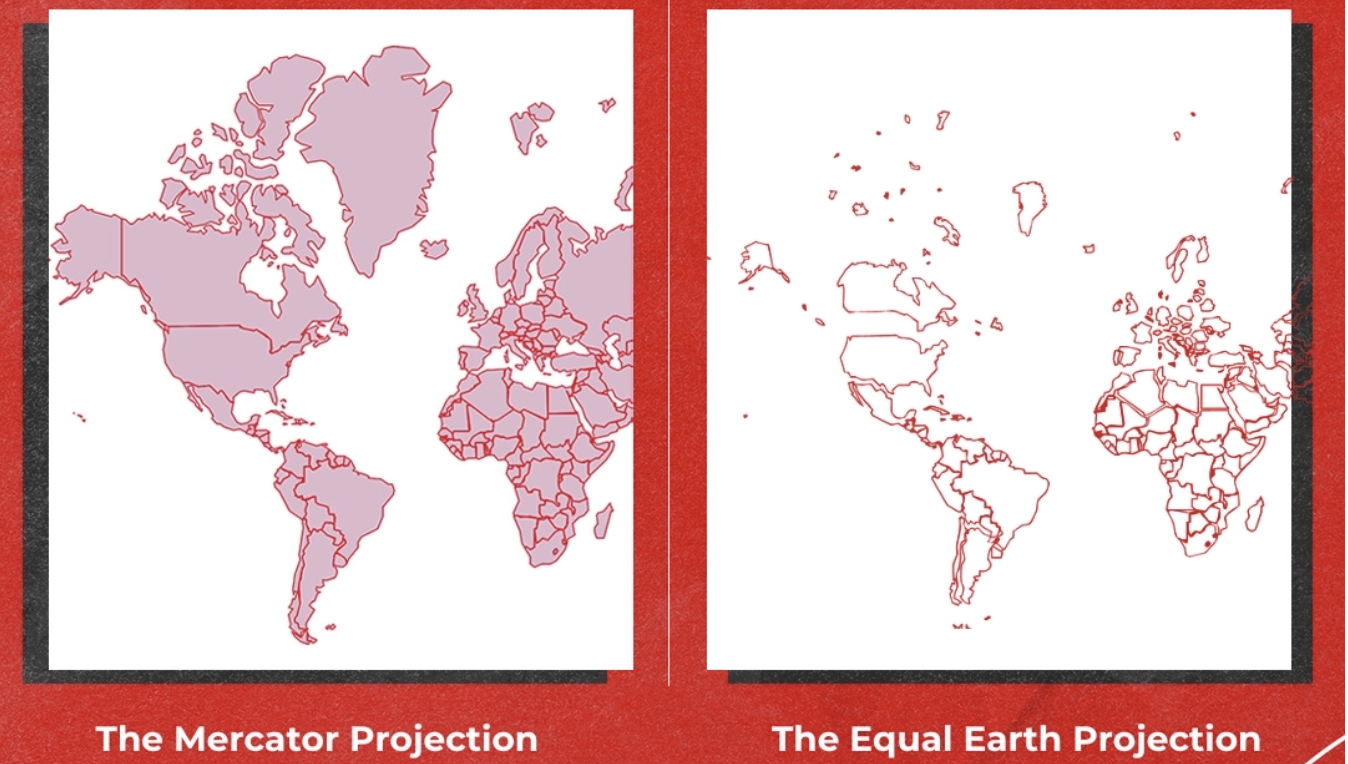

How many of you have ever looked at the world map and thought, mmmm, there is something wrong with this map? I know I haven’t. It is crazy how most of us were brought up to believe everything we learnt in school as the gospel truth. Heck, even questioning our teachers was unthinkable. Imagine my shock when I was answering questions from my daughter about planets a couple of years ago and she told me matter of factly that pluto is no longer a planet? What do you mean, Pluto is no longer a planet, I asked her in disbelief.
“Well, they dropped it from the list of planets in 2006,” she stared at me in a funny way, probably wondering how I could possibly not know such crucial information. “So what is it known as now?” I asked her. “It is now called a dwarf planet, but it is no longer a planet.”
“A what?” I asked incredulously while looking at my 4 year old daughter, who hadn’t even begun school. How did she get to know all these things? The internet, that’s what.
All the hullabaloo going on about the size of the African continent is the kind of knowledge my daughter probably knows of already. She always has a keen interest in such matters.
How many times have you looked at a world map and thought anything of it, other than it just being a map? For most of us, the colorful shapes of continents and oceans hanging in classrooms or printed in atlases are just background knowledge. But what if the map itself has been lying to us all along?
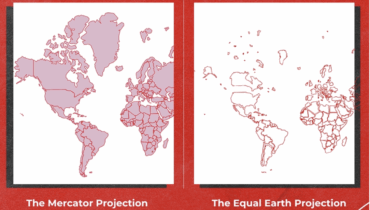
This is what the African Union (AU) is arguing as it backs a global campaign to redraw the world map. At the heart of the movement is the Mercator projection, a map created in 1569 by Flemish cartographer Gerardus Mercator. This map was revolutionary at the time because it helped sailors navigate long voyages by sea. However, it is now coming to people’s attention that as a tool for education, it is deeply flawed.
The Mercator map makes the continents near the equator (especially Africa) look far smaller than they really are. On paper, Greenland and Africa appear almost the same size, yet Africa is about 14 times larger (gasp). Europe looks like this really huge continent while in reality, the African continent can easily swallow it whole multiple times over. Sadly, these distortions that can be mistaken as mathematical accidents have shaped centuries of perception, subtly reinforcing the idea that Africa is smaller, less important and somehow peripheral to the world stage.
As AU Deputy Chairperson Selma Malika Haddadi recently put it: “It might seem to be just a map, but in reality it is not.”
The Equal Earth Projection: Setting the Record Straight
But, all is not lost. Because while the Mercator’s map has been quietly misleading the world for centuries, the Equal Earth projection offers a chance to put things right. Developed in 2018 by a team of cartographers, the Equal Earth projection was designed to show countries and continents in their true proportions while still looking familiar and easy to read.
Unlike Mercator, which stretches landmasses near the poles and shrinks those along the equator, Equal Earth keeps size accurate. On this map, Africa finally takes up the space it deserves as the world’s second-largest continent, covering 20% of Earth’s land area, home to 1.4 billion people and rich in resources, cultures and histories. This, I guess, is what the African Union is fighting for; a true representation.
Geographers have praised the Equal Earth projection for its symbolism. They say it restores balance to how we see the planet, correcting what many activists call “the world’s longest-running misinformation campaign.” Some major organizations, such as the World Bank, have already begun to use it in reports and presentations, signaling an important shift away from Mercator – albeit a slow one.
For Africa, adopting this map is about reclaiming visibility and teaching the next generation to see their continent as vast and significant. For the African Union, it is about undoing the chini ya maji powerful distortions of the past. I just love how this continent is finally waking up.
But not everyone agrees with what the AU is trying to do. Some see it as a non issue. According to all the comments I keep coming across on different social media platforms, not everyone is impressed by the AU’s push to redraw the world map. Some critics argue that with so many pressing issues on the continent like economic challenges and security concerns, focusing on maps seems like a distraction.
“Anything but fixing corruption,” one user wrote, his comment garnering 200k likes as thousand others voiced their agreement. “I was about to say the same thing! Over 34 trillion in aid since the 70’s and they haven’t done a damn thing!”
As someone who has repeatedly called out the African Union myself as seen in this article, I believe that to dismiss this campaign as trivial is to overlook the power of perception.
Maps shape how people understand the world and their place in it. For generations, schoolchildren in Africa and beyond have grown up looking at maps that make their continent appear small and marginal. This distortion feeds into the psychological narrative that Africa is less significant, less capable and most importantly; less powerful.
Correcting the map is about correcting that worldview. It is a step toward decolonizing knowledge and teaching children the truth about their continent. It is demanding that Africa be seen in its real proportions. Changing the world map as we know it is about dignity and identity. It is about justice.
In that light, the AU’s focus makes sense. While changing the world map will not solve Africa’s immediate challenges, it tackles something very important: the way the world (and Africans themselves) imagine the continent.
Africa Has Spoken Up, So What Comes Next?
The African Union has thrown its weight behind the “Correct The Map” campaign, working alongside advocacy groups like Africa No Filter and Speak Up Africa. Together, they are calling on schools, publishers, international organizations and the media to abandon the Mercator projection in favor of Equal Earth.
The AU is already encouraging its 55 member states to adopt the new map in classrooms, so that African children grow up seeing their continent in its true proportions.It is also pressing global institutions like the United Nations and the World Bank to follow suit. Change, after all, demands a global shift.
Some progress is underway. The World Bank has already started incorporating Equal Earth maps in its materials and other organizations are reviewing their cartographic standards. But advocates stress that the ultimate goal is to see Mercator phased out entirely in education, policy and everyday use, replaced by a more accurate vision of the world.
For Africa, this is about taking control of a narrative long shaped elsewhere and ensuring that future generations grow up knowing their continent’s true size and place in the world.
A Bigger Africa, A Fairer Worldview
I agree that redrawing the world map might at first seem like a symbolic gesture. But the truth is, symbols matter because they shape how we see ourselves and how others see us. If truly they did not matter, then Africa would not have been made to look so small and insignificant in the first place.
The African Union’s call to adopt the Equal Earth projection is a reminder that representation is never neutral. As the campaign gains momentum, it becomes clear that this is not just about maps. It’s about narrative. And narratives have the power to change everything.
Update: As of 4/09/2026, the African Union’s campaign to correct the way Africa is represented on world maps has now reached a major milestone. The United Nations General Assembly voted overwhelmingly in favour of a resolution promoting maps that represent Africa and other land masses more accurately, raising new questions about the future of the Mercator projection and how maps showing Africa’s true scale could eventually make their way into schools, textbooks and digital platforms.