
What first comes to mind when you hear the name Tsavo? Most travelers know Tsavo National Park for its elephants and wide-open savannahs. Some also think of the lions and other wild animals, but it mostly is about the elephants.
When I was in Class Six, our school took us on a trip to Tsavo National Park. I still remember the thrill of seeing wild animals for the very first time. The elephants splashing by the river, giraffes walking in “slow motion” appearing nonchalant but noticing everything around them and the lions lazing in the afternoon sun. Even at such a young age, that experience stirred something in me that has never faded.
But as I grew older, I began to realize there is so much more to Tsavo than the postcard images and glossy magazine spreads of elephants and big cats. You will be pleasantly surprised to learn that beyond the game drives lies a side of Tsavo that few visitors ever discover. We are talking about hidden waterfalls, mystical hills, ancient lava flows and secret wildlife rituals right at the heart of this vast landscape.
These hidden gems of Tsavo will make you fall in love not just with the safari, but with the stories the land itself tells. If you’re planning a safari in Kenya, this guide will take you beyond the Big Five and into Tsavo’s best-kept secrets.
Tsavo may be one of Kenya’s best-known safari destinations, but Africa has plenty of lesser known places worth putting on your travel list. If you’re looking beyond the usual tourist circuit, explore these 5 affordable African hidden gems every woman should visit.
1. Lugard Falls. The Power of the Galana River
We start strong with the Lugard falls (because, who doesn’t love a beautiful waterfall view?) The Galana River cuts across the heart of Tsavo, winding gracefully through the wilderness. But at Lugard Falls, the river transforms into something far more breathtaking as its water squeezes through rugged layered rock, crashing and foaming into powerful rapids.
The last time I was in Tsavo, I remember standing in awe as the roar of the water echoed louder than the chatter of my travelmates. It felt so peaceful. Today, Lugard Falls remains one of Tsavo’s most underrated spots where nature’s raw power is on full display.
This hidden gem is perfect for photographers who love capturing the contrast of water and stone, as well as travelers looking for a refreshing stop between game drives.

Lugard Falls in Tsavo National Park with the Galana River rushing through
2. Mudanda Rock & the Elephant Salt Licks; Tsavo’s Natural Theater
Stretching 1.6 kilometers long, Mudanda Rock rises from the savannah like Tsavo’s own Pride Rock. If you climb to the very top, you get sweeping views of the plains below, where all types of wild animals often gather at the nearby waterhole. It’s one of the best spots in Tsavo East to watch wildlife against a stunning backdrop, especially at sunset.
Not far away, Tsavo’s elephants follow a daily ritual at the natural salt licks where they scrape and lick the mineral-rich soil, acquiring the essential nutrients their bodies so badly crave. Watching entire herds take part in this timeless routine and knowing this rock has been feeding the animals for centuries, feels like witnessing an ancient intimate ceremony that is powerful and uniquely Tsavo.

Tourists at Mudanda Rock in Tsavo East National Park as Elephants gather at the waterhole nearby.

Elephants at the salt lick. In the background is the salt lick safari lodge, located at the centre of it all.
3. Mzima Springs. An Oasis in the Wild
In the middle of Tsavo’s dry wilderness lies an unexpected paradise: Mzima Springs. Fed by underground streams from the Chyulu Hills, the springs bubble up into crystal-clear pools that support an entire micro-ecosystem.
At the Mzima springs you will catch Hippos wallowing lazily in the cool water while crocodiles glide silently beneath the surface. Above, vervet monkeys chatter in the fig trees and colorful birds dart across the sky. One of the highlights here is the underwater viewing chamber, where you can watch hippos and fish move beneath the waterline. To be honest, very few places in Africa can offer this perspective.
Mzima springs is definitely a beautiful scenic stop. But it is also a reminder of how life flourishes even in the most unexpected corners of this earth.

Hippos swimming in the clear waters of Mzima Springs in Tsavo West National Park, Kenya
4. Shetani Lava Flows (The Dark Mystery of Tsavo West)
Driving through Tsavo West, you do not expect to come across a vast stretch of black, jagged rock. Known as the Shetani Lava Flows ( i don’t know who gave it that name, seeing as shetani is the swahili word for devil lol) it was created centuries ago by volcanic eruptions. Or maybe it was just the natives of the land, who must have believed that the fiery lava was the devil himself passing through.
Walking across the lava fields feels almost otherworldly – as it should. It feels as if you’ve stepped onto another planet. The sharp, twisted rocks stretch for miles, a stark contrast to the rolling savannahs and green hills nearby. Not many tourists stop here, but those who do are rewarded with a hauntingly beautiful glimpse into Tsavo’s volcanic past.
Shetani lava flows is a geological wonder; a story of fire and myth carved into the land.

Vast black volcanic rock field at Shetani Lava Flows in Tsavo West National Park, Kenya
5. The Chyulu Hills – A Green Escape
After the rugged landscapes of Tsavo, the Chyulu Hills rise like a soft green wave against the horizon. A little trivia, these hills were given the famous name “Green Hills of Africa” by Ernest Hemingway back in the day. The Chyulu hills are a volcanic range that offers a refreshing contrast to the dry savannah below.
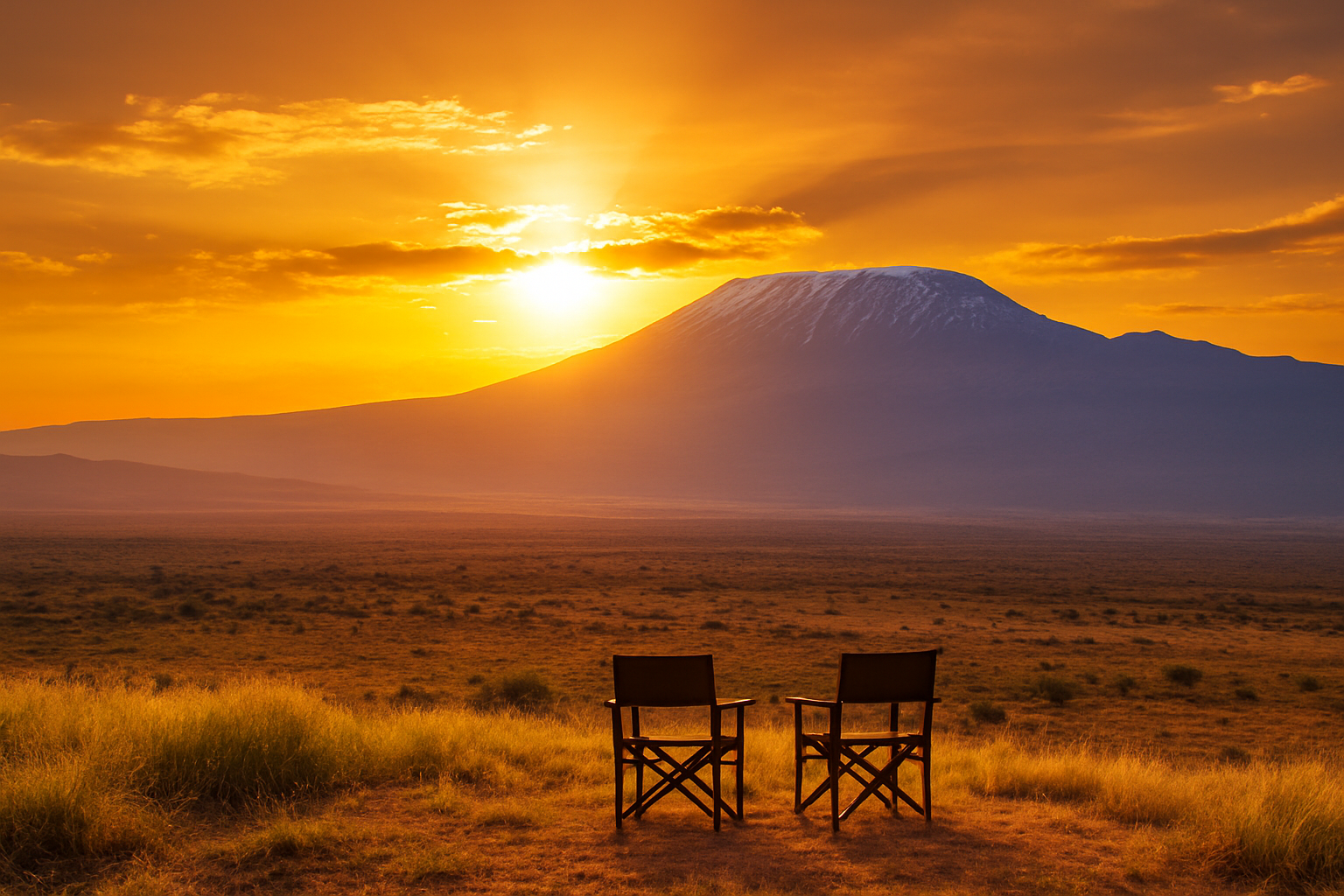
Not only that, the rolling hills are also perfect for hiking, horseback safaris and nature walks. On clear days, you can see Mount Kilimanjaro towering in the distance, its snowy peak shining above the clouds. The hills are also home to caves, underground rivers and unique birdlife. This makes them a paradise for adventurers who want to go beyond the traditional safari.
Quiet, scenic and often overlooked, the Chyulu Hills are where Tsavo shows its softer side.


Rolling green Chyulu Hills, Tsavo Kenya
Insider Travel Tips for Tsavo
Exploring the hidden gems of Tsavo is even more rewarding when you plan right. Here are a few tips to make the most of your safari:
- Best time to visit: The dry season, from June to October and December to February, is ideal for wildlife viewing as animals gather at water sources. While the wet seasons (March–May and November) bring lush scenery, they make spotting wildlife more challenging.
- Getting there: Tsavo is accessible by road (about 5-6 hours from Nairobi or 3-4 hours from Mombasa.) For a faster option you could choose to use the SGR (Madaraka Express train) which stops at Voi and Mtito Andei, both convenient entry points into the park.
- Park entry: Tsavo is split into Tsavo East and Tsavo West, each requiring separate entry tickets. Consider visiting both for the full experience.
- What to pack: Light clothing, a good camera, binoculars, sunscreen and plenty of water. Just because you are going to the wild does not mean you should forgo comfort.
Where to Stay in Tsavo
Whether you’re traveling on a budget or seeking luxury, Tsavo offers a wide range of accommodation options. Here are some standout stays near the hidden gems of Tsavo:
- Kivuko Eco Camp – Perfect for eco-conscious travelers, this camp blends comfort with sustainability right in the heart of Tsavo.
- Afrika Lodges – Located in Voi, it’s an affordable and convenient base for exploring Tsavo East
- Sarova Shaba Game Lodge – For those who love luxury, Sarova combines world-class service with breathtaking views.
- .Boma Simba Lodge – A cozy, family-friendly option offering warm hospitality and authentic safari vibes.
- Taita Hills Safari Resort & Spa – Known for its stunning architecture and spa facilities, it’s ideal for travelers who want both adventure and relaxation.
- Tausa Tsavo Eco Lodge – A peaceful eco-lodge surrounded by nature, perfect for off-the-beaten-path explorers.
- Safari Salt Lick Lodge – One of Tsavo’s most iconic lodges, built on stilts above a natural waterhole and salt lick. Guests can watch elephants and other wildlife gather right below their rooms and get that unforgettable experience.
Conclusion
Tsavo is a living, breathing landscape where stories unfold every day. From the thunderous rush of Lugard Falls, to the silent gathering of elephants at the salt licks, to the lesser-known caves and hills that whisper history, Tsavo holds treasures beyond what most travel magazines capture.
When I first visited as a wide-eyed Class 6 pupil, I thought Tsavo was only about spotting lions and elephants. Adulting, however, has taught me to appreciate nature in ways I never thought possible. Growing older and returning to its vast landscapes showed me that the hidden gems of Tsavo are what make the experience unforgettable. It’s in the places where fewer travelers wander, in the lodges that open up to watering holes and in the simple joy of sitting under an acacia tree while giraffes graze in the distance. Now that is true richness.
So, the next time you plan a safari, instead of following the crowds, you should venture deeper into Tsavo’s secrets because sometimes the best stories are found where the map runs out.