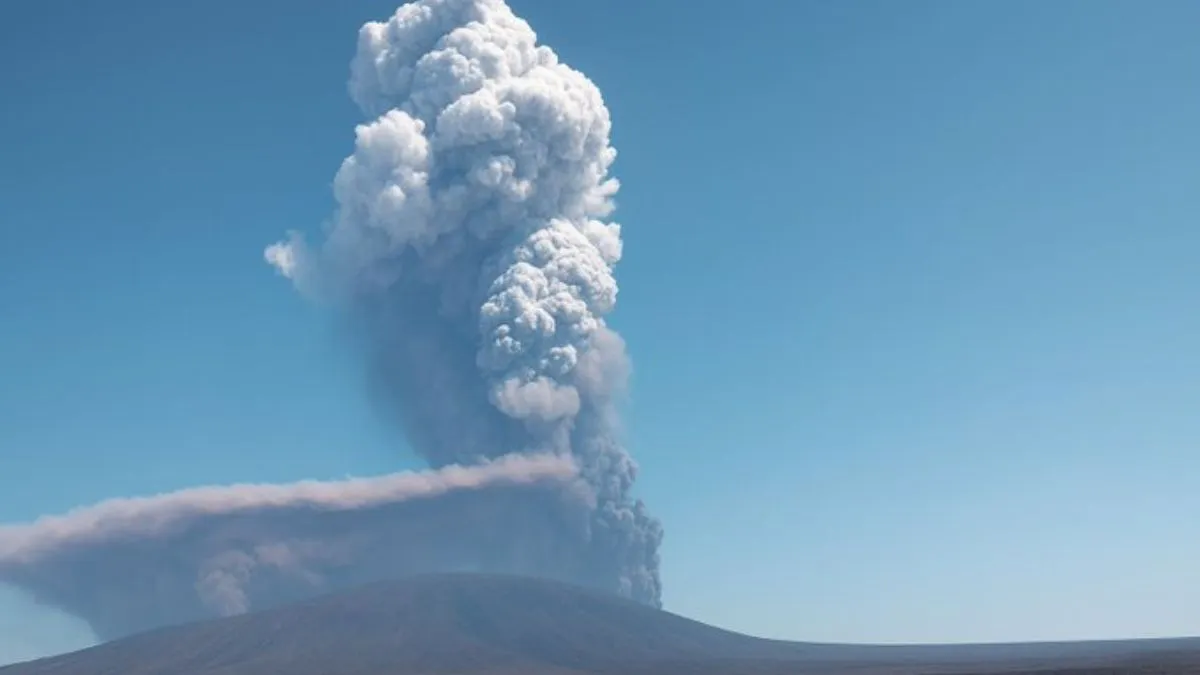
For twelve thousand years, the Hayli Gubbi volcano in Ethiopia stood quietly under the fierce Afar sun. Ethiopia, that ancient land that has been there since BC, hosted the dark, old shaped mountain on the horizon. A mountain so silent that generations grew up believing it was more mountain than volcano.
Then, on a quiet November morning, what was once unthinkable to most scientists finally happened. A volcanic mountain that was long thought to be dead or extinct (meaning the scientists believed it would never erupt again) suddenly reactivated.
Villages woke to darkness after ash from the mountain shot kilometers high into the sky. Suddenly, Planes were adjusting their routes and the world looked toward Ethiopia with shock. And here we are now, wondering what’s this means for the spine of the continent, moving through Kenya, Tanzania and into Mozambique. Maybe this is the Earth’s way of reminding us that the East African Rift is alive.
Hayli Gubbi had not erupted in thousands of years. The last time it erupted, they say, was at the dawn of civilization. Without modern instruments placed nearby, its slow underground changes went unseen. It finally erupting came with a myriad of questions, like are other long quiet mountains capable of doing the same? Is the Rift Valley shifting beneath us? To understand the eruption is to understand the remarkable and often misunderstood geological story of East Africa.
Beneath the towns and wildlife conservancies lies one of the world’s most active tectonic seams. The African continent is, slowly and steadily, tearing itself apart. I dug Abit and did some research and apparently the Nubian Plate to the west and the Somali Plate to the east are drifting away from each other, creating a vast crack that will, millions of years from now, become a new ocean. It is a process so slow it seems irrelevant…. until a volcano reminds us.
For scientists, the awakening of Hayli Gubbi is not a shock but a confirmation of this ongoing process. As the plates pull apart and magma from deep within the Earth rises, this slow process that will take place over thousands of years will create hot springs, steam vents, earthquakes and, occasionally, an eruption after a very long silence.
To the average East African, volcanoes feel like relics from another age. Something truly ancient that shaped the land long ago as opposed to something that still has a voice. And yet the Rift Valley is home to dozens of sleeping volcanoes. Longonot, Suswa, Menengai, Ol Doinyo Lengai, Kilimanjaro. All of these are volcanoes yes, but none has erupted recently. Their quietness has been mistaken for death.
So much has been said since Hayli Gubi erupted. People are claiming that the Longonot is next, others that this eruption will awaken other sleeping mountains long thought incapable of erupting. Whether this is true or not, however, is up for debate. Plus you never really can tell with nature, so we will have to wait and see if there will be a chain reaction.
The Ethiopia event is a reminder that silence is not the same as stillness.
What makes eruptions feel more sudden today is the visibility. Satellites now detect tiny movements from ground swelling to temperature changes. We now have Instruments that are capable of capturing tremors too small for humans to feel. Technology is finally revealing what the Earth has been doing all along. In places with dense monitoring like Iceland or Japan, volcanic activity is predicted and prepared for. We cannot however say the same for most parts of Africa, and across East Africa where monitoring is sparse. Many volcanoes are in remote regions where scientific equipment is limited, meaning eruptions can appear to come out of nowhere, when in reality the warning signs were simply missed.
Isn’t it quite telling that the Rift Valley, cutting through geothermal plants and wildlife parks has fewer seismic stations than Iceland – a country smaller than Samburu County? Without proper monitoring small tremors go unnoticed, Magma movement goes undetected and communities get no early warning. The Ethiopian eruption is a case study in why this must change.
The lesson henceforth is about preparedness, before we have another Pompeii at hand and lose lives. I say this because the Rift Valley is full of life. It is home to millions of people who live and build businesses on its fertile floor. Alot of farming goes on in the rift valley by the way ( I read somewhere that these ashes and whatnot that come from the volcanic eruptions are good for farming and minerals. Maybe all the farming that goes on along the rift valley is proof). Here, towns sit near calderas and power plants tap geothermal heat. Highways run along edges of ancient craters. Investing in monitoring networks would allow scientists to detect changes early and turn eruptions from disasters into controlled events. The communities there need education to help them understand what lies beneath them.
Does the Hayli Gubbi eruption mean another volcano in East Africa will erupt tomorrow? Never mind what the scientists say. The truth is, no one can really tell. Just as this caught them unawares. But generally speaking, It does not mean Longonot is waking up or that the continent is splitting dramatically overnight. The rift grows at the pace fingernails grow. Slow, steady, yet… unstoppable. What the eruption does mean therefore, is that the process continues quietly beneath our feet.
In the end, the story of Hayli Gubbi is about perspective. It reminds us that the Earth is not fixed, something we seem to forget ever so often. The earth is shifting and evolving, just as it has for millions of years. We build homes, towns, and lives on land that was once molten, and one day will look different again.
Dramatic I know, and ohh so exciting.
The eruption is a gentle reminder that the forces shaping our continent are working still. And every so often, like a sleeper turning in their bed, the Earth lets us know it is still awake.