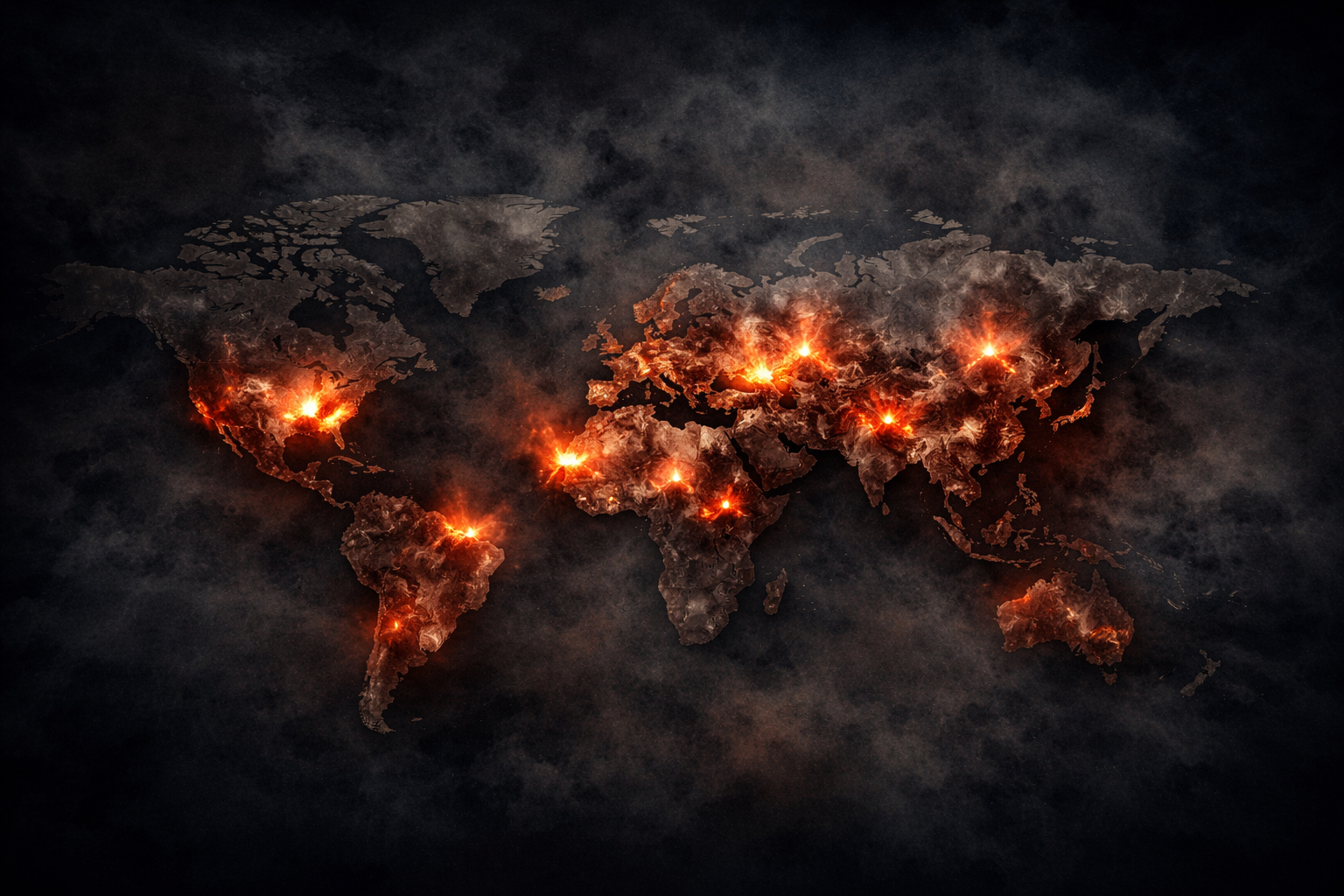
It would serve us well to remember that once upon a time, It used to be that news of a war stopped the world. A bombing or even an invasion were events that dominated headlines for months and stirred outrage across continents. After the devastation of World War I and the unimaginable horror of World War II, the world promised itself that such destruction would never happen again. And for a moment, everyone agreed that the senseless killings would be stopped as Institutions were created and treaties signed. For a brief moment in history, humanity believed it had finally learned its lesson.
For a while there, there was a fragile belief that the world was slowly becoming more peaceful. But, one cannot help wonder if we have just been naive.
It has been back to back with headlines about the devastating battles in the Russia / Ukraine War. Or the violence of the Israel / Hamas War. Elsewhere, entire regions such as the War in the Sahel are locked in conflicts so prolonged that they rarely make international news anymore.
Bombings…. Civilian deaths.
Another alert on the phone, another tragedy sliding down the timeline. Meanwhile, scroll…keep scrolling, please.
Somewhere along the way, something changed. War has not only become more frequent, it has become more familiar. The shock that once accompanied images of destruction is slowly being replaced by indifference. Admittedly, us human beings are adaptable. When violence becomes constant, the mind learns to cope by dulling its own reaction. Psychologists sometimes call this compassion fatigue – a quiet emotional exhaustion that sets in when suffering appears endless.
The result is a strange and troubling paradox of the modern age. Never before have we been able to witness war in real time, from thousands of kilometres away. Yet never before has it been so easy to absorb it and move on within seconds.
While some wars dominate global headlines, others unfold quietly in regions the world rarely pays attention to. And yet, it is becoming clearer than ever that these wars are multiplying, with the most troubling detail being their nature. How, increasingly, they seem to have no clear endings.
In the past, wars often concluded with treaties, surrender ceremonies or decisive victories. Today’s conflicts are different in that they drag on for years and morph into frozen conflicts, proxy battles, insurgencies, or endless cycles of retaliation.
The reasons are complex. Technology has made warfare cheaper and more accessible. Think drones, cyber warfare and information warfare that allow states and non state actors to fight without ever declaring war formally. Global rivalries between powerful nations mean many conflicts become proxy battlefields rather than isolated disputes.
History reminds us that eras of relative peace do not last forever. The decades following the Cold War were sometimes described as a “peace dividend,” a rare period where global powers avoided direct confrontation and many believed the world was slowly stabilizing. But history also shows that when geopolitical tensions rise simultaneously across regions, the risk of prolonged instability grows.
The question is no longer simply whether wars will continue. After all, wars have been there since the old testament. The Israel in these times was fighting one enemy or the other all the time. So yes, while humanity has always fought wars, the question now clearly becomes whether we are entering a period where conflicts rarely end and peace becomes the exception rather than the norm.
An age of endless wars.
It is not an inevitable future. But it is a possibility that the world is beginning to confront.