I was recently home in the village and unlike previous visits, this time I really stopped to smell the flowers. As we grow older, we realise that the best things in life are free, and where else to experience this other than in the village; the kind of place where the land still remembers every footstep and the morning air carries stories older than the county itself. Here, you appreciate the ripe huge avocado dropping from the tree by itself as you are busy sweeping the compound, as opposed to buying one the same size in the city for a hundred shillings – only for half of it to turn out rotten once you get back in the house. Gambling on a hundred bob is not for the faint of heart, but that is a story for another day.
Back home, what struck me most wasn’t the quiet or the slowness of rural life but how illness is still treated. Have you suddenly developed a cough? A stomach upset maybe, or a lingering fever? Well, let’s get you some herbs before anything else. Leaves, roots, barks, powders. Remedies prepared with a confidence that only comes from generations of lived experience. And the surprising part?
Most of them worked.
I say surprising, but why do we find it surprising really, when these medicines have been used by our forefathers for centuries?
For years, Kenya has treated traditional medicine as something unofficial, as if it is a backup plan or at best, alternative care. Yet millions of people rely on these remedies every single day. I write this because I have experienced it first hand – cases of traditional medicine healing people in situations where all else had failed. I will give you a few examples. A close person to me had problems with their heart. They claimed it beat too fast, way too fast, and she was scared one day she would wake up (or not) dead. She had gone to various hospitals and been administered numerous medications, none bearing fruit. And then one day, our village grandma handed her some herbs she was to take for three days. That very night, the problem stopped! To be honest, I am still puzzled to date on how a woman that never stepped in anyone’s class was able to heal someone suffering from a heart condition.
Just the other day when I was home, my niece happened to hurt her leg against a metallic jiko. She was bleeding profusely, and the wound was quite deep. Everyone appeared calm, something that was driving up the wall. My mom cleaned the wound, and I asked incredulously if we shouldn’t be taking her to the hospital.
“Is that it?” asked yours truly.
“yes, for now,” my mom answered dismissively.
“What about later?” I implored earnestly, looking at my sister – my niece’s mom – for support. She shrugged and said nothing, as if I was overreacting. Or maybe I was. Well, to cut the long story short, my mom later on came with herbs that she put on the wound. The next morning, that wound had dried up, and in three days max, you couldn’t even tell there had been a wound that big the day before. Two days, that is all it took to heal a wound that would have taken the hospital two weeks, numerous hospital visits and quite a substantial amount of money (let us for a second, ignore the SHAnanigans).
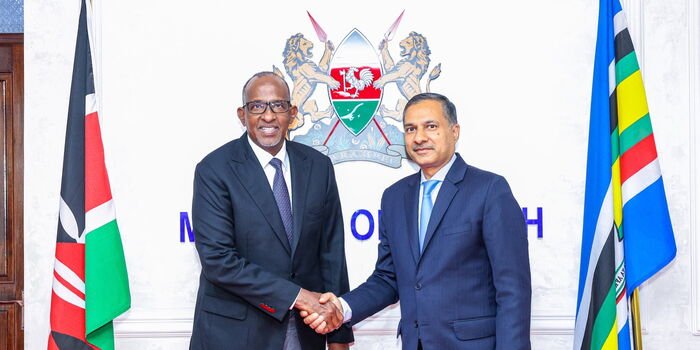
You are probably wondering where I am going with all these…..but I am writing this after defence cabinet secretary Aden Duale recently announced the government’s intention to partner with India on strengthening and regulating traditional medicine. The announcement could not come at a better time and felt less like a new idea and more like Kenya finally returning to itself.
This partnership, if done right, could be one of the most consequential health decisions of our time.
Traditional Medicine Is a Lifeline
In many Kenyan homes, especially outside major towns, traditional remedies provide the first line of defence out of necessity. The remedies are easily accessible, very affordable and trustworthy. And we should not forget that much of modern pharmacology grew out of plants, including some grown right here on our soil.
For a country where a visit to a private hospital often feels like a luxury, formalizing and strengthening traditional medicine is a matter of equity. It acknowledges that healthcare does not start and end with a prescription pad.
India’s Expertise Could Bring the Legitimacy We Lack
Who better than India, a global leader in integrating traditional and modern medicine? Systems like Ayurveda, Unani, Siddha and Yoga are regulated, researched and taught in their universities. Practitioners are licensed and products undergo clinical testing. This is the kind of structure Kenya desperately needs.
While Africans equated tradition with backwardness, India never did. They built research institutes and entire medical systems to preserve and modernize their traditional knowledge. And today, the world flies to India for treatments that blend heritage with science. Why can’t Kenya do the same? Why can’t our own indigenous knowledge receive the respect and investment it deserves?
Shame on us.
Our herbalists are talented (some astonishingly so) but their knowledge lives mostly in oral history and personal practice. Why are they not given the platform to pass on these medicinal gems? With the right partnership, we could build an ecosystem where traditional healers are trained, monitored, certified and supported by modern research labs. Imagine a Kenya where herbal solutions are safe as opposed to being whispered about in market corridors.
Some fear that government involvement will sanitize or dilute traditional healing. But, maybe we should look at as protecting the public from quackery or harmful claims.
The truth is, people are already seeking out herbalists. The government can either pretend it’s not happening, or step in and make sure what they’re using is safe and effective. In truth, it honors the knowledge our ancestors preserved: by documenting it and ensuring it survives another century.
Kenya has spent decades chasing imported solutions, often overlooking the resources at our feet. If you are not new to this page, you know how passionately I talk about looking towards home made solutions, relearning what our forefathers taught us, etc, etc. A partnership with India doesn’t mean abandoning modern medicine; it means widening our toolbox and acknowledging that wellness is not a one size fits all approach.
And most importantly, it means the grandmother in Kisii, the herbalist in Turkana, and the healer in Vihiga will finally be part of the national conversation; not left in the shadows.
The Future of Healthcare Should Be Both High Tech and Deeply Rooted
Kenya has ambitions of becoming a medical hub in East Africa. That vision should include our own heritage. A regulated traditional medicine sector can boost tourism and innovation. It can reduce medical flight abroad. It can make healthcare more affordable. These are changes we as a country so desperately need!
But beyond the economics, it can reconnect us with practices that are uniquely ours, of practices that have quietly sustained communities long before pharmaceuticals arrived.
If Kenya leans into this with seriousness and scientific rigor, we might just heal more than ailments. Unless of course, it is another empty promise from the government, and of late we all know it has not been short of those….until then, one can only hope.