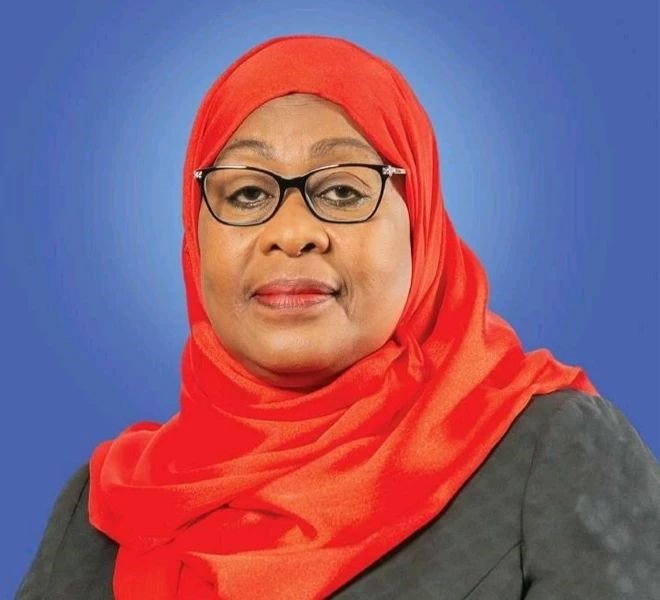
Surely I cannot be the only one noticing the difference between inherited presidency Suluhu and elected presidency Suluhu. Was she simply waiting to be officially elected before revealing who she really is?
It does begin to look like the mask is peeling off now.
When she first took office in 2021, she was not elected. Having inherited the presidency after John Magufuli’s sudden death, she gave the image of a soft spoken, motherly leader. Maybe the fact that she was not elected changed the psychology of leadership. An inherited seat requires caution and diplomacy, which is how Samia came in; soft and diplomatic. A leader that inherited their political seat has to be willing to appear agreeable. You hold power, yes, but not uncontested power.
And in those early months of 2021 and subsequent years, Suluhu played that role almost flawlessly. She was ever calm and measured. She was open to dialogue and most importantly, appeared keen to distinguish herself from the hardline legacy she stepped into.
So what is changing?
Something has definitely shifted. And it’s such an obvious jarring shift. It is not even about the tone alone, but the language, the defensiveness and the sudden anger in her speeches that cannot be hidden anymore. Also, the insistence on blaming everyone but herself for the tragedy that unfolded in October all points to a leader who is changing right before our eyes.
Should we be concerned?
Where is the conciliatory tone she started with? Her latest speeches are now indignant and scolding – they sound nothing like the woman who once positioned herself as Tanzania’s steadying hand. What we are now witnessing instead looks very much like a presidency under immense pressure unraveling in slow motion.
So you understand where I am coming from when I wonder out loud whether the gentleness was strategic: a transitional mask worn until she could stand on her own electoral legitimacy.
A friend recently asked me whether I saw any simillarities between Marie Antoinette, the unlucky French queen, and Suluhu.
“None whatsoever,” I answered without hesitation. “Why would you even compare the two? Marie Antoinette was an aristocratic monarch born into royalty while Suluhu is a democratically elected leader in a modern republic. Their contexts and power structures are worlds apart. A more accurate comparison would be to modern leaders who struggle with balancing reform expectations against entrenched political systems and not 18th century royalty.”
“Well,” my friend answered me undeterred, “why does she behave like an aristocratic monarch?”
I won’t even lie, the question has been eating at me for a while, so much so that, I begun to see his point of view.
However, Marie Antoinette’s aloofness is historically explainable. She was born into opulence and raised in isolation. She had never set foot in the world of ordinary suffering. Her distance from her citizens was baked into the architecture of her life.
What then, is Suluhu’s excuse?
She wasn’t born into royalty or raised behind palace walls. As a Zanzibari, she understands more than most people the power of community. She built her career within the very society now begging her to understand it. She is a daughter of Tanzania, so why is she behaving like a foreign monarch handed leadership on a silver platter?
How does a leader who rose from the people become so emotionally unreachable to those same people?
Marie Antoinette, at least, had her detachment explained by circumstance; raised in a palace and bred for ceremony rather than empathy. Suluhu, on the other hand, rose through the ranks of Tanzanian public life. She knows the reality of ordinary citizens and has lived the politics of the people she now scolds. So why does she talk in such a detached manner in regards to all the recent killings that happened in Tanzania?
Talk about lecturing grieving families and defending state violence.
If you want to understand a leader under strain, listen to their speeches. We are now witnessing the unfolding of an increasingly irritated, defensive and accusatory leader. Her statements over the past weeks (and especially today’s speech addressing the elders of Dar) have carried the impatience of someone feeling cornered.
Instead of confronting the enormity of the tragedy or acknowledging the role of state machinery in it, Suluhu has chosen to frame herself as the one under sieke siege. To her, every critique is an attack and every concern becomes evidence of external manipulation (her favorite scapegoat.).
A classic sign of a leader losing her grip on the narrative. When the story stops being about the people and becomes entirely about herself.
A Presidency That Blames Everyone but Itself
Accountability is the anchor of leadership. When a nation is shaken, people look to the top for ownership. When will we as Africans ever hear the words This happened under my watch, and I will confront it from our leaders?
According to President Suluhu’s narrative, the tragedy of October was caused by manipulated youth, opportunistic politicians and influence from outside actors.
Basically Everyone is responsible, except the people who gave the order to shoot.
This widening accountability vacuum begins to distort reality. Citizens watched events unfold with their own eyes. They saw the crackdown and buried their dead, and yet here they are being reprimanded. Parents that lost their children to the killings that day are being asked why they allowed their children to go out to the streets. But…but, wasn’t there an election going on? were they supposed to vote from the comforts of their sitting rooms? And, so what if they were demonstrating? when did demonstrating become a crime punishable by instant death? Emotional gaslighting on a national scale, if ever there was one.
Leaders can recover from political crises, but they rarely survive a perception that they can no longer tell or face the truth.
But whomst am I to talk? It is her presidency, she can do as she pleases.