Shaping Perception: Clifford Ogendi on Africa’s M.I.C.E. Industry
Most of us walk through trade exhibitions without much thought. We register and scan badges, and well, generally, admire nicely lit booths. We collect brochures, shake hands and move on. What we rarely consider is how carefully those spaces are designed. And it is not just the physical bit, but the psychological designing too. Before a single conversation begins or a deal is discussed and a partnership imagined, decisions have already been made about what we will notice or dismiss.
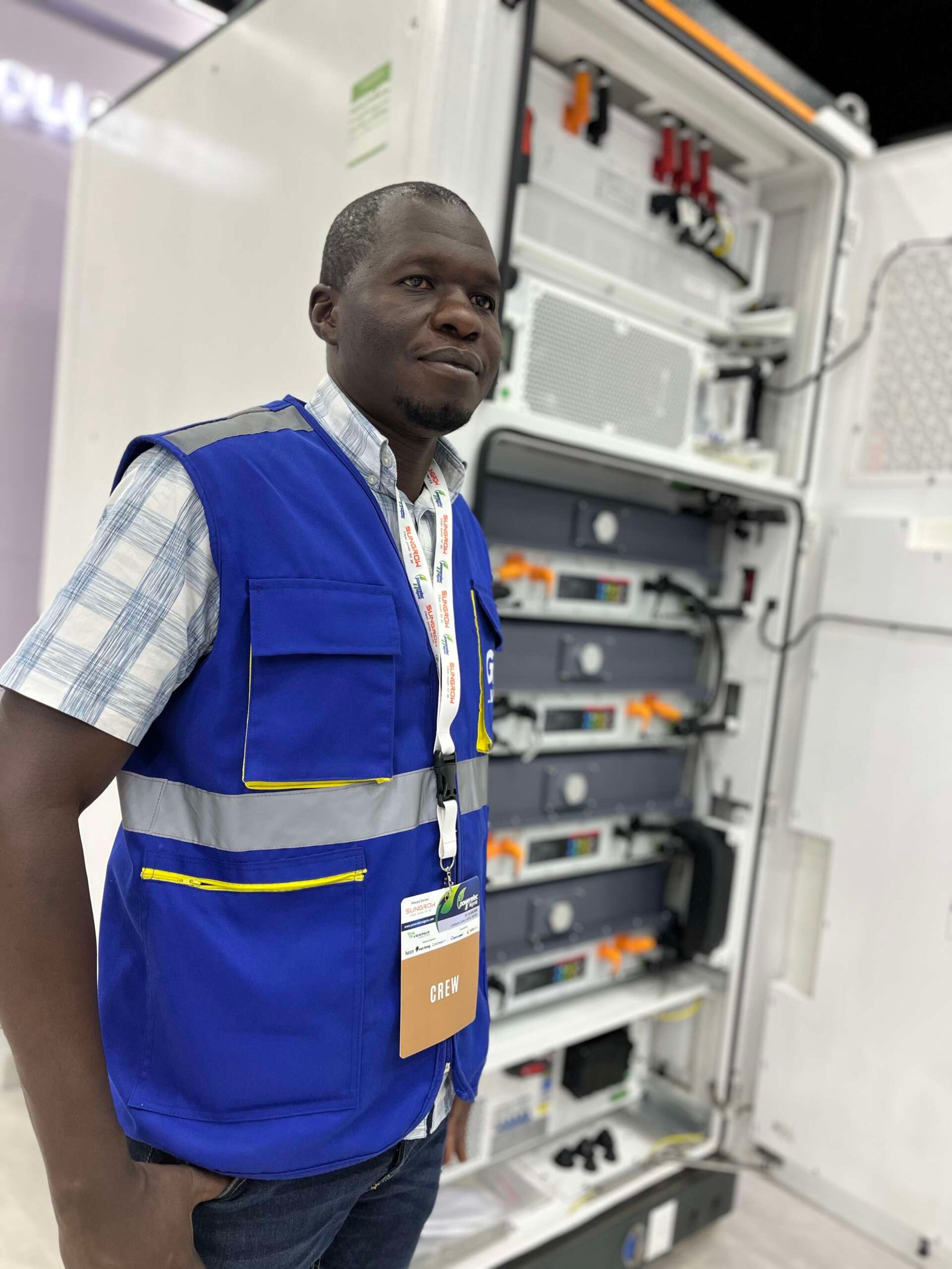
Clifford Ogendi works inside that quiet architecture of influence, a space that belongs to a much larger global ecosystem known as M.I.C.E: Meetings, Incentives, Conferences and Exhibitions. It is an industry that quietly shapes how countries are perceived and how economies introduce themselves to the world.
An exhibition specialist by profession, he operates in an industry that remains largely uncharted territory across much of Africa. His work focuses primarily on trade shows; the large, transactional spaces where countries, corporations, startups and institutions present themselves to the world. It is here where perception is created. And perception as we know it is a very powerful tool that is sometimes quite underrated.
In this first edition of Conversations at Sunset, we sit down with Clifford to talk about the invisible labour behind exhibitions, what it means to build a career in an industry most people don’t know exists, how Africa shows up in global trade spaces and why exhibitions are far more political than they appear.
Exhibition work isn’t a career most African children grow up knowing exists. Did you train for this at university, or did you find your way into it another way?
Honestly, I didn’t grow up knowing this career existed at all. It wasn’t something you could point to in school and say, “That’s what I want to become.” I didn’t study exhibitions or trade shows as a formal university degree. My path into this world was very organic.
I found my way into the industry through work exposure and learning on the job. Over time, I took short professional courses and specialised training that helped me understand the technical and strategic side of exhibitions. What’s encouraging is that in recent years, African institutions have started recognizing this field. Some universities and training centres are now introducing M.I.C.E-related courses, which is a big step forward for the next generation.
For someone hearing about this career for the first time, how would you explain what you do in simple, layman terms?
In simple terms, my work is about shaping how people experience information, products and countries in physical spaces.
When you walk into an exhibition and feel excited or unimpressed, that reaction didn’t happen by accident. Someone planned the flow, the layout, the messaging, the lighting, the interaction points. And this is where I come in. My job sits at that intersection between storytelling and strategy.
To be honest, this is not a desk only career. Sure, one learns some things in class, but most of the real learning happens on site under pressure, while solving problems in real time. Every exhibition is different. That’s what makes the industry challenging, but also exciting.
If a young person wanted to enter this field today, what paths are realistically available to them in Africa?
The truth is, there is no single straight path. Which if you look at unbiasedly, can actually be an advantage.
The M.I.C.E industry pulls together many professions. You’ll find people from sales and marketing, interior and spatial design, architecture, fabrication, logistics, health and safety, graphic design, project management, even hospitality. All these skills support exhibitions in one way or another.
For young people adaptability and willingness to learn matter more than titles. Entry often happens through internships, volunteering at events, working with exhibition contractors or supporting event agencies. Mentorship and exposure are critical because the industry is still defining itself on the continent.
When people walk through an exhibition, what part of your work do they completely overlook but shouldn’t?
One word – Flow.
Most visitors don’t realise how important movement is. How people are guided through a space, where their eyes land first, where they slow down, where they stop engaging. If the flow is wrong, even the best product will be ignored. It’s a simple concept, until it isn’t.
The buyer’s experience is everything. From the entrance to the exit, every decision affects how long they stay and what they remember.
Are there stories that should never be exhibited, even if they draw attention or funding?
I believe all stories can be told. The real question is how they are told.
Exhibitions are powerful platforms, and power comes with responsibility. The positioning of a story must align with the objective of the exhibition and respect the audience. Sensationalism might attract attention, but it can damage credibility and long term trust. The goal should always be honesty, and purpose. In my opinion, this is the one industry where negative news doesn’t sell.
Why do you think exhibition work remains so underdeveloped and underfunded in Africa despite the continent’s trade potential?
A big part of the problem is mindset.
Many African companies and institutions still don’t see exhibitions as a serious marketing or economic tool. They prioritise traditional media like TV, radio and print without realising that exhibitions offer something those platforms cannot. And that is direct human interaction and immediate feedback.
Because exhibitions are not fully understood, they are rarely budgeted for properly. Countries and companies attend trade shows reactively instead of strategically. Until exhibitions are seen as investments rather than expenses, underdevelopment will persist.
Who gets prime visibility at trade shows, and who is quietly pushed to the margins?
Visibility is rarely accidental. That is the thing that most do not realise. Everything is planned and structured.
Prime visibility usually goes to those who can afford higher sponsorship tiers like, say, platinum, gold, silver – each with increasing benefits. Those without resources or strategic backing often end up in less visible spaces, regardless of the quality of their product or story. That is just how it is, unfortunately.
When someone walks into a trade exhibition and feels impressed or unimpressed, what invisible decisions have already shaped that reaction?
Before they arrived, decisions were made about lighting, colour psychology, booth placement, messaging hierarchy, sound, spacing and even how approachable staff appear. Again, nothing is an accident.
People think exhibitions are about logistics (tables, banners, stands) but psychology plays a massive role. How safe someone feels or how welcomed they are, how clearly they understand what’s being offered – all of that and more is engineered long before opening day.
What do most people misunderstand about trade exhibitions?
Many people think exhibitions are just displays. They are not.
Trade exhibitions are where countries and corporations introduce themselves to the world. Always know that this is more than just about showing products. You are shaping perception.
How is Africa typically framed in these spaces, especially internationally?
Too often, Africa is framed as potential rather than power. You know how they are always labeling children as “the leaders of tomorrow?” Well, that is Africa for you in a nutshell. A future promise instead of a present force.
You see narratives of raw materials and untapped markets instead of innovation, systems and leadership. This framing is sometimes external, but we also contribute to it ourselves through weak storytelling and underinvestment.
What mistakes do African exhibitors repeatedly make and why do they persist?
The biggest mistake is assuming the product will speak for itself.
Underinvestment in professional presentation and poor preparation cost African exhibitors visibility and credibility. These mistakes persist because exhibitions are not yet fully understood as competitive global arenas. Showing up is mistaken for showing up well.
Do you see M.I.C.E spaces as neutral platforms, or inherently political ones?
They are absolutely political. Everything in life is political, just so you know.
Every decision from who is visible, what story is told to what is highlighted or hidden is political. Trade exhibitions influence diplomacy and national branding. So how then would they not be political? They may look neutral, but they quietly shape power relations.
Is there a line between strategic presentation and misrepresentation?
Yes, and it’s a very important line.
Strategic presentation is about clarity and emphasis. Misrepresentation is about distortion. When exhibitions cross that line, they may succeed short term but fail long term. Trust is very hard to rebuild once broken.
Have you ever been asked to present something in a way that made you uncomfortable? How do you maneuver that tension?
Yes, it happens.
In those moments, you have to balance professionalism with integrity. I try to advise clients on the long term consequences of certain representations and suggest alternative ways to meet objectives without compromising truth. It’s not always easy, but this industry carries moral weight, whether people acknowledge it or not.
Do you feel fulfilled working in the M.I.C.E industry?
I do.
It’s demanding and often invisible work, but it’s meaningful. Knowing that you’ve helped shape how a country or company is seen by the world is deeply fulfilling.
Why do you think Africa has been slow to invest seriously in M.I.C.E, despite its economic and diplomatic potential?
Because the influence of soft power is still underestimated.
Infrastructure and trade deals are visible. Perception-building is quieter, slower, and harder to measure—but no less powerful. Once that understanding shifts, investment will follow.
If Africa truly understood the influence of trade exhibitions, what could change – economically, politically or diplomatically?
Africa would stop waiting to be interpreted by others and start defining itself. I know it sounds cliche, but Africa needs to start telling its own stories.
What would a world class African trade exhibition look and feel like if money, politics and permission were not barriers?
It would be confident and unapologetically African.
Not performative, not exoticised but innovative, well designed, technologically advanced and rooted in local realities. It would feel intentional and globally competitive.
So far, what has been your most memorable exhibition, and why so?
Contrary to what most might think, the most memorable exhibitions are not always the biggest ones.
They are the ones where you see a shift. For instance, where a client finally understands their power, where visitors engage genuinely or where a story lands exactly as intended. Those moments remind you why this invisible work matters.